Loading...
Analysis will be generated on first visit.
Scores and timeline are available below. The page will refresh automatically when ready.
Hernan Cortes vs Qin Shi Huang
Qin Shi Huang leads by 17.1 pts · 2 figures compared
…

Hernan Cortes
Explorer · Medieval
66.4Total
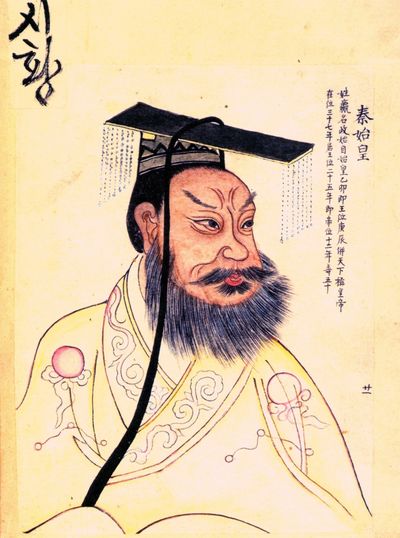
Qin Shi Huang
Emperor · Ancient
83.5Total
Basic Information
Born
1485
-259
Died
1547
-210
Era
Medieval
Ancient
Nationality
Spain
China
Occupation
Explorer
Emperor
Civilization
Western
Eastern
Score Comparison
Military (10%)
57.7
80.0
Political (20%)
72.0
88.0
Influence (20%)
70.4
82.0
Legacy (20%)
72.2
85.0
Leadership (15%)
72.5
88.0
Strategy (15%)
45.7
75.0
TOTAL
66.4
83.5
Rankings
🥇
Qin Shi HuangLeader
Mil: 80.0Pol: 88.0Inf: 82.0
83.5
🥈
Hernan Cortes
Mil: 57.7Pol: 72.0Inf: 70.4
66.4
+17.1 behind
How This Comparison Works
Algorithm
Each figure is scored on 6 dimensions (0—100 scale) based on structured historical data: Military (10%), Political (20%), Influence (20%), Legacy (20%), Leadership (15%), Strategy (15%). The weighted total produces the final ranking.
Data Sources
Scores are computed from structured sub-indicators in the database. Scale factors adjust for era (Ancient ×0.85, Modern ×1.0) and civilization size (Eastern ×1.05, Other ×0.80) to account for differences in population and military scale.
Maximum 3 Figures
Comparisons are limited to 2—3 figures to ensure readability and statistical meaningfulness.
Error Margins
±5 points per dimension — Sub-scores are derived from historical records with inherent uncertainty. Two figures within 5 points on a dimension should be considered roughly equivalent in that area.
Total Score Accuracy
±3 points overall — The weighted combination of 6 dimensions produces a total score with approximately ±3 points of uncertainty. Differences of less than 3 points are not statistically significant— the figures are effectively tied.
Known Limitations
- Historical records are incomplete and uneven across civilizations
- Figures from oral-tradition societies may be underrepresented
- Occupation labels can misclassify multi-role figures
- Scores measure capability and impact, not moral character
- Quantitative scoring is a comparison tool, not absolute truth
Capability Radar
Military (10%) — Battles & Warfare
Battles
85
85
Win Rate
90
90
Expansion
95
90
Political (20%) — Governance & Reform
Reform
65
95
Diplomacy
80
75
Economy
70
90
Influence (20%) — Cultural & Global Reach
Cultural
85
95
Global
90
85
Legacy (20%) — Historical Impact
Historical
90
95
Longevity
85
95
Leadership (15%) — Power & Stability
Tenure
60
70
Stability
45
65
Strategy (15%) — Tactics & Innovation
Strategy
88
85
Tactics
92
80
Reform
70
95
Analysis will be generated on first visit.
Scores and timeline are available below. The page will refresh automatically when ready.
Hernan Cortes — Complete Timeline
1519 AD
Landing in MexicoWar
Cortés landed on the coast of Mexico near present-day Veracruz with about 600 men. He founded the settlement of Villa Rica de la Vera Cruz and deliberately scuttled his ships to prevent retreat, committing his force to conquest.
ConquestMexicoExpedition
Impact: regional
Alliance with TlaxcalaPolitical Action◆ Major
After initial battles, Cort
AllianceIndigenousConquest
Impact: regional
Entry into TenochtitlanPolitical Action◆ Major
Cortés and his forces entered the Aztec capital Tenochtitlan as guests of Emperor Moctezuma II. Cortés later took Moctezuma hostage, attempting to rule through him, but tensions led to a revolt by the Aztec population.
ConquestTenochtitlanHostage
Impact: regional
1520 AD
La Noche TristeWar◆ Major
Aztec forces besieged the Spanish in Tenochtitlan after Moctezuma's death. Cort
BattleRetreatAztec
Impact: regionaltragic
1521 AD
Siege and fall of TenochtitlanWar
Cortés besieged Tenochtitlan with a rebuilt army and indigenous allies. After a 75-day siege involving naval battles on Lake Texcoco, the city fell. The Aztec Empire collapsed, and Cortés claimed Mexico for Spain.
ConquestSiegeAztec Empire
Impact: globaldestructive
1522 AD
Appointment as Governor of New SpainPolitical Action◆ Major
King Charles I appointed Cort
GovernorshipNew SpainAdministration
Impact: regional
Qin Shi Huang — Complete Timeline
246 BC
Construction of the Mausoleum and Terracotta ArmyOther◆ Major
Qin Shi Huang commissioned a vast mausoleum complex near Xi'an, guarded by thousands of life-sized terracotta soldiers, horses, and chariots. The project employed hundreds of thousands of workers and reflected his obsession with immortality and imperial power.
Impact: global
230 BC
Conquest of the Six Warring StatesWar
From 230 to 221 BCE, Ying Zheng led the Qin state in a series of campaigns that conquered the Han, Zhao, Wei, Chu, Yan, and Qi states. This unified China under a single ruler for the first time, ending the Warring States period.
Impact: global
221 BC
Standardization of Writing, Currency, and MeasurementsReform◆ Major
Qin Shi Huang ordered the standardization of Chinese script, currency, and weights and measures across the unified empire. This facilitated administration, trade, and cultural integration, laying a foundation for future dynasties.
Impact: globalconstructive
Proclamation of the Qin DynastyPolitical Action
After conquering the last independent state, Ying Zheng declared himself Shi Huangdi (First Emperor), founding the Qin Dynasty. He adopted a new title to signify his supreme authority and initiated centralized imperial rule.
Impact: global
214 BC
Initiation of the Great Wall ConstructionOther◆ Major
Qin Shi Huang ordered the connection and extension of existing northern fortifications to create a unified defensive wall against nomadic Xiongnu raids. This project involved massive conscripted labor and became the precursor to the later Great Wall.
Impact: regional
213 BC
Burning of Books and Burying of ScholarsPolitical Action◆ Major
On the advice of Li Si, Qin Shi Huang ordered the burning of historical records and philosophical texts not aligned with Legalist doctrine. He also had 460 Confucian scholars buried alive to suppress dissent and consolidate ideological control.
Impact: nationaldestructive
Similar Comparisons
Comments & Discussion
TenochtitlanTactician6/17/2026
Cortés wins on adaptability, not numbers. With 600 Spaniards, he toppled an empire of millions by exploiting Aztec tributary resentment and using superior shipbuilding to besiege an island city. Qin's unification was a grind: 10 years of mass infantry campaigns. Cortés did more with less, proving that psychological warfare beats brute force. If Qin had faced the Aztecs, he'd have crushed them too—but he wouldn't have needed to learn Nahuatl.
长城守卫者6/17/2026
秦始皇才是真正的帝国建筑师。他统一文字、货币、度量衡,修建长城抵御匈奴,这套系统延续了两千年。科尔特斯呢?他只会摧毁和掠夺,留下一个被天花和强迫劳动摧毁的废墟。墨西哥至今还在为马林切综合症挣扎。历史不是比谁更残忍,而是比谁的遗产更持久。秦朝的建筑至今还在用,阿兹特克的神庙现在只剩游客脚下的灰尘。
RevisionistRuin6/17/2026
Both were genocidal, but only one gets called "founder." Qin killed maybe a million in wars and forced labor; Cortés enabled the deaths of 20 million through disease and slavery. Yet Western narratives lionize the emperor as "unifier" while demonizing Cortés as "destroyer." It's Eurocentric hypocrisy. Cortés was a product of his brutal era—same as Qin. The real difference? Qin's victims were assimilated into a surviving culture; Cortés's were replaced by a new one. Both were architects of mass d
兵法迷6/17/2026
战略深度决定一切。秦始皇靠法家思想设计了一套自运行的帝国机器,书同文车同轨,让集权成为本能。科尔特斯只是个赌徒,他烧船不是为了什么崇高理想,是逼手下拼命。赢了是运气,因为他利用了天花和土著内斗。如果让秦始皇指挥科尔特斯的远征,他会先建好后勤体系,再花十年渗透分化,而不是靠一次豪赌。真正的军事家不靠运气,靠制度。
ClassicsContrarian6/17/2026
Comparing them is like comparing a symphony to a firecracker. Qin unified warring states into a continuous civilization—his standardizations of script and law lasted millennia. Cortés merely replaced one empire with another in a few years, leaving nothing but trauma. The gap isn't in brutality—both were ruthless—but in legacy. Qin connected China; Cortés disconnected Mesoamerica from its own past. That's not conqueror vs. conqueror; that's builder vs. arsonist.