Loading...
Analysis will be generated on first visit.
Scores and timeline are available below. The page will refresh automatically when ready.
Henry the Navigator vs Qin Shi Huang
Qin Shi Huang leads by 30.0 pts · 2 figures compared
…

Henry the Navigator
Explorer · Medieval
53.5Total
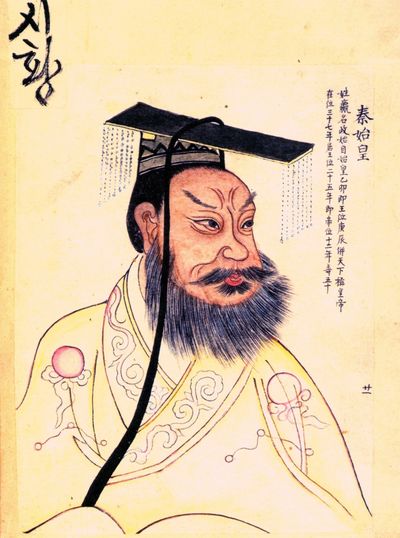
Qin Shi Huang
Emperor · Ancient
83.5Total
Basic Information
Born
1394
-259
Died
1460
-210
Era
Medieval
Ancient
Nationality
Portugal
China
Occupation
Explorer
Emperor
Civilization
Western
Eastern
Score Comparison
Military (10%)
16.2
80.0
Political (20%)
64.9
88.0
Influence (20%)
74.0
82.0
Legacy (20%)
66.3
85.0
Leadership (15%)
40.4
88.0
Strategy (15%)
32.1
75.0
TOTAL
53.5
83.5
Rankings
🥇
Qin Shi HuangLeader
Mil: 80.0Pol: 88.0Inf: 82.0
83.5
🥈
Henry the Navigator
Mil: 16.2Pol: 64.9Inf: 74.0
53.5
+30.0 behind
How This Comparison Works
Algorithm
Each figure is scored on 6 dimensions (0—100 scale) based on structured historical data: Military (10%), Political (20%), Influence (20%), Legacy (20%), Leadership (15%), Strategy (15%). The weighted total produces the final ranking.
Data Sources
Scores are computed from structured sub-indicators in the database. Scale factors adjust for era (Ancient ×0.85, Modern ×1.0) and civilization size (Eastern ×1.05, Other ×0.80) to account for differences in population and military scale.
Maximum 3 Figures
Comparisons are limited to 2—3 figures to ensure readability and statistical meaningfulness.
Error Margins
±5 points per dimension — Sub-scores are derived from historical records with inherent uncertainty. Two figures within 5 points on a dimension should be considered roughly equivalent in that area.
Total Score Accuracy
±3 points overall — The weighted combination of 6 dimensions produces a total score with approximately ±3 points of uncertainty. Differences of less than 3 points are not statistically significant— the figures are effectively tied.
Known Limitations
- Historical records are incomplete and uneven across civilizations
- Figures from oral-tradition societies may be underrepresented
- Occupation labels can misclassify multi-role figures
- Scores measure capability and impact, not moral character
- Quantitative scoring is a comparison tool, not absolute truth
Capability Radar
Military (10%) — Battles & Warfare
Battles
10
85
Win Rate
10
90
Expansion
30
90
Political (20%) — Governance & Reform
Reform
50
95
Diplomacy
60
75
Economy
70
90
Influence (20%) — Cultural & Global Reach
Cultural
65
95
Global
65
85
Legacy (20%) — Historical Impact
Historical
70
95
Longevity
60
95
Leadership (15%) — Power & Stability
Tenure
40
70
Stability
50
65
Strategy (15%) — Tactics & Innovation
Strategy
20
85
Tactics
10
80
Reform
15
95
Analysis will be generated on first visit.
Scores and timeline are available below. The page will refresh automatically when ready.
Henry the Navigator — Complete Timeline
1420 AD
Appointment as Governor of the Order of ChristPolitical Action◆ Major
Henry the Navigator was appointed Governor of the Order of Christ, a wealthy military order. He used its resources to fund maritime exploration, establishing a school of navigation at Sagres and sponsoring voyages along the African coast.
ExplorationPatronageOrder of Christ
Impact: globalconstructive
1434 AD
Sponsorship of the first voyages to Cape BojadorInvention◆ Major
Henry sponsored the voyage of Gil Eanes, who successfully rounded Cape Bojador, a feared obstacle on the African coast. This breakthrough opened the way for further exploration southward, challenging medieval geographical beliefs.
ExplorationNavigationAfrica
Impact: globalconstructive
1445 AD
Establishment of the first Portuguese feitoria in AfricaPolitical Action◆ Major
Henry's captains established a feitoria (trading post) at Arguin, off the coast of modern Mauritania. This became a center for trade in gold, slaves, and other goods, marking the beginning of the Portuguese slave trade in Africa.
TradeSlave TradeColonialism
Impact: globaldestructive
1456 AD
Sponsorship of the discovery of the Cape Verde IslandsInvention◆ Major
Henry's captains, including Alvise Cadamosto, discovered the Cape Verde Islands. These islands became a strategic base for Portuguese exploration and trade, and later a center for the transatlantic slave trade.
DiscoveryExplorationAtlantic
Impact: global
1460 AD
Death and legacy of explorationOther◆ Major
Henry the Navigator died at Sagres. By his death, Portuguese explorers had reached Sierra Leone, laying the groundwork for the sea route to India. His patronage established Portugal as a leading maritime power and initiated the Age of Discovery.
DeathLegacyAge of Discovery
Impact: globalconstructive
Qin Shi Huang — Complete Timeline
246 BC
Construction of the Mausoleum and Terracotta ArmyOther◆ Major
Qin Shi Huang commissioned a vast mausoleum complex near Xi'an, guarded by thousands of life-sized terracotta soldiers, horses, and chariots. The project employed hundreds of thousands of workers and reflected his obsession with immortality and imperial power.
Impact: global
230 BC
Conquest of the Six Warring StatesWar
From 230 to 221 BCE, Ying Zheng led the Qin state in a series of campaigns that conquered the Han, Zhao, Wei, Chu, Yan, and Qi states. This unified China under a single ruler for the first time, ending the Warring States period.
Impact: global
221 BC
Standardization of Writing, Currency, and MeasurementsReform◆ Major
Qin Shi Huang ordered the standardization of Chinese script, currency, and weights and measures across the unified empire. This facilitated administration, trade, and cultural integration, laying a foundation for future dynasties.
Impact: globalconstructive
Proclamation of the Qin DynastyPolitical Action
After conquering the last independent state, Ying Zheng declared himself Shi Huangdi (First Emperor), founding the Qin Dynasty. He adopted a new title to signify his supreme authority and initiated centralized imperial rule.
Impact: global
214 BC
Initiation of the Great Wall ConstructionOther◆ Major
Qin Shi Huang ordered the connection and extension of existing northern fortifications to create a unified defensive wall against nomadic Xiongnu raids. This project involved massive conscripted labor and became the precursor to the later Great Wall.
Impact: regional
213 BC
Burning of Books and Burying of ScholarsPolitical Action◆ Major
On the advice of Li Si, Qin Shi Huang ordered the burning of historical records and philosophical texts not aligned with Legalist doctrine. He also had 460 Confucian scholars buried alive to suppress dissent and consolidate ideological control.
Impact: nationaldestructive
Similar Comparisons
Comments & Discussion
SwordAndShield6/17/2026
Comparing Qin Shi Huang to Henry the Navigator is like comparing an iron fist to a compass. The First Emperor unified warring states through sheer brutality, standardizing writing and weights across a continent. Henry? He never even sailed. His "discoveries" were funded by Portuguese slave markets and executed by anonymous captains. One built the Great Wall; the other built a myth of himself as a explorer-saint while profiting from human cargo. Give me Qin's ruthless efficiency any day—at least
史海沉钩6/17/2026
拿秦始皇和亨利王子比?这简直是拿长城比灯塔!始皇帝扫六合、设郡县、修灵渠,铁腕统一了中国——这可是实打实的国家建设。亨利呢?一个坐办公室的贵族,连航海都没出过,就靠着地图上的线条和非洲奴隶贸易刷名声。论影响力,秦始皇奠定了两千年的帝国格局;亨利只是欧洲殖民浪潮的一个注脚。别被“航海家”的光环骗了,他根本是个纸上谈兵的投机分子。
DataMiner6/17/2026
The comparison skips over the most significant difference: scale. Qin Shi Huang’s regime mobilized hundreds of thousands of laborers, standardized scripts across millions of square kilometers, and left the Great Wall and Terracotta Army as tangible legacies. Henry’s project, the School of Sagres, is largely a romanticized legend—modern historians debate whether it even existed as a formal institution. You’re comparing an empire’s actual infrastructure with a promotional campaign that inflated on
墨家学徒6/17/2026
这种比较忽略了一个关键事实:秦始皇销毁了百家经典,却统一了文字和度量衡,这是文明史上的大工程;亨利王子资助的航海记录大多模糊不清,连他的“萨格里什学校”是否存在都存疑。说白了,一个是实干家,一个是宣传包装的产物。要我选,我宁可研究秦简上的法律条文,也不想再读一遍亨利的骑士传奇。历史不是比谁的名号更响亮,是比谁留下的证据更扎实。