Loading...
Analysis will be generated on first visit.
Scores and timeline are available below. The page will refresh automatically when ready.
Henry Morton Stanley vs Qin Shi Huang
Qin Shi Huang leads by 32.2 pts · 2 figures compared
…

Henry Morton Stanley
Explorer · Modern
51.3Total
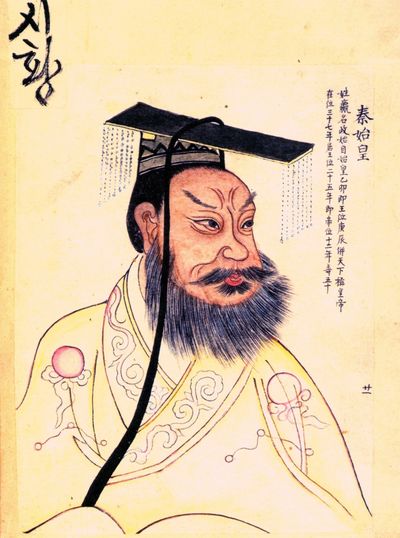
Qin Shi Huang
Emperor · Ancient
83.5Total
Basic Information
Born
1841
-259
Died
1904
-210
Era
Modern
Ancient
Nationality
United Kingdom
China
Occupation
Explorer
Emperor
Civilization
Western
Eastern
Score Comparison
Military (10%)
33.8
80.0
Political (20%)
43.3
88.0
Influence (20%)
73.2
82.0
Legacy (20%)
63.0
85.0
Leadership (15%)
35.2
88.0
Strategy (15%)
45.0
75.0
TOTAL
51.3
83.5
Rankings
🥇
Qin Shi HuangLeader
Mil: 80.0Pol: 88.0Inf: 82.0
83.5
🥈
Henry Morton Stanley
Mil: 33.8Pol: 43.3Inf: 73.2
51.3
+32.2 behind
How This Comparison Works
Algorithm
Each figure is scored on 6 dimensions (0—100 scale) based on structured historical data: Military (10%), Political (20%), Influence (20%), Legacy (20%), Leadership (15%), Strategy (15%). The weighted total produces the final ranking.
Data Sources
Scores are computed from structured sub-indicators in the database. Scale factors adjust for era (Ancient ×0.85, Modern ×1.0) and civilization size (Eastern ×1.05, Other ×0.80) to account for differences in population and military scale.
Maximum 3 Figures
Comparisons are limited to 2—3 figures to ensure readability and statistical meaningfulness.
Error Margins
±5 points per dimension — Sub-scores are derived from historical records with inherent uncertainty. Two figures within 5 points on a dimension should be considered roughly equivalent in that area.
Total Score Accuracy
±3 points overall — The weighted combination of 6 dimensions produces a total score with approximately ±3 points of uncertainty. Differences of less than 3 points are not statistically significant— the figures are effectively tied.
Known Limitations
- Historical records are incomplete and uneven across civilizations
- Figures from oral-tradition societies may be underrepresented
- Occupation labels can misclassify multi-role figures
- Scores measure capability and impact, not moral character
- Quantitative scoring is a comparison tool, not absolute truth
Capability Radar
Military (10%) — Battles & Warfare
Battles
40
85
Win Rate
60
90
Expansion
65
90
Political (20%) — Governance & Reform
Reform
10
95
Diplomacy
35
75
Economy
15
90
Influence (20%) — Cultural & Global Reach
Cultural
55
95
Global
60
85
Legacy (20%) — Historical Impact
Historical
60
95
Longevity
45
95
Leadership (15%) — Power & Stability
Tenure
20
70
Stability
10
65
Strategy (15%) — Tactics & Innovation
Strategy
50
85
Tactics
55
80
Reform
10
95
Analysis will be generated on first visit.
Scores and timeline are available below. The page will refresh automatically when ready.
Henry Morton Stanley — Complete Timeline
1871 AD
Found Livingstone at UjijiOther◆ Major
Stanley, on an expedition funded by the New York Herald, found the missing missionary David Livingstone at Ujiji on Lake Tanganyika. The meeting produced the famous greeting 'Dr. Livingstone, I presume?' and renewed public interest in African exploration.
ExplorationAfricaLivingstone
Impact: global
1875 AD
Circumnavigation of Lake VictoriaOther◆ Major
Stanley circumnavigated Lake Victoria in a boat, proving it was a single large lake and not a series of smaller lakes. This confirmed it as the primary source of the Nile, resolving a major geographical debate.
ExplorationGeographyNile
Impact: regional
1879 AD
Congo Expedition for Leopold IIOther◆ Major
Stanley led an expedition into the Congo Basin on behalf of King Leopold II of Belgium. He established trading stations, signed treaties with local chiefs, and surveyed the Congo River, laying the groundwork for the Congo Free State.
ColonialismCongoLeopold II
Impact: globaldestructive
1887 AD
Emin Pasha Relief ExpeditionOther◆ Major
Stanley led a large expedition to rescue Emin Pasha, a German governor in Equatoria. The expedition crossed central Africa, faced starvation and disease, and resulted in the deaths of hundreds of porters, but successfully reached Emin Pasha.
ExplorationAfricaEmin Pasha
Impact: regionaltragic
Qin Shi Huang — Complete Timeline
246 BC
Construction of the Mausoleum and Terracotta ArmyOther◆ Major
Qin Shi Huang commissioned a vast mausoleum complex near Xi'an, guarded by thousands of life-sized terracotta soldiers, horses, and chariots. The project employed hundreds of thousands of workers and reflected his obsession with immortality and imperial power.
Impact: global
230 BC
Conquest of the Six Warring StatesWar
From 230 to 221 BCE, Ying Zheng led the Qin state in a series of campaigns that conquered the Han, Zhao, Wei, Chu, Yan, and Qi states. This unified China under a single ruler for the first time, ending the Warring States period.
Impact: global
221 BC
Standardization of Writing, Currency, and MeasurementsReform◆ Major
Qin Shi Huang ordered the standardization of Chinese script, currency, and weights and measures across the unified empire. This facilitated administration, trade, and cultural integration, laying a foundation for future dynasties.
Impact: globalconstructive
Proclamation of the Qin DynastyPolitical Action
After conquering the last independent state, Ying Zheng declared himself Shi Huangdi (First Emperor), founding the Qin Dynasty. He adopted a new title to signify his supreme authority and initiated centralized imperial rule.
Impact: global
214 BC
Initiation of the Great Wall ConstructionOther◆ Major
Qin Shi Huang ordered the connection and extension of existing northern fortifications to create a unified defensive wall against nomadic Xiongnu raids. This project involved massive conscripted labor and became the precursor to the later Great Wall.
Impact: regional
213 BC
Burning of Books and Burying of ScholarsPolitical Action◆ Major
On the advice of Li Si, Qin Shi Huang ordered the burning of historical records and philosophical texts not aligned with Legalist doctrine. He also had 460 Confucian scholars buried alive to suppress dissent and consolidate ideological control.
Impact: nationaldestructive
Similar Comparisons
Comments & Discussion
TerracottaTyrant6/17/2026
Stanley was a corporate mercenary disguised as an explorer, while Qin Shihuang was a unifier who forged a civilization. Comparing them is like comparing a colonial debt collector to the man who built the Great Wall. Stanley carved Africa for King Leopold's rubber profits; Qin crushed six kingdoms to create China. One sought headlines, the other history. That's no contest.|
兵团将军6/17/2026
两个都不是好人,但秦始皇至少建了万里长城,统一了文字和度量。斯坦利?他就是比利时殖民者的走狗,打着探险旗号搞屠杀。非洲刚果的橡胶林里,多少黑人的手被砍掉?秦始皇的兵马俑是文化,斯坦利的"发现"是灾难。|
MercuryRiverMan6/17/2026
The mercury rivers beneath Qin's tomb prove something Stanley never had: vision on a cosmic scale. Stanley stumbled across a continent; Qin commanded nature itself. Ancient texts say his tomb had mechanical crossbows protecting it—nobody's stealing from that tomb. Stanley couldn't secure his own supplies. The First Emperor built an empire that outlasted Rome; Stanley's fame died with the Victorian era.|
铁血史官6/17/2026
拿殖民探险家和千古一帝比?你这分析简直胡扯。秦始皇统一六国,书同文车同轨,奠定了中华文明的基础。斯坦利呢?就是个替比利时国王跑腿的记者,在非洲烧杀抢掠,还假装是科学家。历史地位天差地别,别为了追求新奇把两个完全不同的人硬凑在一起。|
SkepticalCartographer6/17/2026
Let's talk methodology. Qin's terracotta army has over 8,000 figures, each with unique facial features—proven by archaeology. Stanley's "discoveries" are colonial propaganda reclassified as exploration. His Lake Tanganyika claims were stolen from African guides who'd navigated those waters for centuries. One built with evidence we can touch; the other built with ink and lies. Stanley's expedition logs don't even match local oral histories. Guess which side history will remember?|