Loading...
Analysis will be generated on first visit.
Scores and timeline are available below. The page will refresh automatically when ready.
George Vancouver vs Qin Shi Huang
Qin Shi Huang leads by 35.8 pts · 2 figures compared
…

George Vancouver
Explorer · Modern
47.7Total
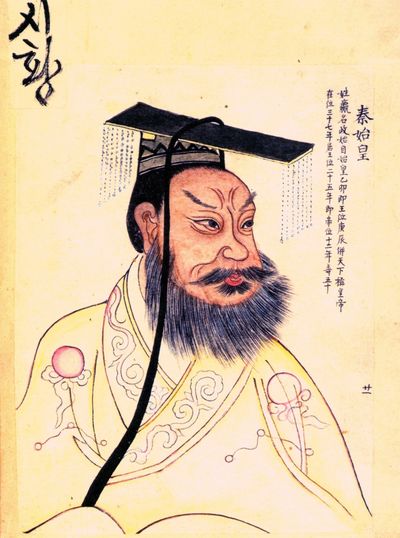
Qin Shi Huang
Emperor · Ancient
83.5Total
Basic Information
Born
1757
-259
Died
1798
-210
Era
Modern
Ancient
Nationality
Great Britain
China
Occupation
Explorer
Emperor
Civilization
Western
Eastern
Score Comparison
Military (10%)
30.0
80.0
Political (20%)
34.4
88.0
Influence (20%)
69.3
82.0
Legacy (20%)
58.3
85.0
Leadership (15%)
24.5
88.0
Strategy (15%)
57.4
75.0
TOTAL
47.7
83.5
Rankings
🥇
Qin Shi HuangLeader
Mil: 80.0Pol: 88.0Inf: 82.0
83.5
🥈
George Vancouver
Mil: 30.0Pol: 34.4Inf: 69.3
47.7
+35.8 behind
How This Comparison Works
Algorithm
Each figure is scored on 6 dimensions (0—100 scale) based on structured historical data: Military (10%), Political (20%), Influence (20%), Legacy (20%), Leadership (15%), Strategy (15%). The weighted total produces the final ranking.
Data Sources
Scores are computed from structured sub-indicators in the database. Scale factors adjust for era (Ancient ×0.85, Modern ×1.0) and civilization size (Eastern ×1.05, Other ×0.80) to account for differences in population and military scale.
Maximum 3 Figures
Comparisons are limited to 2—3 figures to ensure readability and statistical meaningfulness.
Error Margins
±5 points per dimension — Sub-scores are derived from historical records with inherent uncertainty. Two figures within 5 points on a dimension should be considered roughly equivalent in that area.
Total Score Accuracy
±3 points overall — The weighted combination of 6 dimensions produces a total score with approximately ±3 points of uncertainty. Differences of less than 3 points are not statistically significant— the figures are effectively tied.
Known Limitations
- Historical records are incomplete and uneven across civilizations
- Figures from oral-tradition societies may be underrepresented
- Occupation labels can misclassify multi-role figures
- Scores measure capability and impact, not moral character
- Quantitative scoring is a comparison tool, not absolute truth
Capability Radar
Military (10%) — Battles & Warfare
Battles
0
85
Win Rate
0
90
Expansion
20
90
Political (20%) — Governance & Reform
Reform
0
95
Diplomacy
25
75
Economy
10
90
Influence (20%) — Cultural & Global Reach
Cultural
30
95
Global
30
85
Legacy (20%) — Historical Impact
Historical
40
95
Longevity
35
95
Leadership (15%) — Power & Stability
Tenure
10
70
Stability
15
65
Strategy (15%) — Tactics & Innovation
Strategy
15
85
Tactics
10
80
Reform
0
95
Analysis will be generated on first visit.
Scores and timeline are available below. The page will refresh automatically when ready.
George Vancouver — Complete Timeline
1790 AD
Negotiated the Nootka Sound ConventionPolitical Action◆ Major
Vancouver participated in negotiations with Spanish officials at Nootka Sound to resolve territorial disputes. The Nootka Sound Convention established British rights to trade and settle in the region.
DiplomacyNootka SoundTerritorial Dispute
Impact: globalconstructive
1792 AD
Explored the Pacific Northwest coastInvention◆ Major
Vancouver led a British naval expedition to chart the Pacific Northwest coast from California to Alaska. He mapped the coastline with unprecedented accuracy, including Puget Sound and the Strait of Georgia.
ExplorationPacific NorthwestMapping
Impact: global
Circumnavigated Vancouver IslandInvention◆ Major
Vancouver proved that Vancouver Island was an island by sailing around it. He named the island after himself, and the surrounding waters were charted for future navigation.
DiscoveryVancouver IslandGeography
Impact: regional
Surveyed the Hawaiian IslandsInvention
Vancouver visited the Hawaiian Islands during his expedition, conducting surveys and establishing friendly relations with King Kamehameha I. He provided the king with European goods and advice.
SurveyHawaiiKamehameha I
Impact: regional
Qin Shi Huang — Complete Timeline
246 BC
Construction of the Mausoleum and Terracotta ArmyOther◆ Major
Qin Shi Huang commissioned a vast mausoleum complex near Xi'an, guarded by thousands of life-sized terracotta soldiers, horses, and chariots. The project employed hundreds of thousands of workers and reflected his obsession with immortality and imperial power.
Impact: global
230 BC
Conquest of the Six Warring StatesWar
From 230 to 221 BCE, Ying Zheng led the Qin state in a series of campaigns that conquered the Han, Zhao, Wei, Chu, Yan, and Qi states. This unified China under a single ruler for the first time, ending the Warring States period.
Impact: global
221 BC
Standardization of Writing, Currency, and MeasurementsReform◆ Major
Qin Shi Huang ordered the standardization of Chinese script, currency, and weights and measures across the unified empire. This facilitated administration, trade, and cultural integration, laying a foundation for future dynasties.
Impact: globalconstructive
Proclamation of the Qin DynastyPolitical Action
After conquering the last independent state, Ying Zheng declared himself Shi Huangdi (First Emperor), founding the Qin Dynasty. He adopted a new title to signify his supreme authority and initiated centralized imperial rule.
Impact: global
214 BC
Initiation of the Great Wall ConstructionOther◆ Major
Qin Shi Huang ordered the connection and extension of existing northern fortifications to create a unified defensive wall against nomadic Xiongnu raids. This project involved massive conscripted labor and became the precursor to the later Great Wall.
Impact: regional
213 BC
Burning of Books and Burying of ScholarsPolitical Action◆ Major
On the advice of Li Si, Qin Shi Huang ordered the burning of historical records and philosophical texts not aligned with Legalist doctrine. He also had 460 Confucian scholars buried alive to suppress dissent and consolidate ideological control.
Impact: nationaldestructive
Similar Comparisons
Comments & Discussion
The Silent Mapmaker6/17/2026
Vancouver actually out-accomplished Qin in durability. The First Emperor unified China, yes, but his brutal legalist policies collapsed into peasant revolt within three years of his death. Vancouver’s charts of the Pacific Northwest remained the standard for coastal navigation for nearly a century. A map that’s still useful versus a dynasty that falls apart before your grandchildren are born? Give me the surveyor every time. He drew the lines that actually lasted.
Sima’s Ghost6/17/2026
秦始皇统一六国,焚书坑儒,却连自己的继承人都没选好。扶苏被逼自杀,胡亥上台后三年就把帝国玩垮了。温哥华呢?他准确测量了夏威夷到阿拉斯加的海岸线,为后来的殖民者铺平了道路。一个用地图征服,一个用暴力崩塌——格局差太多了。
数据狂人6/17/2026
比“统一”面积?给秦始皇200万平方公里的疆域,温哥华只画了5000公里海岸线,但帝国几百年后就分崩离析,温哥华的航海图至今还在用。2020年加拿大海图局还靠他的数据校准。这不是数量问题,是功用问题。死权力 vs 活知识,我选后面。
航海家的远见6/17/2026
Qin Shi Huang sought immortality through alchemy and tomb armies; Vancouver sought it through names on a chart. And which legacy has the more practical endurance? I’d argue Vancouver’s “Discovery” mapped a region still defined by his coastlines—from Puget Sound to Vancouver Island. The Terracotta Army is a tourist attraction; a nautical chart still saves lives. That’s real immortality.