Loading...
Analysis will be generated on first visit.
Scores and timeline are available below. The page will refresh automatically when ready.
Francisco Pizarro vs Qin Shi Huang
Qin Shi Huang leads by 24.8 pts · 2 figures compared
…

Francisco Pizarro
Explorer · Medieval
58.7Total
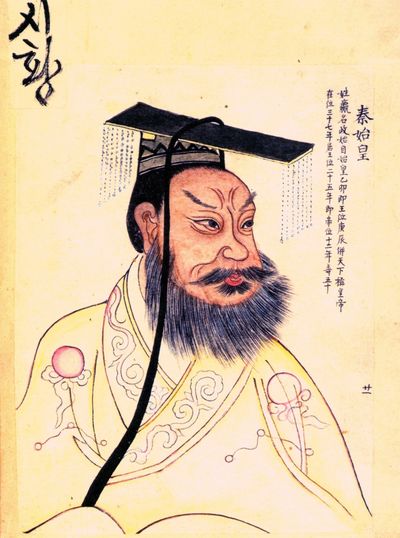
Qin Shi Huang
Emperor · Ancient
83.5Total
Basic Information
Born
1478
-259
Died
1541
-210
Era
Medieval
Ancient
Nationality
Spain
China
Occupation
Explorer
Emperor
Civilization
Western
Eastern
Score Comparison
Military (10%)
65.0
80.0
Political (20%)
57.9
88.0
Influence (20%)
72.3
82.0
Legacy (20%)
66.9
85.0
Leadership (15%)
43.7
88.0
Strategy (15%)
41.3
75.0
TOTAL
58.7
83.5
Rankings
🥇
Qin Shi HuangLeader
Mil: 80.0Pol: 88.0Inf: 82.0
83.5
🥈
Francisco Pizarro
Mil: 65.0Pol: 57.9Inf: 72.3
58.7
+24.8 behind
How This Comparison Works
Algorithm
Each figure is scored on 6 dimensions (0—100 scale) based on structured historical data: Military (10%), Political (20%), Influence (20%), Legacy (20%), Leadership (15%), Strategy (15%). The weighted total produces the final ranking.
Data Sources
Scores are computed from structured sub-indicators in the database. Scale factors adjust for era (Ancient ×0.85, Modern ×1.0) and civilization size (Eastern ×1.05, Other ×0.80) to account for differences in population and military scale.
Maximum 3 Figures
Comparisons are limited to 2—3 figures to ensure readability and statistical meaningfulness.
Error Margins
±5 points per dimension — Sub-scores are derived from historical records with inherent uncertainty. Two figures within 5 points on a dimension should be considered roughly equivalent in that area.
Total Score Accuracy
±3 points overall — The weighted combination of 6 dimensions produces a total score with approximately ±3 points of uncertainty. Differences of less than 3 points are not statistically significant— the figures are effectively tied.
Known Limitations
- Historical records are incomplete and uneven across civilizations
- Figures from oral-tradition societies may be underrepresented
- Occupation labels can misclassify multi-role figures
- Scores measure capability and impact, not moral character
- Quantitative scoring is a comparison tool, not absolute truth
Capability Radar
Military (10%) — Battles & Warfare
Battles
85
85
Win Rate
80
90
Expansion
90
90
Political (20%) — Governance & Reform
Reform
40
95
Diplomacy
55
75
Economy
50
90
Influence (20%) — Cultural & Global Reach
Cultural
70
95
Global
80
85
Legacy (20%) — Historical Impact
Historical
85
95
Longevity
75
95
Leadership (15%) — Power & Stability
Tenure
60
70
Stability
20
65
Strategy (15%) — Tactics & Innovation
Strategy
85
85
Tactics
75
80
Reform
30
95
Analysis will be generated on first visit.
Scores and timeline are available below. The page will refresh automatically when ready.
Francisco Pizarro — Complete Timeline
1532 AD
Conquest of the Inca EmpireWar
Pizarro led a small Spanish force into the Inca Empire, capturing Emperor Atahualpa at Cajamarca in 1532. Despite being vastly outnumbered, the Spanish used superior weaponry and tactics to defeat the Incas, leading to the collapse of the empire and Spanish control over Peru.
Spanish ConquestInca EmpireColonialism
Impact: globaldestructive
1533 AD
Execution of AtahualpaPolitical Action◆ Major
After receiving a ransom of gold and silver, Pizarro ordered the execution of Inca Emperor Atahualpa by garrote. This act eliminated the central leadership of the Inca state, facilitating Spanish domination and the imposition of colonial rule over the Andes region.
Inca EmpireExecutionColonial Violence
Impact: regionaldestructive
1535 AD
Founding of LimaPolitical Action◆ Major
Pizarro founded the city of Lima on the Peruvian coast, designating it as the capital of the Spanish Viceroyalty of Peru. Lima became the political, economic, and cultural center of Spanish South America, a status it retained for centuries.
City FoundingColonial AdministrationPeru
Impact: regionalconstructive
1541 AD
Assassination of Francisco PizarroPolitical Action◆ Major
Pizarro was assassinated in his palace in Lima by a group of rival Spanish conquistadors loyal to Diego de Almagro II. The murder resulted from factional conflicts among the conquerors over control of Peru and its wealth, ending Pizarro's rule.
AssassinationConquistador ConflictPeru
Impact: regionaltragic
Qin Shi Huang — Complete Timeline
246 BC
Construction of the Mausoleum and Terracotta ArmyOther◆ Major
Qin Shi Huang commissioned a vast mausoleum complex near Xi'an, guarded by thousands of life-sized terracotta soldiers, horses, and chariots. The project employed hundreds of thousands of workers and reflected his obsession with immortality and imperial power.
Impact: global
230 BC
Conquest of the Six Warring StatesWar
From 230 to 221 BCE, Ying Zheng led the Qin state in a series of campaigns that conquered the Han, Zhao, Wei, Chu, Yan, and Qi states. This unified China under a single ruler for the first time, ending the Warring States period.
Impact: global
221 BC
Standardization of Writing, Currency, and MeasurementsReform◆ Major
Qin Shi Huang ordered the standardization of Chinese script, currency, and weights and measures across the unified empire. This facilitated administration, trade, and cultural integration, laying a foundation for future dynasties.
Impact: globalconstructive
Proclamation of the Qin DynastyPolitical Action
After conquering the last independent state, Ying Zheng declared himself Shi Huangdi (First Emperor), founding the Qin Dynasty. He adopted a new title to signify his supreme authority and initiated centralized imperial rule.
Impact: global
214 BC
Initiation of the Great Wall ConstructionOther◆ Major
Qin Shi Huang ordered the connection and extension of existing northern fortifications to create a unified defensive wall against nomadic Xiongnu raids. This project involved massive conscripted labor and became the precursor to the later Great Wall.
Impact: regional
213 BC
Burning of Books and Burying of ScholarsPolitical Action◆ Major
On the advice of Li Si, Qin Shi Huang ordered the burning of historical records and philosophical texts not aligned with Legalist doctrine. He also had 460 Confucian scholars buried alive to suppress dissent and consolidate ideological control.
Impact: nationaldestructive
Similar Comparisons
Comments & Discussion
ConquistadorKing6/17/2026
Pizarro’s “afternoon” empire is a myth of European superiority, but the reality is that he got lucky with smallpox and civil war. The Inca had just survived a brutal succession war between Huáscar and Atahualpa, which killed hundreds of thousands and left the empire fragmented. Qin Shi Huang unified China after a century of constant warfare, and he faced no plague that did his work for him. Pizarro walked into a house already on fire; Qin rebuilt the house from the foundation up. That’s the diff
铁血史官6/17/2026
拿皮萨罗和秦始皇比,根本就是关公战秦琼。皮萨罗靠的是168个亡命徒和天花病毒,本质上是个强盗头子搞了次成功的抢劫。秦始皇呢?他用十年灭六国,每一场战役都是数十万大军对垒,长平之战坑杀四十万降卒虽说残忍,但那叫战略威慑。皮萨罗一辈子没指挥过超过一千人的正规战,跟千古一帝比统一,他也配?
PikeAndSkeptic6/17/2026
The numbers here are pure fantasy. That 40,000 Inca army figure comes from Spanish chroniclers who inflated everything to make their victory seem more miraculous. Inca logistics couldn't support that many troops in Cajamarca's high-altitude terrain. Meanwhile, we actually have bamboo slips from Qin records showing precise troop counts—Qin Shi Huang's unification involved millions of mobilized peasants over years. Pizarro defeated a chieftain with a few hundred retainers; Qin crushed professional
变法遗民6/17/2026
别被“大秦帝国”的电视剧骗了。嬴政统一靠的不是什么雄才大略,而是商鞅变法的制度红利。秦国的军功爵位制让底层士兵砍一颗人头就能升级,这才是六国打不过秦的原因。皮萨罗虽然残暴,但西班牙有火枪和马匹的技术代差,这跟商鞅变法的制度代差是一个道理。两位本质都是吃到了文明优势的红利,谁也别吹自己多天才。
ClassicsContrarian6/17/2026
What fascinates me is the contrast in legacy infrastructure. Qin Shi Huang connected 5,000 kilometers of existing walls into the Great Wall, standardized writing and axle widths across China—things that lasted millennia. Pizarro's greatest structural achievement was founding Lima, which later got destroyed by an earthquake. His governance model? Encomienda, a system of feudal exploitation that collapsed into civil wars within a generation. Qin built an empire that outlasted his dynasty; Pizarro