Loading...
Analysis will be generated on first visit.
Scores and timeline are available below. The page will refresh automatically when ready.
Francisco Pizarro vs Napoleon Bonaparte
Napoleon Bonaparte leads by 23.7 pts · 2 figures compared
…

Francisco Pizarro
Explorer · Medieval
58.7Total
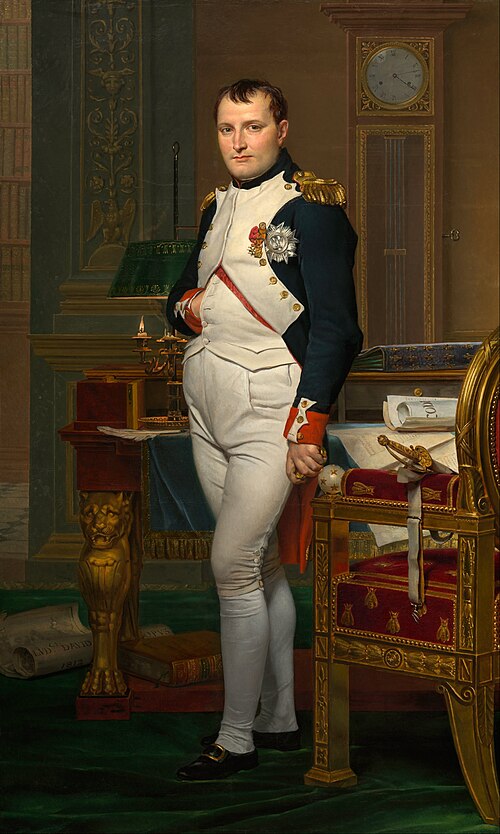
Napoleon Bonaparte
General · Modern
82.4Total
Basic Information
Born
1478
1769
Died
1541
1821
Era
Medieval
Modern
Nationality
Spain
France
Occupation
Explorer
General
Civilization
Western
Western
Score Comparison
Military (10%)
65.0
94.0
Political (20%)
57.9
75.0
Influence (20%)
72.3
82.0
Legacy (20%)
66.9
78.0
Leadership (15%)
43.7
80.0
Strategy (15%)
41.3
93.0
TOTAL
58.7
82.4
Rankings
🥇
Napoleon BonaparteLeader
Mil: 94.0Pol: 75.0Inf: 82.0
82.4
🥈
Francisco Pizarro
Mil: 65.0Pol: 57.9Inf: 72.3
58.7
+23.7 behind
How This Comparison Works
Algorithm
Each figure is scored on 6 dimensions (0—100 scale) based on structured historical data: Military (10%), Political (20%), Influence (20%), Legacy (20%), Leadership (15%), Strategy (15%). The weighted total produces the final ranking.
Data Sources
Scores are computed from structured sub-indicators in the database. Scale factors adjust for era (Ancient ×0.85, Modern ×1.0) and civilization size (Eastern ×1.05, Other ×0.80) to account for differences in population and military scale.
Maximum 3 Figures
Comparisons are limited to 2—3 figures to ensure readability and statistical meaningfulness.
Error Margins
±5 points per dimension — Sub-scores are derived from historical records with inherent uncertainty. Two figures within 5 points on a dimension should be considered roughly equivalent in that area.
Total Score Accuracy
±3 points overall — The weighted combination of 6 dimensions produces a total score with approximately ±3 points of uncertainty. Differences of less than 3 points are not statistically significant— the figures are effectively tied.
Known Limitations
- Historical records are incomplete and uneven across civilizations
- Figures from oral-tradition societies may be underrepresented
- Occupation labels can misclassify multi-role figures
- Scores measure capability and impact, not moral character
- Quantitative scoring is a comparison tool, not absolute truth
Capability Radar
Military (10%) — Battles & Warfare
Battles
85
95
Win Rate
80
90
Expansion
90
95
Political (20%) — Governance & Reform
Reform
40
95
Diplomacy
55
80
Economy
50
85
Influence (20%) — Cultural & Global Reach
Cultural
70
85
Global
80
90
Legacy (20%) — Historical Impact
Historical
85
95
Longevity
75
90
Leadership (15%) — Power & Stability
Tenure
60
85
Stability
20
70
Strategy (15%) — Tactics & Innovation
Strategy
85
95
Tactics
75
98
Reform
30
92
Analysis will be generated on first visit.
Scores and timeline are available below. The page will refresh automatically when ready.
Francisco Pizarro — Complete Timeline
1532 AD
Conquest of the Inca EmpireWar
Pizarro led a small Spanish force into the Inca Empire, capturing Emperor Atahualpa at Cajamarca in 1532. Despite being vastly outnumbered, the Spanish used superior weaponry and tactics to defeat the Incas, leading to the collapse of the empire and Spanish control over Peru.
Spanish ConquestInca EmpireColonialism
Impact: globaldestructive
1533 AD
Execution of AtahualpaPolitical Action◆ Major
After receiving a ransom of gold and silver, Pizarro ordered the execution of Inca Emperor Atahualpa by garrote. This act eliminated the central leadership of the Inca state, facilitating Spanish domination and the imposition of colonial rule over the Andes region.
Inca EmpireExecutionColonial Violence
Impact: regionaldestructive
1535 AD
Founding of LimaPolitical Action◆ Major
Pizarro founded the city of Lima on the Peruvian coast, designating it as the capital of the Spanish Viceroyalty of Peru. Lima became the political, economic, and cultural center of Spanish South America, a status it retained for centuries.
City FoundingColonial AdministrationPeru
Impact: regionalconstructive
1541 AD
Assassination of Francisco PizarroPolitical Action◆ Major
Pizarro was assassinated in his palace in Lima by a group of rival Spanish conquistadors loyal to Diego de Almagro II. The murder resulted from factional conflicts among the conquerors over control of Peru and its wealth, ending Pizarro's rule.
AssassinationConquistador ConflictPeru
Impact: regionaltragic
Similar Comparisons
Comments & Discussion
No comments yet. Be the first to share your thoughts!