Loading...
Analysis will be generated on first visit.
Scores and timeline are available below. The page will refresh automatically when ready.
Francisco Morazan vs Zhao Kuangyin
Zhao Kuangyin leads by 5.7 pts · 2 figures compared
…
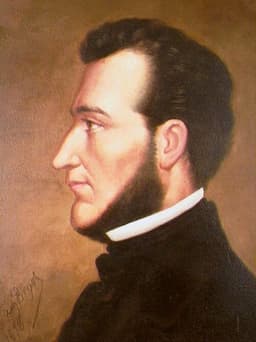
Francisco Morazan
General · Modern
69.8Total
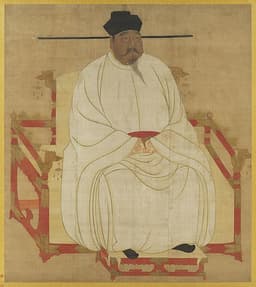
Zhao Kuangyin
Emperor · Medieval
75.5Total
Basic Information
Born
1792
927
Died
1842
976
Era
Modern
Medieval
Nationality
Honduras
China
Occupation
General
Emperor
Civilization
Western
Eastern
Score Comparison
Military (10%)
65.4
74.6
Political (20%)
72.0
75.9
Influence (20%)
76.2
74.9
Legacy (20%)
68.9
75.1
Leadership (15%)
76.7
82.3
Strategy (15%)
55.6
69.8
TOTAL
69.8
75.5
Rankings
🥇
Zhao KuangyinLeader
Mil: 74.6Pol: 75.9Inf: 74.9
75.5
🥈
Francisco Morazan
Mil: 65.4Pol: 72.0Inf: 76.2
69.8
+5.7 behind
How This Comparison Works
Algorithm
Each figure is scored on 6 dimensions (0—100 scale) based on structured historical data: Military (10%), Political (20%), Influence (20%), Legacy (20%), Leadership (15%), Strategy (15%). The weighted total produces the final ranking.
Data Sources
Scores are computed from structured sub-indicators in the database. Scale factors adjust for era (Ancient ×0.85, Modern ×1.0) and civilization size (Eastern ×1.05, Other ×0.80) to account for differences in population and military scale.
Maximum 3 Figures
Comparisons are limited to 2—3 figures to ensure readability and statistical meaningfulness.
Error Margins
±5 points per dimension — Sub-scores are derived from historical records with inherent uncertainty. Two figures within 5 points on a dimension should be considered roughly equivalent in that area.
Total Score Accuracy
±3 points overall — The weighted combination of 6 dimensions produces a total score with approximately ±3 points of uncertainty. Differences of less than 3 points are not statistically significant— the figures are effectively tied.
Known Limitations
- Historical records are incomplete and uneven across civilizations
- Figures from oral-tradition societies may be underrepresented
- Occupation labels can misclassify multi-role figures
- Scores measure capability and impact, not moral character
- Quantitative scoring is a comparison tool, not absolute truth
Capability Radar
Military (10%) — Battles & Warfare
Battles
55
75
Win Rate
60
85
Expansion
40
75
Political (20%) — Governance & Reform
Reform
70
90
Diplomacy
45
85
Economy
50
80
Influence (20%) — Cultural & Global Reach
Cultural
45
70
Global
35
60
Legacy (20%) — Historical Impact
Historical
50
80
Longevity
40
75
Leadership (15%) — Power & Stability
Tenure
55
65
Stability
30
85
Strategy (15%) — Tactics & Innovation
Strategy
55
80
Tactics
50
70
Reform
45
90
Analysis will be generated on first visit.
Scores and timeline are available below. The page will refresh automatically when ready.
Francisco Morazan — Complete Timeline
1824 AD
Abolition of slavery in Central AmericaReform◆ Major
As a key leader in the liberal movement, Moraz
AbolitionSlaveryLiberal Reform
Impact: regionalprogressive
1827 AD
Battle of La TrinidadWar◆ Major
Morazán led a liberal army to victory against conservative forces at La Trinidad, Honduras. This battle was a key turning point in the Central American civil war, allowing Morazán to consolidate power and eventually become president of the federation.
BattleLiberal VictoryCivil War
Impact: regional
1830 AD
Presidency of the Federal Republic of Central AmericaPolitical Action
Morazán was elected president of the Federal Republic of Central America, a union of Guatemala, El Salvador, Honduras, Nicaragua, and Costa Rica. He pursued liberal reforms including separation of church and state, free trade, and land reform, facing opposition from conservatives.
Federal RepublicLiberal ReformsCentral America
Impact: regionalconstructive
1842 AD
Execution by firing squadPolitical Action
After a failed attempt to restore the Federal Republic, Moraz
ExecutionEnd of FederationLiberal Defeat
Impact: regionaltragic
Zhao Kuangyin — Complete Timeline
960 AD
Founded Song dynastyPolitical Action
Zhao Kuangyin, a general of Later Zhou, was proclaimed emperor by his troops at Chenqiao. He established the Song dynasty, ending the Five Dynasties period and beginning a new era of Chinese history.
Song dynastyFoundingChenqiao
Impact: globalconstructive
961 AD
Removed military power from generalsPolitical Action◆ Major
Zhao Kuangyin invited senior generals to a banquet and persuaded them to retire peacefully. This 'removal of military power over wine' prevented military coups and centralized control.
Song dynastyMilitary reformCentralization
Impact: nationalconstructive
963 AD
Unified southern ChinaWar◆ Major
Zhao Kuangyin launched campaigns to conquer the southern kingdoms, including Jingnan, Later Shu, and Southern Tang. By his death, most of China was reunified under Song rule.
Song unificationConquestSouthern kingdoms
Impact: national
Similar Comparisons
Comments & Discussion
赤焰书生6/16/2026
说穿了,这两个人根本不在一个量级。赵匡胤杯酒释兵权,靠的是深厚的历史积淀和政治手腕;莫拉桑呢?拿着几本法国启蒙书,就想把五个烂泥扶不上墙的邦捏一起,不掉脑袋才是怪事。数据会说话:赵匡胤平五代十国花了十六年;莫拉桑的联邦连十年都撑不住。
BodhiBlitz586/16/2026
Morazán was the better man, period. Zhao Kuangyin was a pragmatic warlord who bribed his generals into retirement with cushy estates. That's not peaceful—that's buying loyalty with stolen land. Meanwhile Morazán actually tried to build something real: free press, secular schools, land reform. His Central American Federation had 14 states at one point, man. You can't fake that kind of organic vision.
FistOfTheDragon6/16/2026
军事史角度看,赵匡胤才是真正理解了权力本质的人。他懂得"功高震主"不是道德问题,是结构性问题。他重组禁军枢密院,把兵权和调兵权分开,这在整个中世纪世界都是前瞻性改革。莫拉桑呢?带着几千人打游击,靠个人魅力维持联邦,那叫什么领袖?那是军阀附庸文人,活该被枪毙。
LibertyOrBust6/16/2026
Here's the cold data: Zhao's Song dynasty lasted 319 years. Morazán's Central American Federation lasted 18. That's not a debatable score—that's market verdict. Morazán's liberal reforms were beautiful on paper but split his base; Zhao's Confucian compromise held because he understood the human animal doesn't want abstract unity—it wants stable grain prices. One guy read Machiavelli before Machiavelli wrote, the other died with Rousseau under his arm.