Loading...
Analysis will be generated on first visit.
Scores and timeline are available below. The page will refresh automatically when ready.
Ferdinand Magellan vs Qin Shi Huang
Qin Shi Huang leads by 32.0 pts · 2 figures compared
…

Ferdinand Magellan
Explorer · Medieval
51.5Total
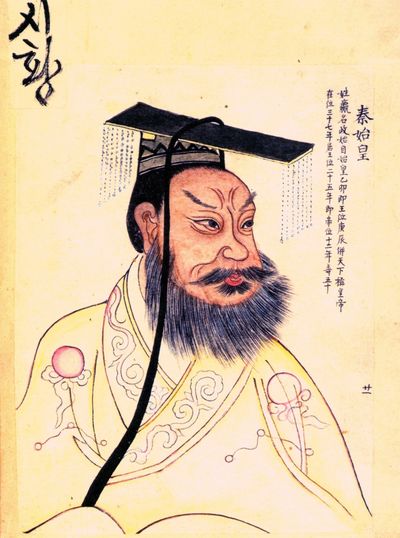
Qin Shi Huang
Emperor · Ancient
83.5Total
Basic Information
Born
1480
-259
Died
1521
-210
Era
Medieval
Ancient
Nationality
Portugal
China
Occupation
Explorer
Emperor
Civilization
Western
Eastern
Score Comparison
Military (10%)
56.7
80.0
Political (20%)
27.8
88.0
Influence (20%)
73.6
82.0
Legacy (20%)
69.7
85.0
Leadership (15%)
22.2
88.0
Strategy (15%)
54.9
75.0
TOTAL
51.5
83.5
Rankings
🥇
Qin Shi HuangLeader
Mil: 80.0Pol: 88.0Inf: 82.0
83.5
🥈
Ferdinand Magellan
Mil: 56.7Pol: 27.8Inf: 73.6
51.5
+32.0 behind
How This Comparison Works
Algorithm
Each figure is scored on 6 dimensions (0—100 scale) based on structured historical data: Military (10%), Political (20%), Influence (20%), Legacy (20%), Leadership (15%), Strategy (15%). The weighted total produces the final ranking.
Data Sources
Scores are computed from structured sub-indicators in the database. Scale factors adjust for era (Ancient ×0.85, Modern ×1.0) and civilization size (Eastern ×1.05, Other ×0.80) to account for differences in population and military scale.
Maximum 3 Figures
Comparisons are limited to 2—3 figures to ensure readability and statistical meaningfulness.
Error Margins
±5 points per dimension — Sub-scores are derived from historical records with inherent uncertainty. Two figures within 5 points on a dimension should be considered roughly equivalent in that area.
Total Score Accuracy
±3 points overall — The weighted combination of 6 dimensions produces a total score with approximately ±3 points of uncertainty. Differences of less than 3 points are not statistically significant— the figures are effectively tied.
Known Limitations
- Historical records are incomplete and uneven across civilizations
- Figures from oral-tradition societies may be underrepresented
- Occupation labels can misclassify multi-role figures
- Scores measure capability and impact, not moral character
- Quantitative scoring is a comparison tool, not absolute truth
Capability Radar
Military (10%) — Battles & Warfare
Battles
25
85
Win Rate
30
90
Expansion
55
90
Political (20%) — Governance & Reform
Reform
10
95
Diplomacy
35
75
Economy
15
90
Influence (20%) — Cultural & Global Reach
Cultural
65
95
Global
70
85
Legacy (20%) — Historical Impact
Historical
75
95
Longevity
70
95
Leadership (15%) — Power & Stability
Tenure
20
70
Stability
10
65
Strategy (15%) — Tactics & Innovation
Strategy
60
85
Tactics
40
80
Reform
10
95
Analysis will be generated on first visit.
Scores and timeline are available below. The page will refresh automatically when ready.
Ferdinand Magellan — Complete Timeline
1520 AD
Discovery of the Strait of MagellanOther
Magellan's fleet discovered a navigable passage at the southern tip of South America, now named the Strait of Magellan. The passage connected the Atlantic and Pacific Oceans, enabling the first European crossing of the Pacific.
ExplorationNavigationDiscovery
Impact: global
Crossing of the Pacific OceanOther◆ Major
After entering the Pacific, Magellan's fleet sailed for 98 days without sighting land, covering over 12,000 miles. The crew suffered severe scurvy and starvation, but the crossing proved the vastness of the Pacific and the feasibility of westward navigation to Asia.
ExplorationNavigationHardship
Impact: globaltragic
1521 AD
Battle of MactanWar◆ Major
Magellan intervened in a local conflict on the island of Mactan in the Philippines. He led a small force against the warriors of Lapu-Lapu and was killed in the battle. His death ended his personal command of the circumnavigation expedition.
BattleDeathExploration
Impact: regionaltragic
1522 AD
Completion of the First CircumnavigationOther
The Victoria, commanded by Juan Sebasti
ExplorationNavigationAchievement
Impact: globalconstructive
Qin Shi Huang — Complete Timeline
246 BC
Construction of the Mausoleum and Terracotta ArmyOther◆ Major
Qin Shi Huang commissioned a vast mausoleum complex near Xi'an, guarded by thousands of life-sized terracotta soldiers, horses, and chariots. The project employed hundreds of thousands of workers and reflected his obsession with immortality and imperial power.
Impact: global
230 BC
Conquest of the Six Warring StatesWar
From 230 to 221 BCE, Ying Zheng led the Qin state in a series of campaigns that conquered the Han, Zhao, Wei, Chu, Yan, and Qi states. This unified China under a single ruler for the first time, ending the Warring States period.
Impact: global
221 BC
Standardization of Writing, Currency, and MeasurementsReform◆ Major
Qin Shi Huang ordered the standardization of Chinese script, currency, and weights and measures across the unified empire. This facilitated administration, trade, and cultural integration, laying a foundation for future dynasties.
Impact: globalconstructive
Proclamation of the Qin DynastyPolitical Action
After conquering the last independent state, Ying Zheng declared himself Shi Huangdi (First Emperor), founding the Qin Dynasty. He adopted a new title to signify his supreme authority and initiated centralized imperial rule.
Impact: global
214 BC
Initiation of the Great Wall ConstructionOther◆ Major
Qin Shi Huang ordered the connection and extension of existing northern fortifications to create a unified defensive wall against nomadic Xiongnu raids. This project involved massive conscripted labor and became the precursor to the later Great Wall.
Impact: regional
213 BC
Burning of Books and Burying of ScholarsPolitical Action◆ Major
On the advice of Li Si, Qin Shi Huang ordered the burning of historical records and philosophical texts not aligned with Legalist doctrine. He also had 460 Confucian scholars buried alive to suppress dissent and consolidate ideological control.
Impact: nationaldestructive
Similar Comparisons
Comments & Discussion
LegionaryLens6/17/2026
Comparing Magellan to Qin Shi Huang is like comparing a marathon runner to a mountain builder. Magellan’s voyage was a logistical nightmare—239 men started, only 18 returned on the *Victoria*. That’s a 92% casualty rate. Qin’s Terracotta Army, built with 700,000 laborers, shows centralized power that dwarfs any maritime exploit. Magellan died in a skirmish on Mactan; Qin died from mercury pills. One was a risk-taker, the other a micromanager of immortality. Give me the emperor who standardized a