Loading...
Analysis will be generated on first visit.
Scores and timeline are available below. The page will refresh automatically when ready.
Ferdinand I of Aragon vs Qin Shi Huang
Qin Shi Huang leads by 21.7 pts · 2 figures compared
…
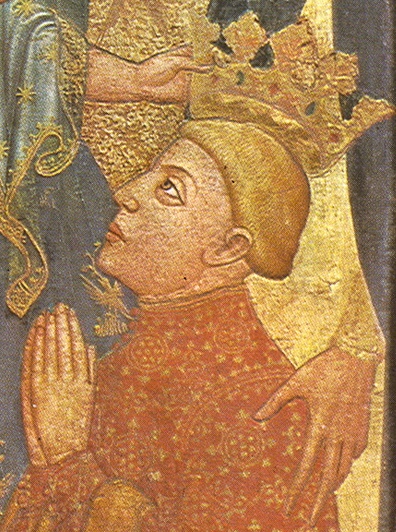
Ferdinand I of Aragon
Emperor · Medieval
61.8Total
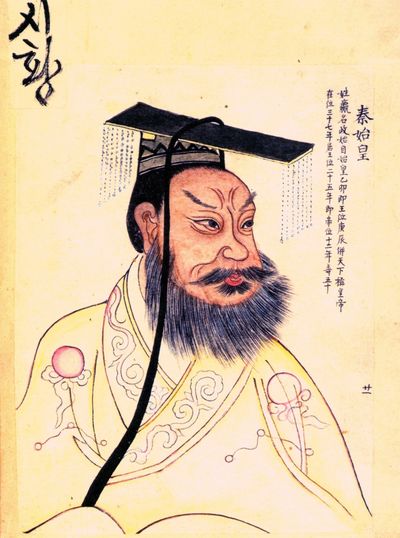
Qin Shi Huang
Emperor · Ancient
83.5Total
Basic Information
Born
1380
-259
Died
1416
-210
Era
Medieval
Ancient
Nationality
Aragon
China
Occupation
Emperor
Emperor
Civilization
Western
Eastern
Score Comparison
Military (10%)
34.6
80.0
Political (20%)
54.2
88.0
Influence (20%)
74.2
82.0
Legacy (20%)
59.5
85.0
Leadership (15%)
77.4
88.0
Strategy (15%)
61.1
75.0
TOTAL
61.8
83.5
Rankings
🥇
Qin Shi HuangLeader
Mil: 80.0Pol: 88.0Inf: 82.0
83.5
🥈
Ferdinand I of Aragon
Mil: 34.6Pol: 54.2Inf: 74.2
61.8
+21.7 behind
How This Comparison Works
Algorithm
Each figure is scored on 6 dimensions (0—100 scale) based on structured historical data: Military (10%), Political (20%), Influence (20%), Legacy (20%), Leadership (15%), Strategy (15%). The weighted total produces the final ranking.
Data Sources
Scores are computed from structured sub-indicators in the database. Scale factors adjust for era (Ancient ×0.85, Modern ×1.0) and civilization size (Eastern ×1.05, Other ×0.80) to account for differences in population and military scale.
Maximum 3 Figures
Comparisons are limited to 2—3 figures to ensure readability and statistical meaningfulness.
Error Margins
±5 points per dimension — Sub-scores are derived from historical records with inherent uncertainty. Two figures within 5 points on a dimension should be considered roughly equivalent in that area.
Total Score Accuracy
±3 points overall — The weighted combination of 6 dimensions produces a total score with approximately ±3 points of uncertainty. Differences of less than 3 points are not statistically significant— the figures are effectively tied.
Known Limitations
- Historical records are incomplete and uneven across civilizations
- Figures from oral-tradition societies may be underrepresented
- Occupation labels can misclassify multi-role figures
- Scores measure capability and impact, not moral character
- Quantitative scoring is a comparison tool, not absolute truth
Capability Radar
Military (10%) — Battles & Warfare
Battles
40
85
Win Rate
45
90
Expansion
50
90
Political (20%) — Governance & Reform
Reform
45
95
Diplomacy
60
75
Economy
50
90
Influence (20%) — Cultural & Global Reach
Cultural
35
95
Global
30
85
Legacy (20%) — Historical Impact
Historical
40
95
Longevity
30
95
Leadership (15%) — Power & Stability
Tenure
55
70
Stability
50
65
Strategy (15%) — Tactics & Innovation
Strategy
40
85
Tactics
35
80
Reform
30
95
Analysis will be generated on first visit.
Scores and timeline are available below. The page will refresh automatically when ready.
Ferdinand I of Aragon — Complete Timeline
1412 AD
Compromise of CaspePolitical Action
Ferdinand I was elected King of Aragon by the Compromise of Caspe, a commission of nine representatives from Aragon, Catalonia, and Valencia. This resolved the succession crisis following the death of Martin I without a direct heir, bringing the Trastamara dynasty to the Aragonese throne.
Succession crisisTrastamara dynasty
Impact: regionalconstructive
1414 AD
Conquest of SardiniaWar◆ Major
Ferdinand I launched a military campaign to subdue the rebellious Sardinian nobles who had resisted Aragonese rule. The campaign successfully reasserted Aragonese control over the island, consolidating the Crown of Aragon's Mediterranean possessions.
Mediterranean expansionSardinia
Impact: regional
1415 AD
Reform of the Aragonese administrationReform
Ferdinand I implemented administrative reforms in the Crown of Aragon, including the reorganization of the royal council and the standardization of tax collection. These reforms strengthened royal authority and improved the efficiency of governance across the diverse territories of Aragon.
Administrative reformRoyal authority
Impact: nationalconstructive
Qin Shi Huang — Complete Timeline
246 BC
Construction of the Mausoleum and Terracotta ArmyOther◆ Major
Qin Shi Huang commissioned a vast mausoleum complex near Xi'an, guarded by thousands of life-sized terracotta soldiers, horses, and chariots. The project employed hundreds of thousands of workers and reflected his obsession with immortality and imperial power.
Impact: global
230 BC
Conquest of the Six Warring StatesWar
From 230 to 221 BCE, Ying Zheng led the Qin state in a series of campaigns that conquered the Han, Zhao, Wei, Chu, Yan, and Qi states. This unified China under a single ruler for the first time, ending the Warring States period.
Impact: global
221 BC
Standardization of Writing, Currency, and MeasurementsReform◆ Major
Qin Shi Huang ordered the standardization of Chinese script, currency, and weights and measures across the unified empire. This facilitated administration, trade, and cultural integration, laying a foundation for future dynasties.
Impact: globalconstructive
Proclamation of the Qin DynastyPolitical Action
After conquering the last independent state, Ying Zheng declared himself Shi Huangdi (First Emperor), founding the Qin Dynasty. He adopted a new title to signify his supreme authority and initiated centralized imperial rule.
Impact: global
214 BC
Initiation of the Great Wall ConstructionOther◆ Major
Qin Shi Huang ordered the connection and extension of existing northern fortifications to create a unified defensive wall against nomadic Xiongnu raids. This project involved massive conscripted labor and became the precursor to the later Great Wall.
Impact: regional
213 BC
Burning of Books and Burying of ScholarsPolitical Action◆ Major
On the advice of Li Si, Qin Shi Huang ordered the burning of historical records and philosophical texts not aligned with Legalist doctrine. He also had 460 Confucian scholars buried alive to suppress dissent and consolidate ideological control.
Impact: nationaldestructive
Similar Comparisons
Comments & Discussion
秦长城督造官6/17/2026
Military historians, stop romanticizing Qin Shi Huang's "Genghis Khan of the Great Wall." The First Emperor didn't conquer shit through sheer will—he had a 400-year head start on Legalist reforms, standardized bronze crossbow triggers, and a logistics system that could feed 300,000 troops. Meanwhile, Ferdinand I won his crown through a messy two-year election. That’s not weakness; that’s realpolitik. Qin inherited a war machine; Ferdinand earned his throne by out-negotiating nine competing claim
铁血工程队6/17/2026
法家粉丝最爱吹什么“书同文车同轨”,但秦始皇把七国货币融成铜水铸成十二金人时,可没问想保留刀币的齐国人愿不愿意。费迪南德一世在卡斯佩妥协案里,至少让阿拉贡贵族保留了投票权。专制的效率?没错。但靠屠城和连坐换来的统一,跟靠谈判桌达成的联合,根本是两个物种。前者是铁腕工程,后者是外科手术。
数字考古员6/17/2026
Here’s the data you won’t hear at the debate podium: Qin Shi Huang’s empire lasted exactly 15 years after his death. Ferdinand I’s Compromise of Caspe? It held the Crown of Aragon together for over 200 years. The “First Emperor” built a supernova—blazing glory, then blackout. Ferdinand built a battery—slow, steady power for generations. Who’s the better empire-builder? Ask the workers whose bones are still under the Great Wall, or ask the merchants who prospered under Aragonese trade law. I know
青铜血与银丝绸6/17/2026
拿兵马俑和费迪南德的加冕宴比就输了。秦始皇的军事遗产是每户三丁抽一的血税,费迪南德留给历史的是地中海商路和加泰罗尼亚宪章。法家那套“以刑去刑”听着多霸气啊,结果呢?焚书坑儒烧掉的不止是竹简,还有技术官僚的脑子。而阿拉贡的议会早就玩转了税收谈判和分权博弈。说穿了,秦始皇赢在肌肉,费迪南德赢在脑子。青铜终会锈蚀,丝绸贸易线却织了四百年。
流沙与绞肉机6/17/2026
Stop pretending these two are comparable leadership models. Qin Shi Huang was a siege commander who turned China into a concentration camp with bronze walls. His anti-feudal reforms? Actually just replacing hereditary warlords with bureaucratic executioners. Ferdinand I was a diplomatic spider who spun a web of compromises across Catalonia, Valencia, and the Mediterranean. One man crushed rivals with chariots and chain-gangs; the other outmaneuvered them with parchment and