Loading...
Analysis will be generated on first visit.
Scores and timeline are available below. The page will refresh automatically when ready.
Estevanico vs Qin Shi Huang
Qin Shi Huang leads by 38.9 pts · 2 figures compared
…

Estevanico
Explorer · Medieval
44.6Total
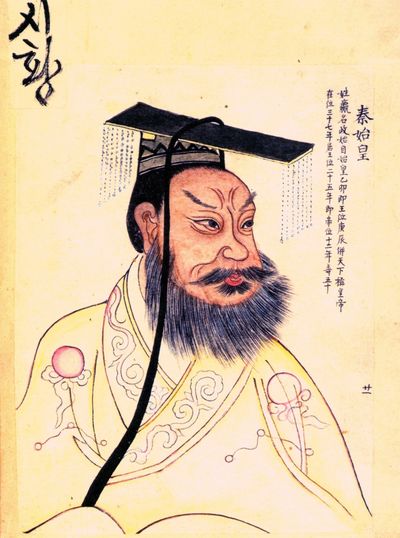
Qin Shi Huang
Emperor · Ancient
83.5Total
Basic Information
Born
1500
-259
Died
1539
-210
Era
Medieval
Ancient
Nationality
Morocco
China
Occupation
Explorer
Emperor
Civilization
Other
Eastern
Score Comparison
Military (10%)
24.3
80.0
Political (20%)
35.1
88.0
Influence (20%)
59.5
82.0
Legacy (20%)
50.3
85.0
Leadership (15%)
35.4
88.0
Strategy (15%)
52.6
75.0
TOTAL
44.6
83.5
Rankings
🥇
Qin Shi HuangLeader
Mil: 80.0Pol: 88.0Inf: 82.0
83.5
🥈
Estevanico
Mil: 24.3Pol: 35.1Inf: 59.5
44.6
+38.9 behind
How This Comparison Works
Algorithm
Each figure is scored on 6 dimensions (0—100 scale) based on structured historical data: Military (10%), Political (20%), Influence (20%), Legacy (20%), Leadership (15%), Strategy (15%). The weighted total produces the final ranking.
Data Sources
Scores are computed from structured sub-indicators in the database. Scale factors adjust for era (Ancient ×0.85, Modern ×1.0) and civilization size (Eastern ×1.05, Other ×0.80) to account for differences in population and military scale.
Maximum 3 Figures
Comparisons are limited to 2—3 figures to ensure readability and statistical meaningfulness.
Error Margins
±5 points per dimension — Sub-scores are derived from historical records with inherent uncertainty. Two figures within 5 points on a dimension should be considered roughly equivalent in that area.
Total Score Accuracy
±3 points overall — The weighted combination of 6 dimensions produces a total score with approximately ±3 points of uncertainty. Differences of less than 3 points are not statistically significant— the figures are effectively tied.
Known Limitations
- Historical records are incomplete and uneven across civilizations
- Figures from oral-tradition societies may be underrepresented
- Occupation labels can misclassify multi-role figures
- Scores measure capability and impact, not moral character
- Quantitative scoring is a comparison tool, not absolute truth
Capability Radar
Military (10%) — Battles & Warfare
Battles
17
85
Win Rate
16
90
Expansion
23
90
Political (20%) — Governance & Reform
Reform
0
95
Diplomacy
10
75
Economy
0
90
Influence (20%) — Cultural & Global Reach
Cultural
20
95
Global
10
85
Legacy (20%) — Historical Impact
Historical
30
95
Longevity
20
95
Leadership (15%) — Power & Stability
Tenure
0
70
Stability
0
65
Strategy (15%) — Tactics & Innovation
Strategy
26
85
Tactics
26
80
Reform
33
95
Analysis will be generated on first visit.
Scores and timeline are available below. The page will refresh automatically when ready.
Estevanico — Complete Timeline
1527 AD
Joined Narváez ExpeditionOther◆ Major
Estevanico, as a slave of Andr
ExplorationSpanish colonization
Impact: regional
1528 AD
Shipwrecked on Galveston IslandOther◆ Major
After the expedition's ships were wrecked near present-day Galveston Island, Texas, Estevanico was among the few survivors. The group was stranded and faced starvation, disease, and attacks by indigenous peoples.
ShipwreckSurvival
tragic
1534 AD
Became Healer and Trader Among Indigenous PeoplesOther
During his years of wandering across the American Southwest, Estevanico learned multiple indigenous languages and served as a healer and trader. He gained a reputation among various tribes, which facilitated the group's survival and movement.
Cultural exchangeSurvival
constructive
1536 AD
Reached Mexico City with Cabeza de VacaOther◆ Major
Estevanico, along with
ExplorationJourney
Impact: regionalconstructive
1539 AD
Led Fray Marcos de Niza Expedition to CíbolaOther◆ Major
Estevanico was sent ahead as a scout for the expedition led by Fray Marcos de Niza to find the legendary Seven Cities of C
ExplorationScouting
Impact: regional
Killed at HawikuhOther◆ Major
Estevanico was killed by Zuni warriors at the pueblo of Hawikuh (present-day New Mexico) after reportedly demanding turquoise and women. His death ended the expedition's advance and led to conflicting reports about the fate of C
DeathConflict
tragic
Qin Shi Huang — Complete Timeline
246 BC
Construction of the Mausoleum and Terracotta ArmyOther◆ Major
Qin Shi Huang commissioned a vast mausoleum complex near Xi'an, guarded by thousands of life-sized terracotta soldiers, horses, and chariots. The project employed hundreds of thousands of workers and reflected his obsession with immortality and imperial power.
Impact: global
230 BC
Conquest of the Six Warring StatesWar
From 230 to 221 BCE, Ying Zheng led the Qin state in a series of campaigns that conquered the Han, Zhao, Wei, Chu, Yan, and Qi states. This unified China under a single ruler for the first time, ending the Warring States period.
Impact: global
221 BC
Standardization of Writing, Currency, and MeasurementsReform◆ Major
Qin Shi Huang ordered the standardization of Chinese script, currency, and weights and measures across the unified empire. This facilitated administration, trade, and cultural integration, laying a foundation for future dynasties.
Impact: globalconstructive
Proclamation of the Qin DynastyPolitical Action
After conquering the last independent state, Ying Zheng declared himself Shi Huangdi (First Emperor), founding the Qin Dynasty. He adopted a new title to signify his supreme authority and initiated centralized imperial rule.
Impact: global
214 BC
Initiation of the Great Wall ConstructionOther◆ Major
Qin Shi Huang ordered the connection and extension of existing northern fortifications to create a unified defensive wall against nomadic Xiongnu raids. This project involved massive conscripted labor and became the precursor to the later Great Wall.
Impact: regional
213 BC
Burning of Books and Burying of ScholarsPolitical Action◆ Major
On the advice of Li Si, Qin Shi Huang ordered the burning of historical records and philosophical texts not aligned with Legalist doctrine. He also had 460 Confucian scholars buried alive to suppress dissent and consolidate ideological control.
Impact: nationaldestructive
Similar Comparisons
Comments & Discussion
QIN-STONE-THOMPER6/17/2026
You people are romanticizing a slaver. Estevanico wasn’t some mystic explorer—he was a tool of Spanish conquistadors, sent ahead because his masters deemed him expendable. Qin Shi Huang at least unified China, standardized writing, and built infrastructure that lasted millennia. One conquered chaos; the other died delivering a message for colonial parasites. Don’t equate a pawn with a king.
MERCURY-DREAMS6/17/2026
秦始皇上千兵马俑、水银江河,这不叫怕死,这叫终极自信。Estevanico一身羽毛就被当成神,结果死得连坟都没有,这对比简直像拿烛火比太阳。你告诉我,谁更能掌控命运?他不是输在肤色,是输在没权力做自己的史书。
HISTORY-SHADE6/17/2026
You’re missing the irony: both men were erased in their own ways. Qin’s tomb got mentioned in Sima Qian, but his empire crumbled within years. Estevanico’s body got scattered, yet he’s remembered as the first African in the American Southwest. One wanted to freeze time with clay soldiers, the other became a ghost in oral histories. Immortality doesn’t require a palace.
BELLS-AND-BRASS6/17/2026
别拿兵马俑压人。Estevanico凭一张嘴、一只葫芦,从佛罗里达走到新墨西哥,靠的是语言和医术,不是刀剑。他被人杀,是因为土著看出他不是神,但他早就活着走出了比秦始皇还大的地牢——现实。一个用奴隶建墓,一个用智慧逃命,谁更接近人?
GOURD-SHAKER6/17/2026
The real story is simpler: Estevanico was a survivor, not a builder. Qin’s legacy is measurable—roads, scripts, terracotta. Estevanico’s is a mystery, shrouded in myth and Spanish propaganda. I’ll take the concrete over the romantic. The man with the gourd didn’t shape history; he got shaped by it. That’s not immortality. That’s a footnote.