Loading...
Analysis will be generated on first visit.
Scores and timeline are available below. The page will refresh automatically when ready.
Ernest Shackleton vs Qin Shi Huang
Qin Shi Huang leads by 26.2 pts · 2 figures compared
…

Ernest Shackleton
Explorer · Modern
57.3Total
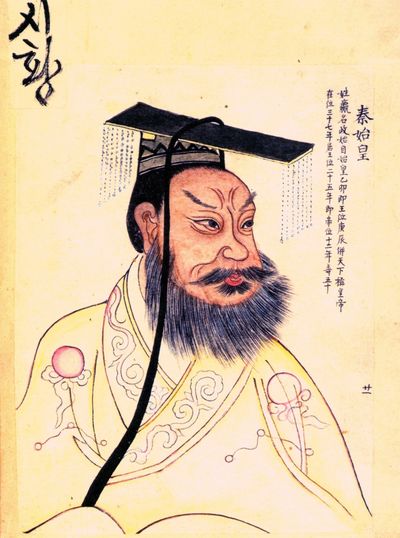
Qin Shi Huang
Emperor · Ancient
83.5Total
Basic Information
Born
1874
-259
Died
1922
-210
Era
Modern
Ancient
Nationality
United Kingdom
China
Occupation
Explorer
Emperor
Civilization
Western
Eastern
Score Comparison
Military (10%)
46.0
80.0
Political (20%)
46.4
88.0
Influence (20%)
73.7
82.0
Legacy (20%)
68.9
85.0
Leadership (15%)
39.9
88.0
Strategy (15%)
59.3
75.0
TOTAL
57.3
83.5
Rankings
🥇
Qin Shi HuangLeader
Mil: 80.0Pol: 88.0Inf: 82.0
83.5
🥈
Ernest Shackleton
Mil: 46.0Pol: 46.4Inf: 73.7
57.3
+26.2 behind
How This Comparison Works
Algorithm
Each figure is scored on 6 dimensions (0—100 scale) based on structured historical data: Military (10%), Political (20%), Influence (20%), Legacy (20%), Leadership (15%), Strategy (15%). The weighted total produces the final ranking.
Data Sources
Scores are computed from structured sub-indicators in the database. Scale factors adjust for era (Ancient ×0.85, Modern ×1.0) and civilization size (Eastern ×1.05, Other ×0.80) to account for differences in population and military scale.
Maximum 3 Figures
Comparisons are limited to 2—3 figures to ensure readability and statistical meaningfulness.
Error Margins
±5 points per dimension — Sub-scores are derived from historical records with inherent uncertainty. Two figures within 5 points on a dimension should be considered roughly equivalent in that area.
Total Score Accuracy
±3 points overall — The weighted combination of 6 dimensions produces a total score with approximately ±3 points of uncertainty. Differences of less than 3 points are not statistically significant— the figures are effectively tied.
Known Limitations
- Historical records are incomplete and uneven across civilizations
- Figures from oral-tradition societies may be underrepresented
- Occupation labels can misclassify multi-role figures
- Scores measure capability and impact, not moral character
- Quantitative scoring is a comparison tool, not absolute truth
Capability Radar
Military (10%) — Battles & Warfare
Battles
39
85
Win Rate
41
90
Expansion
46
90
Political (20%) — Governance & Reform
Reform
44
95
Diplomacy
47
75
Economy
47
90
Influence (20%) — Cultural & Global Reach
Cultural
65
95
Global
55
85
Legacy (20%) — Historical Impact
Historical
70
95
Longevity
60
95
Leadership (15%) — Power & Stability
Tenure
40
70
Stability
55
65
Strategy (15%) — Tactics & Innovation
Strategy
44
85
Tactics
49
80
Reform
51
95
Analysis will be generated on first visit.
Scores and timeline are available below. The page will refresh automatically when ready.
Ernest Shackleton — Complete Timeline
1914 AD
Imperial Trans-Antarctic Expedition departureOther◆ Major
Shackleton led the Imperial Trans-Antarctic Expedition with the goal of crossing Antarctica. The expedition departed from England on the ship Endurance, but the ship became trapped in pack ice in the Weddell Sea before reaching land.
ExplorationAntarcticExpedition
Impact: global
1915 AD
Loss of the EnduranceOther
The Endurance was crushed by pack ice and sank in the Weddell Sea. Shackleton and his crew of 27 were stranded on the ice, forcing them to camp on drifting floes for months before escaping in lifeboats.
ShipwreckSurvivalAntarctic
Impact: globaltragic
1916 AD
Open-boat journey to South GeorgiaOther
Shackleton and five crew members sailed the lifeboat James Caird 800 miles across the Southern Ocean from Elephant Island to South Georgia. The 16-day journey in stormy seas is considered one of the greatest small-boat voyages in history.
SurvivalNavigationLeadership
Impact: globalconstructive
Crossing of South GeorgiaOther◆ Major
After landing on South Georgia, Shackleton, Tom Crean, and Frank Worsley crossed the island's uncharted mountainous interior in 36 hours to reach a whaling station. This feat enabled the rescue of the remaining crew stranded on Elephant Island.
SurvivalRescueAntarctic
Impact: regionalconstructive
Rescue of the Endurance crewOther◆ Major
Shackleton organized a rescue mission from South Georgia, eventually reaching Elephant Island on a Chilean steamer. All 28 members of the expedition were rescued alive after more than 20 months stranded in the Antarctic.
RescueLeadershipSurvival
Impact: globalconstructive
Qin Shi Huang — Complete Timeline
246 BC
Construction of the Mausoleum and Terracotta ArmyOther◆ Major
Qin Shi Huang commissioned a vast mausoleum complex near Xi'an, guarded by thousands of life-sized terracotta soldiers, horses, and chariots. The project employed hundreds of thousands of workers and reflected his obsession with immortality and imperial power.
Impact: global
230 BC
Conquest of the Six Warring StatesWar
From 230 to 221 BCE, Ying Zheng led the Qin state in a series of campaigns that conquered the Han, Zhao, Wei, Chu, Yan, and Qi states. This unified China under a single ruler for the first time, ending the Warring States period.
Impact: global
221 BC
Standardization of Writing, Currency, and MeasurementsReform◆ Major
Qin Shi Huang ordered the standardization of Chinese script, currency, and weights and measures across the unified empire. This facilitated administration, trade, and cultural integration, laying a foundation for future dynasties.
Impact: globalconstructive
Proclamation of the Qin DynastyPolitical Action
After conquering the last independent state, Ying Zheng declared himself Shi Huangdi (First Emperor), founding the Qin Dynasty. He adopted a new title to signify his supreme authority and initiated centralized imperial rule.
Impact: global
214 BC
Initiation of the Great Wall ConstructionOther◆ Major
Qin Shi Huang ordered the connection and extension of existing northern fortifications to create a unified defensive wall against nomadic Xiongnu raids. This project involved massive conscripted labor and became the precursor to the later Great Wall.
Impact: regional
213 BC
Burning of Books and Burying of ScholarsPolitical Action◆ Major
On the advice of Li Si, Qin Shi Huang ordered the burning of historical records and philosophical texts not aligned with Legalist doctrine. He also had 460 Confucian scholars buried alive to suppress dissent and consolidate ideological control.
Impact: nationaldestructive
Similar Comparisons
Comments & Discussion
ShackletonSavage6/17/2026
Shackleton didn’t just save his men—he rewrote the rulebook on leadership. Qin Shi Huang built the Great Wall and standardized writing, but he did it by burying scholars alive and working peasants to death. One man inspired loyalty through sheer force of will; the other demanded it through terror. Two hundred years from now, Shackleton’s story will still inspire, while Qin’s legacy will always be stained by the smell of burning books. Easy call.
兵马俑吐槽6/17/2026
不是,拿一个探险家和始皇帝比?始皇帝统一六国、书同文车同轨,修长城打匈奴,那是实打实的千古一帝。沙克尔顿再厉害,也就是救了27个人,你让他来管管几百万人的帝国试试?没有秦始皇,中国可能就像欧洲一样碎成一地。别拿浪漫主义当历史,现实点行不行?
SouthGeorgiaSkeptic6/17/2026
People love the romanticized myth, but let’s fact-check: Shackleton’s Endurance expedition was a total failure in every measurable goal—they never touched Antarctica. Compare that to Qin Shi Huang, who actually conquered and unified a continent. The whole “great leader” narrative for Shackleton leans heavily on heroic failure being spun into virtue. Meanwhile, Qin’s standardization of weights, measures, and script had lasting functional impact for millennia. Survival is admirable. Empire-buildin
史书毒舌6/17/2026
沙克尔顿那套“宁死不弃一人”的故事,听着热血,但说到底就是一次失败的极地游。秦始皇呢?人家把战国七雄打成一家,废分封设郡县,法律传遍天下。你非要比谁更“伟大”,那就比实际结果:一个什么都没改变,一个改变了两千年。感动有什么用?历史要的是改变。
ClassicsChad6/17/2026
The real contrast isn’t about who was nicer—it’s about what kind of power lasts. Qin Shi Huang created a centralized bureaucracy that still echoes in China today. Shackleton’s legacy is a story of survival against nature, noble but ultimately personal. One shaped the political DNA of a civilization; the other shaped a great anecdote. Both are impressive, but we should stop pretending they belong in the same weight class.