Loading...
Analysis will be generated on first visit.
Scores and timeline are available below. The page will refresh automatically when ready.
Erna Solberg vs Napoleon Bonaparte
Napoleon Bonaparte leads by 19.1 pts · 2 figures compared
…

Erna Solberg
Politician · Modern
63.3Total
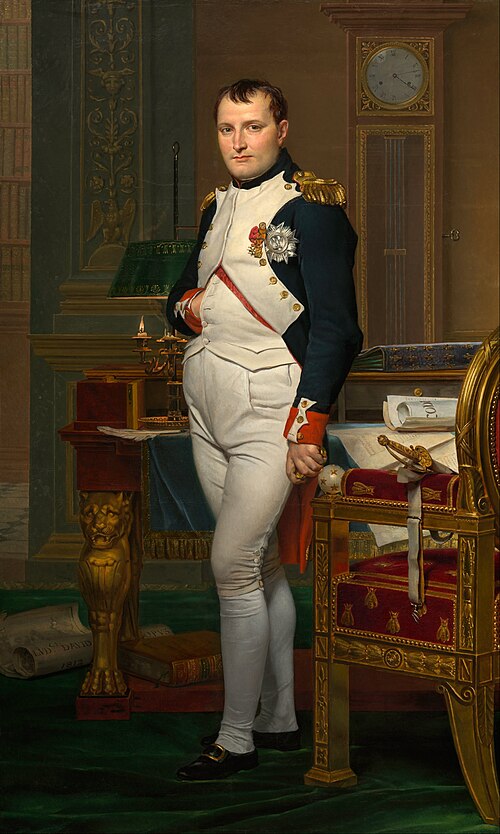
Napoleon Bonaparte
General · Modern
82.4Total
Basic Information
Born
1961
1769
Died
—
1821
Era
Modern
Modern
Nationality
Norway
France
Occupation
Politician
General
Civilization
Western
Western
Score Comparison
Military (10%)
37.5
94.0
Political (20%)
72.0
75.0
Influence (20%)
74.6
82.0
Legacy (20%)
59.5
78.0
Leadership (15%)
87.0
80.0
Strategy (15%)
35.3
93.0
TOTAL
63.3
82.4
Rankings
🥇
Napoleon BonaparteLeader
Mil: 94.0Pol: 75.0Inf: 82.0
82.4
🥈
Erna Solberg
Mil: 37.5Pol: 72.0Inf: 74.6
63.3
+19.1 behind
How This Comparison Works
Algorithm
Each figure is scored on 6 dimensions (0—100 scale) based on structured historical data: Military (10%), Political (20%), Influence (20%), Legacy (20%), Leadership (15%), Strategy (15%). The weighted total produces the final ranking.
Data Sources
Scores are computed from structured sub-indicators in the database. Scale factors adjust for era (Ancient ×0.85, Modern ×1.0) and civilization size (Eastern ×1.05, Other ×0.80) to account for differences in population and military scale.
Maximum 3 Figures
Comparisons are limited to 2—3 figures to ensure readability and statistical meaningfulness.
Error Margins
±5 points per dimension — Sub-scores are derived from historical records with inherent uncertainty. Two figures within 5 points on a dimension should be considered roughly equivalent in that area.
Total Score Accuracy
±3 points overall — The weighted combination of 6 dimensions produces a total score with approximately ±3 points of uncertainty. Differences of less than 3 points are not statistically significant— the figures are effectively tied.
Known Limitations
- Historical records are incomplete and uneven across civilizations
- Figures from oral-tradition societies may be underrepresented
- Occupation labels can misclassify multi-role figures
- Scores measure capability and impact, not moral character
- Quantitative scoring is a comparison tool, not absolute truth
Capability Radar
Military (10%) — Battles & Warfare
Battles
27
95
Win Rate
34
90
Expansion
33
95
Political (20%) — Governance & Reform
Reform
55
95
Diplomacy
60
80
Economy
58
85
Influence (20%) — Cultural & Global Reach
Cultural
30
85
Global
40
90
Legacy (20%) — Historical Impact
Historical
35
95
Longevity
25
90
Leadership (15%) — Power & Stability
Tenure
65
85
Stability
62
70
Strategy (15%) — Tactics & Innovation
Strategy
36
95
Tactics
42
98
Reform
44
92
Analysis will be generated on first visit.
Scores and timeline are available below. The page will refresh automatically when ready.
Erna Solberg — Complete Timeline
2013 AD
Became Prime Minister of NorwayPolitical Action
On October 16, 2013, Solberg became Prime Minister, leading a coalition government of the Conservative Party and the Progress Party, with support from the Liberal Party and Christian Democratic Party. This ended eight years of Labour rule.
Conservative PartyCoalitionPolitical Shift
Impact: national
2014 AD
Implemented Tax Cuts and DeregulationReform◆ Major
Solberg's government introduced tax cuts for businesses and high-income earners, along with deregulation of the housing market and labor laws. These policies aimed to boost economic growth but were criticized for increasing inequality.
Tax ReformDeregulationEconomic Policy
Impact: national
Managed the Oil Price CrashPolitical Action◆ Major
Solberg's government faced a sharp drop in oil prices in 2014, which reduced Norway's oil revenues. She implemented fiscal restraint and used the sovereign wealth fund to stabilize the economy, avoiding a recession but slowing growth.
Oil PriceEconomic ManagementSovereign Wealth Fund
Impact: national
2017 AD
Re-elected for a Second TermPolitical Action◆ Major
Solberg was re-elected in September 2017, continuing her coalition government. Her second term focused on climate policy, immigration reform, and further tax cuts, but she faced challenges from a resurgent Labour Party.
ElectionRe-electionCoalition
Impact: national
2019 AD
Expanded the Sovereign Wealth FundPolitical Action◆ Major
Solberg's government oversaw the expansion of the Government Pension Fund Global to over $1 trillion in assets. She also introduced ethical guidelines for the fund, including divestment from companies involved in coal and tobacco.
Sovereign Wealth FundEthical InvestmentOil Revenue
Impact: globalconstructive
2020 AD
COVID-19 Pandemic ResponsePolitical Action◆ Major
Solberg's government implemented strict lockdown measures and economic support packages during the COVID-19 pandemic. Norway had relatively low infection and death rates compared to many European countries, but the measures were criticized for their economic impact.
COVID-19LockdownEconomic Support
Impact: national
2021 AD
Lost the 2021 ElectionPolitical Action◆ Major
Solberg lost the general election in September 2021 to the Labour Party led by Jonas Gahr St
ElectionDefeatEnd of Tenure
Impact: national
Similar Comparisons
Comments & Discussion
No comments yet. Be the first to share your thoughts!