Loading...
Analysis will be generated on first visit.
Scores and timeline are available below. The page will refresh automatically when ready.
Elizabeth of Russia vs Julius Caesar
Julius Caesar leads by 14.3 pts · 2 figures compared
…

Elizabeth of Russia
Emperor · Modern
69.0Total
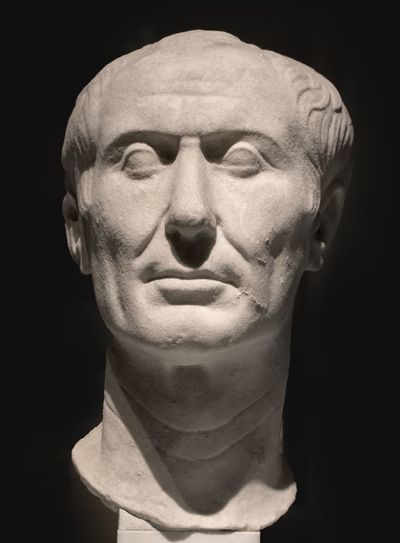
Julius Caesar
General · Ancient
83.3Total
Basic Information
Born
1709
-100
Died
1762
-44
Era
Modern
Ancient
Nationality
Russia
Roman Republic
Occupation
Emperor
General
Civilization
Western
Western
Score Comparison
Military (10%)
70.8
88.0
Political (20%)
67.7
78.0
Influence (20%)
66.7
85.0
Legacy (20%)
67.6
82.0
Leadership (15%)
83.8
82.0
Strategy (15%)
59.4
88.0
TOTAL
69.0
83.3
Rankings
🥇
Julius CaesarLeader
Mil: 88.0Pol: 78.0Inf: 85.0
83.3
🥈
Elizabeth of Russia
Mil: 70.8Pol: 67.7Inf: 66.7
69.0
+14.3 behind
How This Comparison Works
Algorithm
Each figure is scored on 6 dimensions (0—100 scale) based on structured historical data: Military (10%), Political (20%), Influence (20%), Legacy (20%), Leadership (15%), Strategy (15%). The weighted total produces the final ranking.
Data Sources
Scores are computed from structured sub-indicators in the database. Scale factors adjust for era (Ancient ×0.85, Modern ×1.0) and civilization size (Eastern ×1.05, Other ×0.80) to account for differences in population and military scale.
Maximum 3 Figures
Comparisons are limited to 2—3 figures to ensure readability and statistical meaningfulness.
Error Margins
±5 points per dimension — Sub-scores are derived from historical records with inherent uncertainty. Two figures within 5 points on a dimension should be considered roughly equivalent in that area.
Total Score Accuracy
±3 points overall — The weighted combination of 6 dimensions produces a total score with approximately ±3 points of uncertainty. Differences of less than 3 points are not statistically significant— the figures are effectively tied.
Known Limitations
- Historical records are incomplete and uneven across civilizations
- Figures from oral-tradition societies may be underrepresented
- Occupation labels can misclassify multi-role figures
- Scores measure capability and impact, not moral character
- Quantitative scoring is a comparison tool, not absolute truth
Capability Radar
Military (10%) — Battles & Warfare
Battles
60
95
Win Rate
55
92
Expansion
60
97
Political (20%) — Governance & Reform
Reform
55
90
Diplomacy
65
85
Economy
60
82
Influence (20%) — Cultural & Global Reach
Cultural
65
88
Global
55
94
Legacy (20%) — Historical Impact
Historical
60
95
Longevity
55
96
Leadership (15%) — Power & Stability
Tenure
70
75
Stability
50
60
Strategy (15%) — Tactics & Innovation
Strategy
65
94
Tactics
40
96
Reform
50
88
Analysis will be generated on first visit.
Scores and timeline are available below. The page will refresh automatically when ready.
Elizabeth of Russia — Complete Timeline
1741 AD
Accession as Empress of RussiaPolitical Action◆ Major
Elizabeth seized the throne in a bloodless coup, overthrowing the infant Ivan VI and his regent. She was supported by the Preobrazhensky Regiment and popular sentiment against German dominance. Her accession restored the line of Peter the Great and was celebrated as a national revival.
CoupSuccessionNational Revival
Impact: nationalconstructive
1752 AD
Construction of the Catherine PalaceCultural
Elizabeth commissioned the reconstruction of the Catherine Palace in Tsarskoye Selo, designed by Francesco Bartolomeo Rastrelli. The palace, with its elaborate Baroque style, became a symbol of imperial opulence and a center of court life. It is a UNESCO World Heritage site.
ArchitectureBaroqueTsarskoye Selo
Impact: nationalconstructive
1753 AD
Abolition of Internal Customs TariffsReform◆ Major
Elizabeth abolished internal customs tariffs and tolls within Russia, which had hindered trade and economic development. This reform simplified taxation, promoted internal commerce, and increased state revenue through higher import duties. It was a significant step toward economic modernization.
Economic ReformTradeTaxation
Impact: nationalconstructive
1755 AD
Founding of Moscow UniversityCultural◆ Major
Elizabeth signed the decree establishing Moscow University, the first university in Russia, on the initiative of Mikhail Lomonosov. The university became a center of learning and science, promoting education and reducing reliance on foreign scholars. It remains a leading institution today.
EducationUniversityLomonosov
Impact: nationalconstructive
1756 AD
Participation in the Seven Years' WarWar◆ Major
Elizabeth led Russia into the Seven Years' War against Prussia, allying with Austria and France. Russian forces achieved major victories, including the occupation of Berlin in 1760. The war drained Russian resources but demonstrated its military power. Elizabeth's death in 1762 led to a reversal of policy.
Seven Years' WarPrussiaBerlin
Impact: global
Similar Comparisons
Comments & Discussion
No comments yet. Be the first to share your thoughts!