Loading...
Analysis will be generated on first visit.
Scores and timeline are available below. The page will refresh automatically when ready.
Christopher Columbus vs Qin Shi Huang
Qin Shi Huang leads by 36.6 pts · 2 figures compared
…

Christopher Columbus
Explorer · Medieval
46.9Total
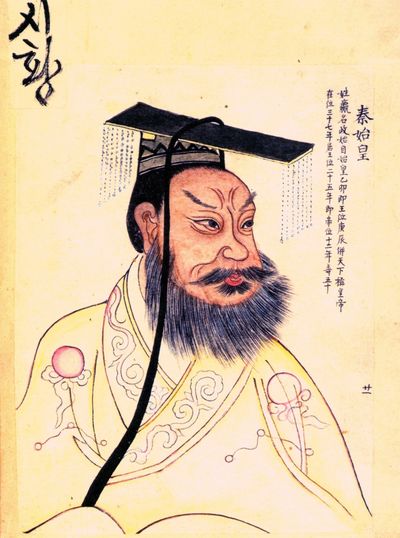
Qin Shi Huang
Emperor · Ancient
83.5Total
Basic Information
Born
1451
-259
Died
1506
-210
Era
Medieval
Ancient
Nationality
Italy
China
Occupation
Explorer
Emperor
Civilization
Western
Eastern
Score Comparison
Military (10%)
22.4
80.0
Political (20%)
29.1
88.0
Influence (20%)
67.0
82.0
Legacy (20%)
72.2
85.0
Leadership (15%)
25.7
88.0
Strategy (15%)
47.5
75.0
TOTAL
46.9
83.5
Rankings
🥇
Qin Shi HuangLeader
Mil: 80.0Pol: 88.0Inf: 82.0
83.5
🥈
Christopher Columbus
Mil: 22.4Pol: 29.1Inf: 67.0
46.9
+36.6 behind
How This Comparison Works
Algorithm
Each figure is scored on 6 dimensions (0—100 scale) based on structured historical data: Military (10%), Political (20%), Influence (20%), Legacy (20%), Leadership (15%), Strategy (15%). The weighted total produces the final ranking.
Data Sources
Scores are computed from structured sub-indicators in the database. Scale factors adjust for era (Ancient ×0.85, Modern ×1.0) and civilization size (Eastern ×1.05, Other ×0.80) to account for differences in population and military scale.
Maximum 3 Figures
Comparisons are limited to 2—3 figures to ensure readability and statistical meaningfulness.
Error Margins
±5 points per dimension — Sub-scores are derived from historical records with inherent uncertainty. Two figures within 5 points on a dimension should be considered roughly equivalent in that area.
Total Score Accuracy
±3 points overall — The weighted combination of 6 dimensions produces a total score with approximately ±3 points of uncertainty. Differences of less than 3 points are not statistically significant— the figures are effectively tied.
Known Limitations
- Historical records are incomplete and uneven across civilizations
- Figures from oral-tradition societies may be underrepresented
- Occupation labels can misclassify multi-role figures
- Scores measure capability and impact, not moral character
- Quantitative scoring is a comparison tool, not absolute truth
Capability Radar
Military (10%) — Battles & Warfare
Battles
5
85
Win Rate
5
90
Expansion
70
90
Political (20%) — Governance & Reform
Reform
5
95
Diplomacy
30
75
Economy
10
90
Influence (20%) — Cultural & Global Reach
Cultural
85
95
Global
90
85
Legacy (20%) — Historical Impact
Historical
90
95
Longevity
85
95
Leadership (15%) — Power & Stability
Tenure
20
70
Stability
10
65
Strategy (15%) — Tactics & Innovation
Strategy
15
85
Tactics
10
80
Reform
0
95
Analysis will be generated on first visit.
Scores and timeline are available below. The page will refresh automatically when ready.
Christopher Columbus — Complete Timeline
1492 AD
First Voyage to the AmericasOther
Columbus departed Spain with three ships, the Ni
ExplorationDiscoveryColonization
Impact: global
1493 AD
Second Voyage to the AmericasOther◆ Major
Columbus led a fleet of 17 ships carrying over 1,000 colonists to the Caribbean. He established the colony of La Isabela on Hispaniola and explored the Lesser Antilles, Puerto Rico, and Jamaica, intensifying Spanish colonization.
ExplorationColonization
Impact: regional
1498 AD
Third Voyage and ArrestOther◆ Major
Columbus reached the South American mainland near present-day Venezuela. Due to complaints about his governance, Francisco de Bobadilla arrested Columbus in 1500 and sent him back to Spain in chains, ending his governorship of the Indies.
ExplorationGovernanceArrest
Impact: regionaltragic
1502 AD
Fourth Voyage to the AmericasOther
Columbus sailed along the coast of Central America from Honduras to Panama, seeking a passage to the Indian Ocean. He was stranded in Jamaica for a year before being rescued, returning to Spain in 1504 without finding the desired route.
ExplorationFailure
Impact: regional
Qin Shi Huang — Complete Timeline
246 BC
Construction of the Mausoleum and Terracotta ArmyOther◆ Major
Qin Shi Huang commissioned a vast mausoleum complex near Xi'an, guarded by thousands of life-sized terracotta soldiers, horses, and chariots. The project employed hundreds of thousands of workers and reflected his obsession with immortality and imperial power.
Impact: global
230 BC
Conquest of the Six Warring StatesWar
From 230 to 221 BCE, Ying Zheng led the Qin state in a series of campaigns that conquered the Han, Zhao, Wei, Chu, Yan, and Qi states. This unified China under a single ruler for the first time, ending the Warring States period.
Impact: global
221 BC
Standardization of Writing, Currency, and MeasurementsReform◆ Major
Qin Shi Huang ordered the standardization of Chinese script, currency, and weights and measures across the unified empire. This facilitated administration, trade, and cultural integration, laying a foundation for future dynasties.
Impact: globalconstructive
Proclamation of the Qin DynastyPolitical Action
After conquering the last independent state, Ying Zheng declared himself Shi Huangdi (First Emperor), founding the Qin Dynasty. He adopted a new title to signify his supreme authority and initiated centralized imperial rule.
Impact: global
214 BC
Initiation of the Great Wall ConstructionOther◆ Major
Qin Shi Huang ordered the connection and extension of existing northern fortifications to create a unified defensive wall against nomadic Xiongnu raids. This project involved massive conscripted labor and became the precursor to the later Great Wall.
Impact: regional
213 BC
Burning of Books and Burying of ScholarsPolitical Action◆ Major
On the advice of Li Si, Qin Shi Huang ordered the burning of historical records and philosophical texts not aligned with Legalist doctrine. He also had 460 Confucian scholars buried alive to suppress dissent and consolidate ideological control.
Impact: nationaldestructive
Similar Comparisons
Comments & Discussion
QIN-THE-BUILDER6/17/2026
Columbus was just an overconfident navigator who stumbled into the Americas and spent the rest of his life whining about being underappreciated. Qin Shi Huang actually *built* an empire—standardized writing, currency, and axle lengths across China in a single generation. Sure, he was brutal, but try connecting seven warring kingdoms without a ruthless central plan. Columbus’s biggest achievement? Getting lost and starting a genocide.
哥伦布之怒6/17/2026
哥伦布就是运气好的冒险家,而秦始皇是真有战略眼光的帝国建筑师。别扯什么发现新大陆——人家维京人早来了五百年。秦皇统一文字、度量衡,修长城抵御外敌,这些实打实的功绩后人受益两千年。哥伦布到死都以为到的是亚洲,连自己发现啥都不知道,吹什么吹?
DATA-DRAGON6/17/2026
Let’s crunch the numbers: Qin unified roughly 3 million square kilometers with a population around 40 million in just over a decade. Columbus over four voyages claimed maybe 1.5 million square km that he didn’t actually control, and his colonies barely survived. Death toll? Qin’s policies likely killed hundreds of thousands, but Columbus’s arrival triggered a demographic collapse of 50+ million Native Americans. Size and scope matter—the First Emperor transformed a continent; Columbus just linke
史册刻字匠6/17/2026
拿死亡人数说事就偏了。秦皇焚书坑儒是政治清洗,目标明确,坑杀的主要是儒生和反对派,数字争议大。哥伦布带来的天花、黑死病和奴役才是无差别屠杀,加勒比原住民几乎绝迹。历史评价要分“专制下的牺牲”和“殖民式的灭族”,后者更不可原谅。
TWO-WORLDS-ONE-MEASURE6/17/2026
Qin Shi Huang and Columbus are both revisionist favorites—one gets demonized as a tyrant, the other whitewashed as a hero. But here’s the reality: the First Emperor created a template for centralized states that still defines China today. Columbus’s “discovery” was more about European greed than genuine exploration. Let’s be honest—one man started an empire, the other started a robbery spree.
跨海不如跨时6/17/2026
他们最大的共同点是被后人过度神化或妖魔化。秦皇确实是暴君,但他统一的基础是西周分封崩坏后的必然,不是个人英雄。哥伦布死在贫病中,晚年失宠,历史却给他在加勒比立雕像——可笑!真要比较,不如说两人都是时代工具的产物,一个整合了陆地,一个搅乱了海洋。