Loading...
Analysis will be generated on first visit.
Scores and timeline are available below. The page will refresh automatically when ready.
Chen Qun vs Cleisthenes of Athens
Cleisthenes of Athens leads by 1.9 pts · 2 figures compared
…

Chen Qun
Politician · Ancient
71.3Total
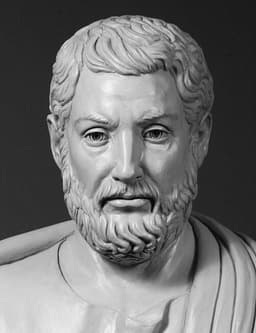
Cleisthenes of Athens
Politician · Ancient
73.2Total
Basic Information
Born
160
-570
Died
237
-508
Era
Ancient
Ancient
Nationality
China
Athens
Occupation
Politician
Politician
Civilization
Eastern
Western
Score Comparison
Military (10%)
30.2
31.7
Political (20%)
69.8
66.6
Influence (20%)
92.4
83.5
Legacy (20%)
89.6
89.9
Leadership (15%)
80.0
82.7
Strategy (15%)
39.8
64.3
TOTAL
71.3
73.2
Chen Qun — Complete Timeline
220 AD
Proposed the Nine-rank SystemReform◆ Major
Chen Qun proposed the Nine-rank system for civil service appointments to Cao Pi, the first emperor of Wei. This system ranked candidates based on family background and personal merit, replacing the earlier recommendation system and becoming the standard for official selection in China for centuries.
Civil Service ReformWei DynastyBureaucracy
Impact: nationalconstructive
Advised Cao Pi on Legal CodeReform
Chen Qun assisted Cao Pi in drafting the new legal code for the Wei dynasty. He advocated for clearer laws and more consistent punishments, contributing to the legal framework that helped stabilize Wei's early rule.
Legal ReformWei DynastyLaw
Impact: nationalconstructive
226 AD
Served as Minister over the MassesPolitical Action
Chen Qun was appointed Minister over the Masses (Sikong) under Emperor Cao Rui of Wei. In this high-ranking position, he oversaw civil administration and continued to refine the implementation of the Nine-rank system, solidifying its role in Wei governance.
AppointmentWei DynastyGovernment
Impact: nationalconstructive
Cleisthenes of Athens — Complete Timeline
508 BC
Reform of the Athenian Tribes (Cleisthenes' Reforms)Reform
Cleisthenes reorganized the Athenian citizen body into ten new tribes based on demes (local districts), replacing the old four Ionian tribes. This broke the power of aristocratic clans and created a new political structure that formed the basis of Athenian democracy.
DemocracyPolitical ReformAthens
Impact: globalprogressive
Introduction of OstracismReform◆ Major
Cleisthenes introduced the practice of ostracism, allowing citizens to vote annually to exile a prominent figure for ten years. This mechanism was designed to prevent tyranny and remove threats to democracy. The first ostracism occurred in 487 BC.
DemocracyPolitical ReformExile
Impact: globalprogressive
Creation of the Council of 500 (Boule)Reform◆ Major
Cleisthenes established the Boule, a council of 500 citizens (50 from each tribe) chosen by lot. This body prepared legislation for the Assembly and oversaw daily administration. It replaced the aristocratic Areopagus as the main governing body, expanding citizen participation.
DemocracyPolitical ReformGovernment
Impact: globalprogressive
Exile of Isagoras and Spartan InterventionPolitical Action◆ Major
Cleisthenes' rival Isagoras called on Spartan king Cleomenes I to intervene in Athens. The Spartans expelled Cleisthenes and attempted to dissolve the Boule, but the Athenian people revolted, besieging the Acropolis and forcing the Spartans to withdraw. Cleisthenes was recalled.
Spartan InterventionDemocracyAthens
Impact: nationalconstructive
Analysis will be generated on first visit.
Scores and timeline are available below. The page will refresh automatically when ready.
Rankings
🥇
Cleisthenes of AthensLeader
Mil: 31.7Pol: 66.6Inf: 83.5
73.2
🥈
Chen Qun
Mil: 30.2Pol: 69.8Inf: 92.4
71.3
+1.9 behind
How This Comparison Works
Algorithm
Each figure is scored on 6 dimensions (0—100 scale) based on structured historical data: Military (10%), Political (20%), Influence (20%), Legacy (20%), Leadership (15%), Strategy (15%). The weighted total produces the final ranking.
Data Sources
Scores are computed from structured sub-indicators in the database. Scale factors adjust for era (Ancient ×0.85, Modern ×1.0) and civilization size (Eastern ×1.05, Other ×0.80) to account for differences in population and military scale.
Maximum 3 Figures
Comparisons are limited to 2—3 figures to ensure readability and statistical meaningfulness.
Error Margins
±5 points per dimension — Sub-scores are derived from historical records with inherent uncertainty. Two figures within 5 points on a dimension should be considered roughly equivalent in that area.
Total Score Accuracy
±3 points overall — The weighted combination of 6 dimensions produces a total score with approximately ±3 points of uncertainty. Differences of less than 3 points are not statistically significant— the figures are effectively tied.
Known Limitations
- Historical records are incomplete and uneven across civilizations
- Figures from oral-tradition societies may be underrepresented
- Occupation labels can misclassify multi-role figures
- Scores measure capability and impact, not moral character
- Quantitative scoring is a comparison tool, not absolute truth
Capability Radar
Military (10%) — Battles & Warfare
Battles
19
22
Win Rate
22
27
Expansion
25
28
Political (20%) — Governance & Reform
Reform
85
95
Diplomacy
50
70
Economy
60
40
Influence (20%) — Cultural & Global Reach
Cultural
70
85
Global
65
80
Legacy (20%) — Historical Impact
Historical
80
90
Longevity
85
95
Leadership (15%) — Power & Stability
Tenure
40
30
Stability
65
60
Strategy (15%) — Tactics & Innovation
Strategy
31
35
Tactics
32
34
Reform
36
40
Similar Comparisons
Comments & Discussion
九品中正6/16/2026
要我说陈群比克里斯提尼务实多了。雅典那种抽签选官,简直是外行指导内行。陈群至少知道跑官买官的问题,搞出九品中正制,让本地豪强推荐人才。虽然后来被士族垄断了,但在乱世里,能解决当时的问题就够了。理想主义好,没实力活不下去啊。
QuotaConundrum6/16/2026
You can't compare a quota system to democracy. Cleisthenes actually empowered common citizens through demes and ostracism, while Chen Qun's "Nine-Rank" system just codified aristocratic nepotism. By 300 AD, the Sima clan had turned it into a birthright scheme, producing useless generals like Sima Yan. Democracy has flaws, but at least Athens fought Persia. What did the Nine-Rank system fight? Internal squabbling.