Loading...
Analysis will be generated on first visit.
Scores and timeline are available below. The page will refresh automatically when ready.
Bartolomeu Dias vs Qin Shi Huang
Qin Shi Huang leads by 26.7 pts · 2 figures compared
…

Bartolomeu Dias
Explorer · Medieval
56.8Total
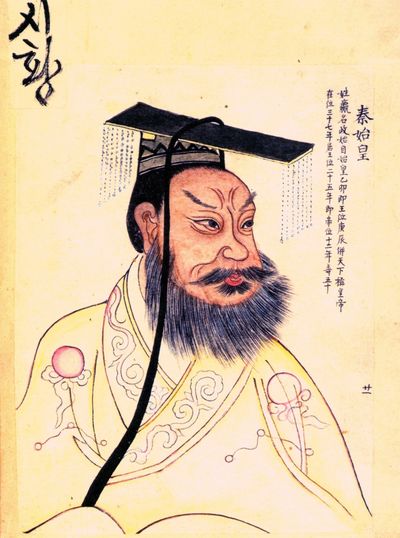
Qin Shi Huang
Emperor · Ancient
83.5Total
Basic Information
Born
1450
-259
Died
1500
-210
Era
Medieval
Ancient
Nationality
Portugal
China
Occupation
Explorer
Emperor
Civilization
Western
Eastern
Score Comparison
Military (10%)
43.3
80.0
Political (20%)
42.3
88.0
Influence (20%)
74.0
82.0
Legacy (20%)
67.5
85.0
Leadership (15%)
42.7
88.0
Strategy (15%)
62.3
75.0
TOTAL
56.8
83.5
Rankings
🥇
Qin Shi HuangLeader
Mil: 80.0Pol: 88.0Inf: 82.0
83.5
🥈
Bartolomeu Dias
Mil: 43.3Pol: 42.3Inf: 74.0
56.8
+26.7 behind
How This Comparison Works
Algorithm
Each figure is scored on 6 dimensions (0—100 scale) based on structured historical data: Military (10%), Political (20%), Influence (20%), Legacy (20%), Leadership (15%), Strategy (15%). The weighted total produces the final ranking.
Data Sources
Scores are computed from structured sub-indicators in the database. Scale factors adjust for era (Ancient ×0.85, Modern ×1.0) and civilization size (Eastern ×1.05, Other ×0.80) to account for differences in population and military scale.
Maximum 3 Figures
Comparisons are limited to 2—3 figures to ensure readability and statistical meaningfulness.
Error Margins
±5 points per dimension — Sub-scores are derived from historical records with inherent uncertainty. Two figures within 5 points on a dimension should be considered roughly equivalent in that area.
Total Score Accuracy
±3 points overall — The weighted combination of 6 dimensions produces a total score with approximately ±3 points of uncertainty. Differences of less than 3 points are not statistically significant— the figures are effectively tied.
Known Limitations
- Historical records are incomplete and uneven across civilizations
- Figures from oral-tradition societies may be underrepresented
- Occupation labels can misclassify multi-role figures
- Scores measure capability and impact, not moral character
- Quantitative scoring is a comparison tool, not absolute truth
Capability Radar
Military (10%) — Battles & Warfare
Battles
0
85
Win Rate
0
90
Expansion
15
90
Political (20%) — Governance & Reform
Reform
0
95
Diplomacy
10
75
Economy
0
90
Influence (20%) — Cultural & Global Reach
Cultural
55
95
Global
55
85
Legacy (20%) — Historical Impact
Historical
65
95
Longevity
60
95
Leadership (15%) — Power & Stability
Tenure
0
70
Stability
0
65
Strategy (15%) — Tactics & Innovation
Strategy
0
85
Tactics
0
80
Reform
0
95
Analysis will be generated on first visit.
Scores and timeline are available below. The page will refresh automatically when ready.
Bartolomeu Dias — Complete Timeline
1488 AD
First voyage around the Cape of Good HopeOther
Dias commanded a Portuguese expedition that sailed around the southern tip of Africa, which he named the Cape of Storms. This proved the Atlantic and Indian Oceans were connected, opening a sea route to Asia. The cape was later renamed the Cape of Good Hope by King John II.
Age of DiscoveryNavigationSea Route to India
Impact: globalconstructive
Return voyage to PortugalOther◆ Major
After rounding the Cape of Good Hope, Dias's crew forced him to turn back near the Great Fish River. He returned to Portugal in December 1488, reporting his discovery to King John II. The voyage lasted 16 months and covered over 6,000 miles.
Age of DiscoveryNavigation
Impact: globalconstructive
1500 AD
Participation in Cabral's expedition to BrazilOther
Dias served as a captain in Pedro
Age of DiscoveryColonizationBrazil
Impact: nationalconstructive
Death in shipwreck near the Cape of Good HopeOther◆ Major
Dias died when his ship sank during a storm near the Cape of Good Hope while returning from Cabral's expedition. Four ships from the fleet were lost in the same storm. Dias's body was never recovered.
DeathShipwreckAge of Discovery
Impact: nationaltragic
Qin Shi Huang — Complete Timeline
246 BC
Construction of the Mausoleum and Terracotta ArmyOther◆ Major
Qin Shi Huang commissioned a vast mausoleum complex near Xi'an, guarded by thousands of life-sized terracotta soldiers, horses, and chariots. The project employed hundreds of thousands of workers and reflected his obsession with immortality and imperial power.
Impact: global
230 BC
Conquest of the Six Warring StatesWar
From 230 to 221 BCE, Ying Zheng led the Qin state in a series of campaigns that conquered the Han, Zhao, Wei, Chu, Yan, and Qi states. This unified China under a single ruler for the first time, ending the Warring States period.
Impact: global
221 BC
Standardization of Writing, Currency, and MeasurementsReform◆ Major
Qin Shi Huang ordered the standardization of Chinese script, currency, and weights and measures across the unified empire. This facilitated administration, trade, and cultural integration, laying a foundation for future dynasties.
Impact: globalconstructive
Proclamation of the Qin DynastyPolitical Action
After conquering the last independent state, Ying Zheng declared himself Shi Huangdi (First Emperor), founding the Qin Dynasty. He adopted a new title to signify his supreme authority and initiated centralized imperial rule.
Impact: global
214 BC
Initiation of the Great Wall ConstructionOther◆ Major
Qin Shi Huang ordered the connection and extension of existing northern fortifications to create a unified defensive wall against nomadic Xiongnu raids. This project involved massive conscripted labor and became the precursor to the later Great Wall.
Impact: regional
213 BC
Burning of Books and Burying of ScholarsPolitical Action◆ Major
On the advice of Li Si, Qin Shi Huang ordered the burning of historical records and philosophical texts not aligned with Legalist doctrine. He also had 460 Confucian scholars buried alive to suppress dissent and consolidate ideological control.
Impact: nationaldestructive
Similar Comparisons
Comments & Discussion
THE_TERRACOTTA_TYRANT6/17/2026
Let's be real—comparing a man who standardized Chinese script and built the Great Wall to a guy who got tossed around by waves near Cape Town is absurd. Qin Shi Huang unified a continent-spanning civilization through ruthless centralization, including the Lingqu Canal that moved armies and supplies. Dias? He bumped into a storm, turned back, and died in obscurity 10 years later. One left an empire that defines China today; the other left a footnote. Not a contest.
The_Dias_Defender6/17/2026
I won't have this slander against Bartolomeu Dias. While Qin Shi Huang terrorized millions into building walls and terracotta statues, Dias braved the "Cape of Storms" (later renamed Good Hope) with nothing but wooden ships and courage. His 1488 voyage cracked the Portuguese monopoly on Asian trade wide open—without him, Vasco da Gama sails nowhere. Qin built a tomb army; Dias built a gateway to global trade. Impact per brave deed? Dias wins.
史痴老刘6/17/2026
说秦始皇没代价?焚书坑儒就是铁证。他烧了百家的思想,埋了四百多儒生,搞得华夏文明断了一脉。反观迪亚斯,人家征服风暴,回家还受国王重用,死得风光。一个靠恐怖统治,一个靠航海壮举,谁更体面?数据说话:迪亚斯的航线让葡萄牙富了百年,秦朝才撑了15年。短命王朝,别吹了。
数据推手小王6/17/2026
别扯虚的,比硬数字:秦朝统一后人口约2000万,修长城、阿房宫死一百万劳工——5%的人口没了。迪亚斯呢?1488年那次航行死不到20人。而且他帮葡萄牙绕过非洲,1498年达伽马就杀到印度,利润高达3000%。效率对比太惨:废人一堆的暴君 vs 省钱省命的探险家。历史要算账,我选航海家。
古简先生6/17/2026
两位都是暴君和赌徒,别分高下了。秦始皇搞了书同文、车同轨,文化统一贡献巨大;迪亚斯打破了世界隔绝,国际贸易先驱。但他们代价一样惨:秦朝苛政导致百姓造反;迪亚斯的暴力殖民后来引发非洲血泪。历史没光环只有阴影——一个是凝固的恐惧,一个是流动的贪婪。都是双刃剑,别假惺惺崇拜了。