Loading...
Analysis will be generated on first visit.
Scores and timeline are available below. The page will refresh automatically when ready.
Antonio Jose de Sucre vs Qin Shi Huang
Qin Shi Huang leads by 10.4 pts · 2 figures compared
…

Antonio Jose de Sucre
General · Modern
73.1Total
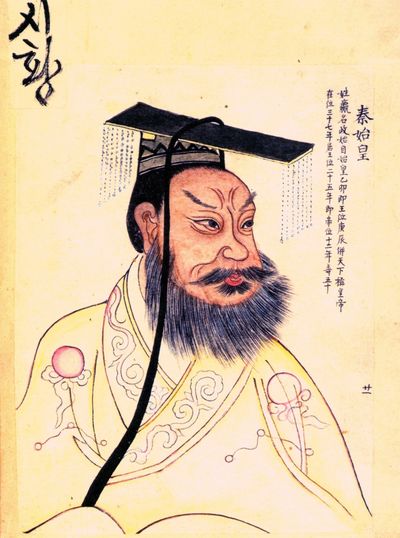
Qin Shi Huang
Emperor · Ancient
83.5Total
Basic Information
Born
1795
-259
Died
1830
-210
Era
Modern
Ancient
Nationality
Venezuela
China
Occupation
General
Emperor
Civilization
Western
Eastern
Score Comparison
Military (10%)
84.3
80.0
Political (20%)
72.0
88.0
Influence (20%)
70.2
82.0
Legacy (20%)
68.2
85.0
Leadership (15%)
74.5
88.0
Strategy (15%)
76.3
75.0
TOTAL
73.1
83.5
Rankings
🥇
Qin Shi HuangLeader
Mil: 80.0Pol: 88.0Inf: 82.0
83.5
🥈
Antonio Jose de Sucre
Mil: 84.3Pol: 72.0Inf: 70.2
73.1
+10.4 behind
How This Comparison Works
Algorithm
Each figure is scored on 6 dimensions (0—100 scale) based on structured historical data: Military (10%), Political (20%), Influence (20%), Legacy (20%), Leadership (15%), Strategy (15%). The weighted total produces the final ranking.
Data Sources
Scores are computed from structured sub-indicators in the database. Scale factors adjust for era (Ancient ×0.85, Modern ×1.0) and civilization size (Eastern ×1.05, Other ×0.80) to account for differences in population and military scale.
Maximum 3 Figures
Comparisons are limited to 2—3 figures to ensure readability and statistical meaningfulness.
Error Margins
±5 points per dimension — Sub-scores are derived from historical records with inherent uncertainty. Two figures within 5 points on a dimension should be considered roughly equivalent in that area.
Total Score Accuracy
±3 points overall — The weighted combination of 6 dimensions produces a total score with approximately ±3 points of uncertainty. Differences of less than 3 points are not statistically significant— the figures are effectively tied.
Known Limitations
- Historical records are incomplete and uneven across civilizations
- Figures from oral-tradition societies may be underrepresented
- Occupation labels can misclassify multi-role figures
- Scores measure capability and impact, not moral character
- Quantitative scoring is a comparison tool, not absolute truth
Capability Radar
Military (10%) — Battles & Warfare
Battles
85
85
Win Rate
90
90
Expansion
80
90
Political (20%) — Governance & Reform
Reform
70
95
Diplomacy
80
75
Economy
60
90
Influence (20%) — Cultural & Global Reach
Cultural
55
95
Global
55
85
Legacy (20%) — Historical Impact
Historical
70
95
Longevity
60
95
Leadership (15%) — Power & Stability
Tenure
55
70
Stability
50
65
Strategy (15%) — Tactics & Innovation
Strategy
85
85
Tactics
88
80
Reform
70
95
Analysis will be generated on first visit.
Scores and timeline are available below. The page will refresh automatically when ready.
Antonio Jose de Sucre — Complete Timeline
1824 AD
Battle of AyacuchoWar
Sucre commanded the patriot army that defeated the last major Spanish royalist force in South America at Ayacucho, Peru. This victory effectively ended Spanish colonial rule in South America and secured the independence of Peru and Bolivia.
BattleIndependenceDecisive Victory
Impact: regionalconstructive
1825 AD
Establishment of BoliviaPolitical Action◆ Major
Sucre convened the assembly that declared the independence of Upper Peru, naming the new republic Bolivia in honor of Sim
IndependenceConstitutionNation-building
Impact: regionalconstructive
1830 AD
AssassinationOther◆ Major
Sucre was assassinated while traveling through the mountains of Colombia, ambushed by unknown gunmen. His death removed a key political figure who could have stabilized Gran Colombia, and it contributed to the eventual dissolution of Bol
AssassinationPolitical InstabilityGran Colombia
Impact: regionaltragic
Qin Shi Huang — Complete Timeline
246 BC
Construction of the Mausoleum and Terracotta ArmyOther◆ Major
Qin Shi Huang commissioned a vast mausoleum complex near Xi'an, guarded by thousands of life-sized terracotta soldiers, horses, and chariots. The project employed hundreds of thousands of workers and reflected his obsession with immortality and imperial power.
Impact: global
230 BC
Conquest of the Six Warring StatesWar
From 230 to 221 BCE, Ying Zheng led the Qin state in a series of campaigns that conquered the Han, Zhao, Wei, Chu, Yan, and Qi states. This unified China under a single ruler for the first time, ending the Warring States period.
Impact: global
221 BC
Standardization of Writing, Currency, and MeasurementsReform◆ Major
Qin Shi Huang ordered the standardization of Chinese script, currency, and weights and measures across the unified empire. This facilitated administration, trade, and cultural integration, laying a foundation for future dynasties.
Impact: globalconstructive
Proclamation of the Qin DynastyPolitical Action
After conquering the last independent state, Ying Zheng declared himself Shi Huangdi (First Emperor), founding the Qin Dynasty. He adopted a new title to signify his supreme authority and initiated centralized imperial rule.
Impact: global
214 BC
Initiation of the Great Wall ConstructionOther◆ Major
Qin Shi Huang ordered the connection and extension of existing northern fortifications to create a unified defensive wall against nomadic Xiongnu raids. This project involved massive conscripted labor and became the precursor to the later Great Wall.
Impact: regional
213 BC
Burning of Books and Burying of ScholarsPolitical Action◆ Major
On the advice of Li Si, Qin Shi Huang ordered the burning of historical records and philosophical texts not aligned with Legalist doctrine. He also had 460 Confucian scholars buried alive to suppress dissent and consolidate ideological control.
Impact: nationaldestructive
Similar Comparisons
Comments & Discussion
SucreShade6/17/2026
Sucre's end shows liberation's tragedy. Unlike Qin's sealed tomb, his murder on a lonely path reveals how fragile freedom is. History remembers the emperor's bronze army, but forgets the liberator's real army—ordinary people. Sucre's corpse wasn't honored, yet his idea of unity outlives Qin's empire. That's the difference: one built walls, the other bridges.
夜雨屠夫6/17/2026
拿统一者和解放者对比?干脆拿刀和盾比算了。始皇帝书同文车同轨,一条命压住六国余孽,这叫硬实力。苏克雷呢?打跑西班牙人,结果玻利瓦尔死后内乱成啥样?他死在路边就说明问题——你解放的土地连你的命都保不住。别跟我扯理想主义,历史只认结果。
DataCrusher6/17/2026
Quantitatively, Qin Shi Huang unified a population of ~40 million across 2 directives; Sucre liberated ~2 million with 3 major treaties. Factor in longevity—Qin's centralized model lasted 2000 years; Sucre's Gran Colombia fractured in 10. Even adjusting for era, one created durable systems while the other oversaw volatile coalitions. The numbers don't lie about whose "world" outlived its architect.
孤灯史客6/17/2026
苏克雷追求的是人之解放,始皇帝追求的是序之统一。一个留下自由的火种,一个筑就帝国的骨架。你不能拿火药味评判桂花香。看他的遗嘱:希望玻利瓦尔别走他的老路——这胸襟,比秦始皇焚书时的冷血不知高到哪里去了。历史不只有赢家写的版本。
MetaphorMason6/17/2026
Comparing them is like weighing a diamond against a glacier. Qin's jade armor and mercury rivers scream "I am eternity." Sucre's naked corpse in the mud whispers "I was human." One built a tomb that'll outlast nuclear waste; the other built nations that barely outlasted his breath. Yet which legacy makes your chest ache? Exactly. Power impresses, but sacrifice sticks.