Loading...
Analysis will be generated on first visit.
Scores and timeline are available below. The page will refresh automatically when ready.
Alvar Nunez Cabeza de Vaca vs Qin Shi Huang
Qin Shi Huang leads by 33.6 pts · 2 figures compared
…

Alvar Nunez Cabeza de Vaca
Explorer · Medieval
49.9Total
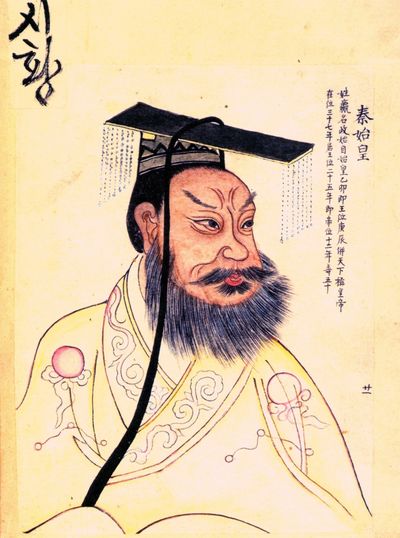
Qin Shi Huang
Emperor · Ancient
83.5Total
Basic Information
Born
1490
-259
Died
1559
-210
Era
Medieval
Ancient
Nationality
Spain
China
Occupation
Explorer
Emperor
Civilization
Western
Eastern
Score Comparison
Military (10%)
22.4
80.0
Political (20%)
46.1
88.0
Influence (20%)
66.7
82.0
Legacy (20%)
55.0
85.0
Leadership (15%)
39.0
88.0
Strategy (15%)
55.3
75.0
TOTAL
49.9
83.5
Rankings
🥇
Qin Shi HuangLeader
Mil: 80.0Pol: 88.0Inf: 82.0
83.5
🥈
Alvar Nunez Cabeza de Vaca
Mil: 22.4Pol: 46.1Inf: 66.7
49.9
+33.6 behind
How This Comparison Works
Algorithm
Each figure is scored on 6 dimensions (0—100 scale) based on structured historical data: Military (10%), Political (20%), Influence (20%), Legacy (20%), Leadership (15%), Strategy (15%). The weighted total produces the final ranking.
Data Sources
Scores are computed from structured sub-indicators in the database. Scale factors adjust for era (Ancient ×0.85, Modern ×1.0) and civilization size (Eastern ×1.05, Other ×0.80) to account for differences in population and military scale.
Maximum 3 Figures
Comparisons are limited to 2—3 figures to ensure readability and statistical meaningfulness.
Error Margins
±5 points per dimension — Sub-scores are derived from historical records with inherent uncertainty. Two figures within 5 points on a dimension should be considered roughly equivalent in that area.
Total Score Accuracy
±3 points overall — The weighted combination of 6 dimensions produces a total score with approximately ±3 points of uncertainty. Differences of less than 3 points are not statistically significant— the figures are effectively tied.
Known Limitations
- Historical records are incomplete and uneven across civilizations
- Figures from oral-tradition societies may be underrepresented
- Occupation labels can misclassify multi-role figures
- Scores measure capability and impact, not moral character
- Quantitative scoring is a comparison tool, not absolute truth
Capability Radar
Military (10%) — Battles & Warfare
Battles
5
85
Win Rate
5
90
Expansion
0
90
Political (20%) — Governance & Reform
Reform
20
95
Diplomacy
40
75
Economy
15
90
Influence (20%) — Cultural & Global Reach
Cultural
35
95
Global
25
85
Legacy (20%) — Historical Impact
Historical
40
95
Longevity
30
95
Leadership (15%) — Power & Stability
Tenure
30
70
Stability
15
65
Strategy (15%) — Tactics & Innovation
Strategy
15
85
Tactics
10
80
Reform
0
95
Analysis will be generated on first visit.
Scores and timeline are available below. The page will refresh automatically when ready.
Alvar Nunez Cabeza de Vaca — Complete Timeline
1528 AD
Shipwreck on the Florida coastOther◆ Major
Cabeza de Vaca was shipwrecked on the coast of present-day Texas as part of the Narv
ShipwreckSurvivalTexas
Impact: regionaltragic
1534 AD
Journey across North AmericaOther
Cabeza de Vaca, along with three other survivors, began an 8-year journey across the North American continent. They traveled from the Gulf Coast of Texas through present-day New Mexico and Arizona, eventually reaching the Spanish settlement in Sinaloa, Mexico. They covered over 6,000 miles.
ExplorationSurvivalNorth America
Impact: globalconstructive
1540 AD
Appointment as Governor of Río de la PlataPolitical Action◆ Major
Cabeza de Vaca was appointed Governor of the R
GovernorshipColonizationSouth America
Impact: regionalconstructive
1542 AD
Publication of La RelaciónCultural◆ Major
Cabeza de Vaca published his account of the journey, titled 'La Relaci
PublicationExplorationEthnography
Impact: regionalconstructive
1543 AD
Expedition to the interior of ParaguayOther◆ Major
Cabeza de Vaca led an expedition from Asunci
ExplorationParaguayIguazú Falls
Impact: regional
1544 AD
Arrest and return to Spain in chainsPolitical Action◆ Major
Cabeza de Vaca was arrested by his own colonists in Asunci
ArrestTrialExile
Impact: regionaltragic
Qin Shi Huang — Complete Timeline
246 BC
Construction of the Mausoleum and Terracotta ArmyOther◆ Major
Qin Shi Huang commissioned a vast mausoleum complex near Xi'an, guarded by thousands of life-sized terracotta soldiers, horses, and chariots. The project employed hundreds of thousands of workers and reflected his obsession with immortality and imperial power.
Impact: global
230 BC
Conquest of the Six Warring StatesWar
From 230 to 221 BCE, Ying Zheng led the Qin state in a series of campaigns that conquered the Han, Zhao, Wei, Chu, Yan, and Qi states. This unified China under a single ruler for the first time, ending the Warring States period.
Impact: global
221 BC
Standardization of Writing, Currency, and MeasurementsReform◆ Major
Qin Shi Huang ordered the standardization of Chinese script, currency, and weights and measures across the unified empire. This facilitated administration, trade, and cultural integration, laying a foundation for future dynasties.
Impact: globalconstructive
Proclamation of the Qin DynastyPolitical Action
After conquering the last independent state, Ying Zheng declared himself Shi Huangdi (First Emperor), founding the Qin Dynasty. He adopted a new title to signify his supreme authority and initiated centralized imperial rule.
Impact: global
214 BC
Initiation of the Great Wall ConstructionOther◆ Major
Qin Shi Huang ordered the connection and extension of existing northern fortifications to create a unified defensive wall against nomadic Xiongnu raids. This project involved massive conscripted labor and became the precursor to the later Great Wall.
Impact: regional
213 BC
Burning of Books and Burying of ScholarsPolitical Action◆ Major
On the advice of Li Si, Qin Shi Huang ordered the burning of historical records and philosophical texts not aligned with Legalist doctrine. He also had 460 Confucian scholars buried alive to suppress dissent and consolidate ideological control.
Impact: nationaldestructive
Similar Comparisons
Comments & Discussion
QIN’S BUREAUCRAT6/17/2026
The comparison is fascinating, but Qin Shi Huang didn’t just wield power—he engineered civilization. While Cabeza de Vaca survived by luck and adaptation, the First Emperor standardized weights, measures, and writing across a continent. That’s not tyranny; it’s nation-building. A shipwreck teaches you about yourself; unifying a warring kingdom teaches you about humanity’s need for order. One followed the currents; the other created the riverbed.
流浪史家6/17/2026
拿秦始皇和卡韦萨·德·巴卡比,本质是拿帝国机器和个体韧性比。嬴政靠的是铁血官僚系统——修驰道、筑长城、焚书坑儒,把思想都标准化了。而这位西班牙贵族却活成了一张流动的文明地图:他穿越美洲时学会草药知识,还在奴隶制中提倡人道。权力的尽头是孤独,但脆弱的尽头可能是和解。结论?秦皇帝赢了战役,卡韦萨赢了人心。
TEXT-CRUSHER6/17/2026
Let’s be real: this comparison overromanticizes vulnerability. Cabeza de Vaca’s “journey” was a failed expedition. He ended up a servant to coastal tribes, not a heroic shaman. Meanwhile, Qin Shi Huang’s Terracotta Army—over 8,000 life-sized figures—shows he literally built legacy in stone. The castaway wrote a memoir; the emperor built a civilization that named itself after him: China. One was forgotten for centuries; the other was never forgotten.
墨客杠精6/17/2026
数据呢?两位的“历史影响”根本不对等。秦朝统一后,中国人口从约3000万降至2000万(战争加徭役),而卡韦萨的《沉船纪事》直接引发了西班牙更人道的“新法律”(1542年)。一个制造了大规模死亡,一个推动了零星人权。别谈抽象伟大,谈具体后果:嬴政是系统化控驭,卡韦萨是碎片化共情。我选后者,因为死人是记不住统一文字的。
SPIRIT CATCHER6/17/2026
I see both as failed gods. Qin Shi Huang tried to cheat death with mercury rivers in his tomb. Cabeza de Vaca ended his career as a colonial administrator in Paraguay, hated by everyone. The Emperor wanted immortality; the castaway wanted redemption. Neither got it. But Cabeza de Vaca’s transformation from exploiter to healer among Native Americans is a more human arc. Qin’s legacy is awe; Cabeza’s is lesson. I’d read the castaway’s diary over the emperor’s decree any day.