Loading...
Analysis will be generated on first visit.
Scores and timeline are available below. The page will refresh automatically when ready.
Alexander the Great vs Zhao Kuangyin
Alexander the Great leads by 9.2 pts · 2 figures compared
…
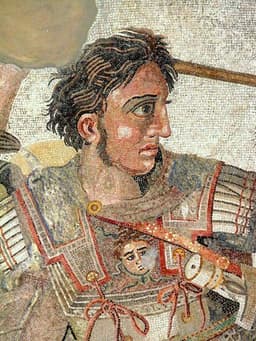
Alexander the Great
General · Ancient
84.7Total
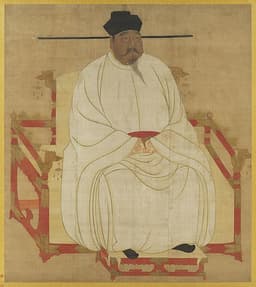
Zhao Kuangyin
Emperor · Medieval
75.5Total
Basic Information
Born
-356
927
Died
-323
976
Era
Ancient
Medieval
Nationality
Macedon
China
Occupation
General
Emperor
Civilization
Western
Eastern
Score Comparison
Military (10%)
96.0
74.6
Political (20%)
65.0
75.9
Influence (20%)
90.0
74.9
Legacy (20%)
90.0
75.1
Leadership (15%)
82.0
82.3
Strategy (15%)
92.0
69.8
TOTAL
84.7
75.5
Rankings
🥇
Alexander the GreatLeader
Mil: 96.0Pol: 65.0Inf: 90.0
84.7
🥈
Zhao Kuangyin
Mil: 74.6Pol: 75.9Inf: 74.9
75.5
+9.2 behind
How This Comparison Works
Algorithm
Each figure is scored on 6 dimensions (0—100 scale) based on structured historical data: Military (10%), Political (20%), Influence (20%), Legacy (20%), Leadership (15%), Strategy (15%). The weighted total produces the final ranking.
Data Sources
Scores are computed from structured sub-indicators in the database. Scale factors adjust for era (Ancient ×0.85, Modern ×1.0) and civilization size (Eastern ×1.05, Other ×0.80) to account for differences in population and military scale.
Maximum 3 Figures
Comparisons are limited to 2—3 figures to ensure readability and statistical meaningfulness.
Error Margins
±5 points per dimension — Sub-scores are derived from historical records with inherent uncertainty. Two figures within 5 points on a dimension should be considered roughly equivalent in that area.
Total Score Accuracy
±3 points overall — The weighted combination of 6 dimensions produces a total score with approximately ±3 points of uncertainty. Differences of less than 3 points are not statistically significant— the figures are effectively tied.
Known Limitations
- Historical records are incomplete and uneven across civilizations
- Figures from oral-tradition societies may be underrepresented
- Occupation labels can misclassify multi-role figures
- Scores measure capability and impact, not moral character
- Quantitative scoring is a comparison tool, not absolute truth
Capability Radar
Military (10%) — Battles & Warfare
Battles
98
75
Win Rate
99
85
Expansion
99
75
Political (20%) — Governance & Reform
Reform
75
90
Diplomacy
80
85
Economy
70
80
Influence (20%) — Cultural & Global Reach
Cultural
95
70
Global
95
60
Legacy (20%) — Historical Impact
Historical
98
80
Longevity
95
75
Leadership (15%) — Power & Stability
Tenure
60
65
Stability
55
85
Strategy (15%) — Tactics & Innovation
Strategy
98
80
Tactics
99
70
Reform
85
90
Analysis will be generated on first visit.
Scores and timeline are available below. The page will refresh automatically when ready.
Alexander the Great — Complete Timeline
334 BC
Battle of the Granicus RiverWar◆ Major
Alexander led his Macedonian army across the Hellespont into Asia Minor and defeated a Persian force under local satraps at the Granicus River. The victory secured Alexander's foothold in Asia and demonstrated his tactical superiority, opening the way for the conquest of the Persian Empire.
Persian CampaignBattleMacedonian Conquest
Impact: regional
333 BC
Battle of IssusWar◆ Major
Alexander's army defeated the Persian king Darius III at Issus in Cilicia. Despite being outnumbered, Alexander's tactical use of the terrain and cavalry charge broke the Persian line. Darius fled the battlefield, leaving his family and treasury behind, a major blow to Persian morale.
Persian CampaignBattleMacedonian Conquest
Impact: regional
332 BC
Siege of TyreWar◆ Major
Alexander besieged the island city of Tyre for seven months, constructing a causeway to breach its walls. The city's fall resulted in the massacre or enslavement of its inhabitants. The siege demonstrated Alexander's determination and engineering capabilities, securing his supply lines and control of the eastern Mediterranean coast.
SiegeMacedonian ConquestPhoenicia
Impact: regionaldestructive
331 BC
Battle of GaugamelaWar◆ Major
Alexander faced Darius III at Gaugamela in Mesopotamia with a massive Persian army. Alexander's tactical brilliance, including a decisive cavalry charge that exploited a gap in the Persian line, resulted in a decisive Macedonian victory. Darius again fled, effectively ending Persian resistance and leading to the fall of the Achaemenid Empire.
Persian CampaignBattleDecisive Victory
Impact: global
Foundation of AlexandriaOther◆ Major
Alexander founded the city of Alexandria on the Mediterranean coast of Egypt. He personally selected the site and oversaw the initial planning. Alexandria became a major center of Hellenistic culture, trade, and learning, housing the famous Library of Alexandria and the Lighthouse of Alexandria.
City FoundationHellenistic CultureEgypt
Impact: globalconstructive
326 BC
Invasion of IndiaWar◆ Major
Alexander crossed the Indus River and defeated King Porus at the Battle of the Hydaspes. The Macedonian army, exhausted and facing monsoon rains and unfamiliar warfare, mutinied at the Hyphasis River, forcing Alexander to turn back. This campaign marked the easternmost extent of his conquests.
Indian CampaignBattleMutiny
Impact: regional
Zhao Kuangyin — Complete Timeline
960 AD
Founded Song dynastyPolitical Action
Zhao Kuangyin, a general of Later Zhou, was proclaimed emperor by his troops at Chenqiao. He established the Song dynasty, ending the Five Dynasties period and beginning a new era of Chinese history.
Song dynastyFoundingChenqiao
Impact: globalconstructive
961 AD
Removed military power from generalsPolitical Action◆ Major
Zhao Kuangyin invited senior generals to a banquet and persuaded them to retire peacefully. This 'removal of military power over wine' prevented military coups and centralized control.
Song dynastyMilitary reformCentralization
Impact: nationalconstructive
963 AD
Unified southern ChinaWar◆ Major
Zhao Kuangyin launched campaigns to conquer the southern kingdoms, including Jingnan, Later Shu, and Southern Tang. By his death, most of China was reunified under Song rule.
Song unificationConquestSouthern kingdoms
Impact: national
Similar Comparisons
Comments & Discussion
史海沉钩6/16/2026
亚历山大和赵匡胤的对比很有意思,但我认为这个评分体系明显偏向西方军事征服标准。亚历山大96分的军事分确实令人印象深刻,但赵匡胤的75分严重低估了他“以文驭武”的治国智慧。宋太祖的“杯酒释兵权”不仅避免了流血冲突,更开创了中国历史上罕见的文人治国黄金时代。反观亚历山大,他死后帝国立即分裂,继业者战争打了四十多年,这种“征服后真空”在东方史观里是很大的减分项。此外,赵匡胤推行重文轻武政策,使得宋代科技经济达到古代巅峰,这种“软力量”影响力往往被西方评分标准忽视。如果按东方史观评价,赵匡胤的政治和影响力分数应该更高。
数据考据派6/16/2026
我对这两个人物的评分做了一些重新计算。亚历山大总分84.7分,其中军事96分太夸张了——他确实没输过仗,但高加米拉战役时兵力是波斯的1/3吗?实际上马其顿方阵和伙伴骑兵的协同作战效率极高,而且对手大流士三世的指挥能力实在不敢恭维。如果按赵匡胤的评分标准,南唐、后蜀、北汉这些对手同样不堪一击。另外,亚历山大的政治分只有65分,但他在埃及被尊为法老、在波斯采用总督制、鼓励马其顿将领娶波斯贵族女性——这些跨文化整合努力至少应该70分以上。赵匡胤的军事分74.6分也值得商榷:他统一南方时兵力常优于对手,而北伐契丹时高梁河之战宋军惨败——这个败绩如果扣分,亚历山大的印度撤退是不是也该扣?评分体系需要更一致的跨文明权重。