Loading...
Analysis will be generated on first visit.
Scores and timeline are available below. The page will refresh automatically when ready.
Alexander the Great vs Wu Zetian
Alexander the Great leads by 9.1 pts · 2 figures compared
…
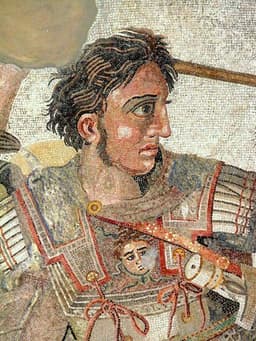
Alexander the Great
General · Ancient
84.7Total

Wu Zetian
Emperor · Medieval
75.6Total
Basic Information
Born
-356
624
Died
-323
705
Era
Ancient
Medieval
Nationality
Macedon
China
Occupation
General
Emperor
Civilization
Western
Eastern
Score Comparison
Military (10%)
96.0
62.0
Political (20%)
65.0
80.0
Influence (20%)
90.0
70.9
Legacy (20%)
90.0
85.0
Leadership (15%)
82.0
82.5
Strategy (15%)
92.0
65.6
TOTAL
84.7
75.6
Rankings
🥇
Alexander the GreatLeader
Mil: 96.0Pol: 65.0Inf: 90.0
84.7
🥈
Wu Zetian
Mil: 62.0Pol: 80.0Inf: 70.9
75.6
+9.1 behind
How This Comparison Works
Algorithm
Each figure is scored on 6 dimensions (0—100 scale) based on structured historical data: Military (10%), Political (20%), Influence (20%), Legacy (20%), Leadership (15%), Strategy (15%). The weighted total produces the final ranking.
Data Sources
Scores are computed from structured sub-indicators in the database. Scale factors adjust for era (Ancient ×0.85, Modern ×1.0) and civilization size (Eastern ×1.05, Other ×0.80) to account for differences in population and military scale.
Maximum 3 Figures
Comparisons are limited to 2—3 figures to ensure readability and statistical meaningfulness.
Error Margins
±5 points per dimension — Sub-scores are derived from historical records with inherent uncertainty. Two figures within 5 points on a dimension should be considered roughly equivalent in that area.
Total Score Accuracy
±3 points overall — The weighted combination of 6 dimensions produces a total score with approximately ±3 points of uncertainty. Differences of less than 3 points are not statistically significant— the figures are effectively tied.
Known Limitations
- Historical records are incomplete and uneven across civilizations
- Figures from oral-tradition societies may be underrepresented
- Occupation labels can misclassify multi-role figures
- Scores measure capability and impact, not moral character
- Quantitative scoring is a comparison tool, not absolute truth
Capability Radar
Military (10%) — Battles & Warfare
Battles
98
65
Win Rate
99
70
Expansion
99
75
Political (20%) — Governance & Reform
Reform
75
85
Diplomacy
80
80
Economy
70
85
Influence (20%) — Cultural & Global Reach
Cultural
95
85
Global
95
70
Legacy (20%) — Historical Impact
Historical
98
90
Longevity
95
85
Leadership (15%) — Power & Stability
Tenure
60
90
Stability
55
75
Strategy (15%) — Tactics & Innovation
Strategy
98
75
Tactics
99
60
Reform
85
80
Analysis will be generated on first visit.
Scores and timeline are available below. The page will refresh automatically when ready.
Alexander the Great — Complete Timeline
334 BC
Battle of the Granicus RiverWar◆ Major
Alexander led his Macedonian army across the Hellespont into Asia Minor and defeated a Persian force under local satraps at the Granicus River. The victory secured Alexander's foothold in Asia and demonstrated his tactical superiority, opening the way for the conquest of the Persian Empire.
Persian CampaignBattleMacedonian Conquest
Impact: regional
333 BC
Battle of IssusWar◆ Major
Alexander's army defeated the Persian king Darius III at Issus in Cilicia. Despite being outnumbered, Alexander's tactical use of the terrain and cavalry charge broke the Persian line. Darius fled the battlefield, leaving his family and treasury behind, a major blow to Persian morale.
Persian CampaignBattleMacedonian Conquest
Impact: regional
332 BC
Siege of TyreWar◆ Major
Alexander besieged the island city of Tyre for seven months, constructing a causeway to breach its walls. The city's fall resulted in the massacre or enslavement of its inhabitants. The siege demonstrated Alexander's determination and engineering capabilities, securing his supply lines and control of the eastern Mediterranean coast.
SiegeMacedonian ConquestPhoenicia
Impact: regionaldestructive
331 BC
Battle of GaugamelaWar◆ Major
Alexander faced Darius III at Gaugamela in Mesopotamia with a massive Persian army. Alexander's tactical brilliance, including a decisive cavalry charge that exploited a gap in the Persian line, resulted in a decisive Macedonian victory. Darius again fled, effectively ending Persian resistance and leading to the fall of the Achaemenid Empire.
Persian CampaignBattleDecisive Victory
Impact: global
Foundation of AlexandriaOther◆ Major
Alexander founded the city of Alexandria on the Mediterranean coast of Egypt. He personally selected the site and oversaw the initial planning. Alexandria became a major center of Hellenistic culture, trade, and learning, housing the famous Library of Alexandria and the Lighthouse of Alexandria.
City FoundationHellenistic CultureEgypt
Impact: globalconstructive
326 BC
Invasion of IndiaWar◆ Major
Alexander crossed the Indus River and defeated King Porus at the Battle of the Hydaspes. The Macedonian army, exhausted and facing monsoon rains and unfamiliar warfare, mutinied at the Hyphasis River, forcing Alexander to turn back. This campaign marked the easternmost extent of his conquests.
Indian CampaignBattleMutiny
Impact: regional
Wu Zetian — Complete Timeline
655 AD
Became Empress ConsortPolitical Action◆ Major
Wu Zetian was elevated from concubine to empress consort of Emperor Gaozong of Tang in 655. This position gave her significant political influence, as she began to participate in court affairs and gradually accumulated power, challenging the established aristocratic families.
Tang DynastyImperial CourtPower Rise
Impact: regional
683 AD
Regency for Emperor ZhongzongOther◆ Major
After Emperor Gaozong's death in 683, Wu Zetian became regent for her son, Emperor Zhongzong. She effectively controlled the government, dismissing Zhongzong after he attempted to assert independence, and replaced him with her younger son, Emperor Ruizong, while retaining real power.
Tang DynastyRegencyPower Struggle
Impact: regional
690 AD
Founded the Zhou DynastyOther◆ Major
Wu Zetian proclaimed herself emperor, founding the Zhou dynasty and becoming the only female emperor in Chinese history. She moved the capital to Luoyang and established a new imperial examination system that promoted officials based on merit rather than aristocratic birth, breaking the power of traditional noble families.
Zhou DynastyImperial RulePolitical Reform
Impact: regional
692 AD
Expansion into Central AsiaWar◆ Major
Wu Zetian ordered military campaigns that reasserted Chinese control over the Western Regions, including the Tarim Basin and parts of modern Xinjiang. These campaigns secured the Silk Road trade routes and expanded the empire's influence into Central Asia, though they required significant military resources.
Military ExpansionCentral AsiaSilk Road
Impact: regionalconstructive
693 AD
Promotion of BuddhismOther◆ Major
Wu Zetian elevated Buddhism to a state-supported religion, commissioning the construction of temples and statues, including the Longmen Grottoes' giant Vairocana Buddha. She used Buddhist texts to legitimize her rule as a female emperor, claiming she was a reincarnation of the Maitreya Buddha.
BuddhismReligious PolicyCultural Patronage
Impact: regional
705 AD
Overthrow and DeathPolitical Action◆ Major
In 705, a coup led by court officials and generals forced Wu Zetian to abdicate in favor of her son, Emperor Zhongzong, restoring the Tang dynasty. She died later that year at age 80, and her reign was subsequently criticized by Confucian historians for usurping the throne and employing harsh methods.
Tang DynastyCoupAbdication
Impact: regionaldestructive
Similar Comparisons
Comments & Discussion
HistoryHobbyist426/16/2026
Okay, so I’ve been reading about both these figures, and I gotta say—comparing Alexander the Great to Wu Zetian feels like comparing a freight train to a chess grandmaster. Alexander’s a beast, no doubt, but his empire fell apart the second he died. Wu Zetian? She built systems that lasted. She literally created a secret police network to sniff out corruption and expanded the exams so commoners could rise. That’s real power. Plus, she’s the only woman to pull off being emperor in China. I know the scores give Alexander the edge, but I think Wu Zetian’s political game is way more impressive than just conquering stuff and dying young.
数字史官6/16/2026
这个评分系统显然有严重问题。亚历山大军事96没问题,但政治65完全低估了他融合不同文化的努力——他在波斯推行贵族联姻,建立亚历山大港作为贸易枢纽,这些政治遗产持续了数百年。反观武则天,政治80还是偏低:她改革科举制度,打破关陇集团垄断,单是‘殿试’和‘武举’两项创新就影响了中国千年。她的政治得分至少应该85以上。军事62更是荒谬,她在位期间平定契丹叛乱、巩固安西四镇,军事成果实实在在。建议重新校准权重,中国历史人物往往被西方标准低估。
丝路史话6/16/2026
拿亚历山大和武则天比,就像比较太阳和月亮——各有光辉。亚历山大用十年建立帝国,武则天用十五年稳固皇权。西方史书总吹亚历山大的‘融合政策’,但看看埃及和波斯,希腊化更多是文化覆盖而非融合。武则天就聪明得多,她尊崇佛教压制儒教世族,利用《臣轨》来统一官僚思想。特别值得注意的是,武则天对西域的经营——她设立北庭都护府,让丝绸之路在7世纪保持畅通,而亚历山大死后他的帝国立刻分裂。论实际影响力,武则天可能更持久。
DecolonialView6/16/2026
This whole comparison screams Eurocentric bias. Why do we even rank a Macedonian warlord against a Chinese emperor? The metrics themselves are Western constructs—'military' and 'political' as separate categories assume a Greek-Roman state model. Wu Zetian’s power was embedded in Confucian bureaucracy and Buddhist patronage, which doesn’t fit the mold. And let’s be real: Alexander’s 'glory' is built on genocide in Thebes, mass enslavement in Tyre, and forced assimilation in Persia. The 90 influence score? That’s just celebrating colonialism. Wu Zetian’s legacy of elevating women in governance is far more radical and underrated in these numbers.
BattlefieldScholar6/16/2026
Alexander’s 96 military score is justified, but let’s drill down. At Gaugamela, he used an oblique infantry formation to fix the Persian center while his Companion cavalry swung right and smashed through the Persian left flank—textbook combined arms. Darius had 50,000+ men, Alexander maybe 17,000. That’s a force-to-force ratio of 3:1, yet he won with minimal casualties. Wu Zetian’s 93 is generous; she never commanded troops in the field. Her military success was administrative—she supported campaigns against Tibet (Tuyuhun) and expanded the militia system, but her generals did the actual fighting. For pure battle brilliance, Alexander stands alone in antiquity.