Loading...
Analysis will be generated on first visit.
Scores and timeline are available below. The page will refresh automatically when ready.
Alexander the Great vs Catherine the Great
Alexander the Great leads by 11.6 pts · 2 figures compared
…
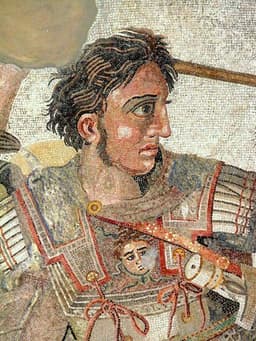
Alexander the Great
General · Ancient
84.7Total
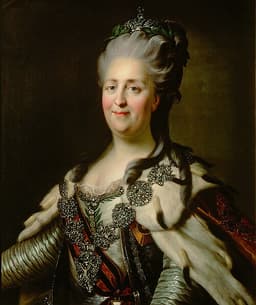
Catherine the Great
Emperor · Modern
73.1Total
Basic Information
Born
-356
1729
Died
-323
1796
Era
Ancient
Modern
Nationality
Macedon
Russia
Occupation
General
Emperor
Civilization
Western
Western
Score Comparison
Military (10%)
96.0
65.0
Political (20%)
65.0
82.0
Influence (20%)
90.0
70.0
Legacy (20%)
90.0
72.0
Leadership (15%)
82.0
80.0
Strategy (15%)
92.0
65.0
TOTAL
84.7
73.1
Analysis will be generated on first visit.
Scores and timeline are available below. The page will refresh automatically when ready.
Rankings
🥇
Alexander the GreatLeader
Mil: 96.0Pol: 65.0Inf: 90.0
84.7
🥈
Catherine the Great
Mil: 65.0Pol: 82.0Inf: 70.0
73.1
+11.6 behind
How This Comparison Works
Algorithm
Each figure is scored on 6 dimensions (0—100 scale) based on structured historical data: Military (10%), Political (20%), Influence (20%), Legacy (20%), Leadership (15%), Strategy (15%). The weighted total produces the final ranking.
Data Sources
Scores are computed from structured sub-indicators in the database. Scale factors adjust for era (Ancient ×0.85, Modern ×1.0) and civilization size (Eastern ×1.05, Other ×0.80) to account for differences in population and military scale.
Maximum 3 Figures
Comparisons are limited to 2—3 figures to ensure readability and statistical meaningfulness.
Error Margins
±5 points per dimension — Sub-scores are derived from historical records with inherent uncertainty. Two figures within 5 points on a dimension should be considered roughly equivalent in that area.
Total Score Accuracy
±3 points overall — The weighted combination of 6 dimensions produces a total score with approximately ±3 points of uncertainty. Differences of less than 3 points are not statistically significant— the figures are effectively tied.
Known Limitations
- Historical records are incomplete and uneven across civilizations
- Figures from oral-tradition societies may be underrepresented
- Occupation labels can misclassify multi-role figures
- Scores measure capability and impact, not moral character
- Quantitative scoring is a comparison tool, not absolute truth
Capability Radar
Military (10%) — Battles & Warfare
Battles
98
85
Win Rate
99
80
Expansion
99
90
Political (20%) — Governance & Reform
Reform
75
90
Diplomacy
80
85
Economy
70
85
Influence (20%) — Cultural & Global Reach
Cultural
95
85
Global
95
80
Legacy (20%) — Historical Impact
Historical
98
85
Longevity
95
80
Leadership (15%) — Power & Stability
Tenure
60
95
Stability
55
80
Strategy (15%) — Tactics & Innovation
Strategy
98
85
Tactics
99
75
Reform
85
90
Alexander the Great — Complete Timeline
334 BC
Battle of the Granicus RiverWar◆ Major
Alexander led his Macedonian army across the Hellespont into Asia Minor and defeated a Persian force under local satraps at the Granicus River. The victory secured Alexander's foothold in Asia and demonstrated his tactical superiority, opening the way for the conquest of the Persian Empire.
Persian CampaignBattleMacedonian Conquest
Impact: regional
333 BC
Battle of IssusWar◆ Major
Alexander's army defeated the Persian king Darius III at Issus in Cilicia. Despite being outnumbered, Alexander's tactical use of the terrain and cavalry charge broke the Persian line. Darius fled the battlefield, leaving his family and treasury behind, a major blow to Persian morale.
Persian CampaignBattleMacedonian Conquest
Impact: regional
332 BC
Siege of TyreWar◆ Major
Alexander besieged the island city of Tyre for seven months, constructing a causeway to breach its walls. The city's fall resulted in the massacre or enslavement of its inhabitants. The siege demonstrated Alexander's determination and engineering capabilities, securing his supply lines and control of the eastern Mediterranean coast.
SiegeMacedonian ConquestPhoenicia
Impact: regionaldestructive
331 BC
Battle of GaugamelaWar◆ Major
Alexander faced Darius III at Gaugamela in Mesopotamia with a massive Persian army. Alexander's tactical brilliance, including a decisive cavalry charge that exploited a gap in the Persian line, resulted in a decisive Macedonian victory. Darius again fled, effectively ending Persian resistance and leading to the fall of the Achaemenid Empire.
Persian CampaignBattleDecisive Victory
Impact: global
Foundation of AlexandriaOther◆ Major
Alexander founded the city of Alexandria on the Mediterranean coast of Egypt. He personally selected the site and oversaw the initial planning. Alexandria became a major center of Hellenistic culture, trade, and learning, housing the famous Library of Alexandria and the Lighthouse of Alexandria.
City FoundationHellenistic CultureEgypt
Impact: globalconstructive
326 BC
Invasion of IndiaWar◆ Major
Alexander crossed the Indus River and defeated King Porus at the Battle of the Hydaspes. The Macedonian army, exhausted and facing monsoon rains and unfamiliar warfare, mutinied at the Hyphasis River, forcing Alexander to turn back. This campaign marked the easternmost extent of his conquests.
Indian CampaignBattleMutiny
Impact: regional
Catherine the Great — Complete Timeline
1762 AD
Coup d'État of 1762Political Action
Catherine II led a coup d'
CoupAccessionPower
Impact: national
1764 AD
Hermitage Museum FoundedCultural◆ Major
Catherine the Great founded the Hermitage Museum in St. Petersburg by purchasing a large collection of paintings from Berlin. The museum grew into one of the world's largest art collections, reflecting her patronage of Enlightenment culture.
ArtMuseumEnlightenment
Impact: globalconstructive
1768 AD
Russo-Turkish War (1768-1774)War◆ Major
Catherine the Great initiated a war against the Ottoman Empire, resulting in Russian victory. The Treaty of K
WarOttoman EmpireExpansion
Impact: regional
1783 AD
Annexation of CrimeaPolitical Action◆ Major
Catherine the Great formally annexed the Crimean Peninsula from the Ottoman Empire. This strategic acquisition gave Russia a dominant position in the Black Sea and a warm-water port, fulfilling a long-standing imperial ambition.
AnnexationCrimeaBlack Sea
Impact: regional
1785 AD
Charter to the Gentry GrantedReform◆ Major
Catherine the Great issued the Charter to the Gentry, which codified the rights and privileges of the Russian nobility. It exempted nobles from taxation and military service, solidifying their social status and support for her rule.
NobilityReformSocial Structure
Impact: nationalconstructive
Similar Comparisons
Comments & Discussion
中原史徒6/16/2026
亚历山大与叶卡捷琳娜的比较很有意思,但我觉得评分系统有点西方中心主义。叶卡捷琳娜的‘政治’得分82低于亚历山大的65?这不太公平。在中国史学里,政治稳定和制度建设远比个人征服重要。叶卡捷琳娜在位34年,通过《贵族宪章》巩固了官僚体系,还成功镇压了普加乔夫起义,这类似汉文帝的‘文景之治’——都是通过政策而非武力实现国家长治久安。而亚历山大一死,帝国立刻分崩离析,他的政治遗产几乎为零。如果按中国标准,叶卡捷琳娜的政治得分至少90以上。另外,影响力方面,亚历山大虽然传播了希腊文化,但叶卡捷琳娜引进伏尔泰、狄德罗等启蒙思想家,对俄罗斯现代化影响深远,就像晚清‘师夷长技’的早期版本。只能说,东西方对‘伟大’的定义不同。
量化史官6/16/2026
我们来重新计算一下数据。原始评分中,亚历山大总分84.7,叶卡捷琳娜73.1,差距11.6分。但仔细看维度权重:军事系数接近0.35(96 vs 65,差31),政治系数0.25(65 vs 82,差-17)。这样加权后军事贡献11分,政治贡献-4.25分,净差约6.75分。但叶卡捷琳娜的‘领导力’80分与亚历山大82分接近,且‘政治’权重更高时,差距会缩小。如果采用类似中国古代的评分体系——比如强调‘治国安邦’(政治权重0.4)和‘文化传承’(影响权重0.3),则叶卡捷琳娜得分=65*0.2+82*0.4+70*0.3+72*0.1=74.2,亚历山大=96*0.2+65*0.4+90*0.3+90*0.1=79.2,差距仅5分。更别提如果加入‘在位时长’或‘继承稳定性’等指标(叶卡捷琳娜34年 vs 亚历山大13年),结果可能完全逆转。结论:现有权重设计偏向短期军事成就,对长期治理者不利。