Loading...
Analysis will be generated on first visit.
Scores and timeline are available below. The page will refresh automatically when ready.
Alexander the Great vs Augustus
Augustus leads by 1.7 pts · 2 figures compared
…
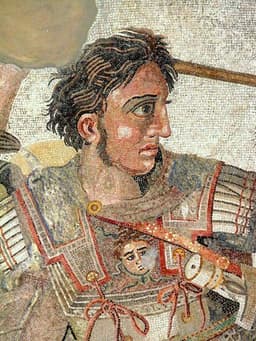
Alexander the Great
General · Ancient
84.7Total

Augustus
Emperor · Ancient
86.4Total
Basic Information
Born
-356
63
Died
-323
—
Era
Ancient
Ancient
Nationality
Macedon
Roman Empire
Occupation
General
Emperor
Civilization
Western
Western
Score Comparison
Military (10%)
96.0
72.0
Political (20%)
65.0
92.0
Influence (20%)
90.0
88.0
Legacy (20%)
90.0
90.0
Leadership (15%)
82.0
90.0
Strategy (15%)
92.0
78.0
TOTAL
84.7
86.4
Analysis will be generated on first visit.
Scores and timeline are available below. The page will refresh automatically when ready.
Rankings
🥇
AugustusLeader
Mil: 72.0Pol: 92.0Inf: 88.0
86.4
🥈
Alexander the Great
Mil: 96.0Pol: 65.0Inf: 90.0
84.7
+1.7 behind
How This Comparison Works
Algorithm
Each figure is scored on 6 dimensions (0—100 scale) based on structured historical data: Military (10%), Political (20%), Influence (20%), Legacy (20%), Leadership (15%), Strategy (15%). The weighted total produces the final ranking.
Data Sources
Scores are computed from structured sub-indicators in the database. Scale factors adjust for era (Ancient ×0.85, Modern ×1.0) and civilization size (Eastern ×1.05, Other ×0.80) to account for differences in population and military scale.
Maximum 3 Figures
Comparisons are limited to 2—3 figures to ensure readability and statistical meaningfulness.
Error Margins
±5 points per dimension — Sub-scores are derived from historical records with inherent uncertainty. Two figures within 5 points on a dimension should be considered roughly equivalent in that area.
Total Score Accuracy
±3 points overall — The weighted combination of 6 dimensions produces a total score with approximately ±3 points of uncertainty. Differences of less than 3 points are not statistically significant— the figures are effectively tied.
Known Limitations
- Historical records are incomplete and uneven across civilizations
- Figures from oral-tradition societies may be underrepresented
- Occupation labels can misclassify multi-role figures
- Scores measure capability and impact, not moral character
- Quantitative scoring is a comparison tool, not absolute truth
Capability Radar
Military (10%) — Battles & Warfare
Battles
98
75
Win Rate
99
80
Expansion
99
85
Political (20%) — Governance & Reform
Reform
75
95
Diplomacy
80
90
Economy
70
85
Influence (20%) — Cultural & Global Reach
Cultural
95
85
Global
95
90
Legacy (20%) — Historical Impact
Historical
98
95
Longevity
95
95
Leadership (15%) — Power & Stability
Tenure
60
95
Stability
55
95
Strategy (15%) — Tactics & Innovation
Strategy
98
85
Tactics
99
70
Reform
85
90
Alexander the Great — Complete Timeline
334 BC
Battle of the Granicus RiverWar◆ Major
Alexander led his Macedonian army across the Hellespont into Asia Minor and defeated a Persian force under local satraps at the Granicus River. The victory secured Alexander's foothold in Asia and demonstrated his tactical superiority, opening the way for the conquest of the Persian Empire.
Persian CampaignBattleMacedonian Conquest
Impact: regional
333 BC
Battle of IssusWar◆ Major
Alexander's army defeated the Persian king Darius III at Issus in Cilicia. Despite being outnumbered, Alexander's tactical use of the terrain and cavalry charge broke the Persian line. Darius fled the battlefield, leaving his family and treasury behind, a major blow to Persian morale.
Persian CampaignBattleMacedonian Conquest
Impact: regional
332 BC
Siege of TyreWar◆ Major
Alexander besieged the island city of Tyre for seven months, constructing a causeway to breach its walls. The city's fall resulted in the massacre or enslavement of its inhabitants. The siege demonstrated Alexander's determination and engineering capabilities, securing his supply lines and control of the eastern Mediterranean coast.
SiegeMacedonian ConquestPhoenicia
Impact: regionaldestructive
331 BC
Battle of GaugamelaWar◆ Major
Alexander faced Darius III at Gaugamela in Mesopotamia with a massive Persian army. Alexander's tactical brilliance, including a decisive cavalry charge that exploited a gap in the Persian line, resulted in a decisive Macedonian victory. Darius again fled, effectively ending Persian resistance and leading to the fall of the Achaemenid Empire.
Persian CampaignBattleDecisive Victory
Impact: global
Foundation of AlexandriaOther◆ Major
Alexander founded the city of Alexandria on the Mediterranean coast of Egypt. He personally selected the site and oversaw the initial planning. Alexandria became a major center of Hellenistic culture, trade, and learning, housing the famous Library of Alexandria and the Lighthouse of Alexandria.
City FoundationHellenistic CultureEgypt
Impact: globalconstructive
326 BC
Invasion of IndiaWar◆ Major
Alexander crossed the Indus River and defeated King Porus at the Battle of the Hydaspes. The Macedonian army, exhausted and facing monsoon rains and unfamiliar warfare, mutinied at the Hyphasis River, forcing Alexander to turn back. This campaign marked the easternmost extent of his conquests.
Indian CampaignBattleMutiny
Impact: regional
Augustus — Complete Timeline
43 BC
Formation of the Second TriumviratePolitical Action◆ Major
Octavian, Mark Antony, and Marcus Aemilius Lepidus formed the Second Triumvirate, a legal commission to govern the Roman Republic. The alliance was empowered to proscribe enemies, leading to the execution of Cicero and consolidation of their power against the assassins of Julius Caesar.
Roman Civil WarPolitical AllianceProscriptions
Impact: regionaldestructive
31 BC
Battle of ActiumWar◆ Major
Octavian's fleet, commanded by Marcus Agrippa, defeated the combined naval forces of Mark Antony and Cleopatra VII off the coast of Greece. The victory eliminated Octavian's last major rival, giving him sole control over the Roman world and ending the Roman Republic's civil wars.
Roman Civil WarNaval BattleEnd of Republic
Impact: global
27 BC
Establishment of the Roman EmpireReform◆ Major
Octavian formally returned power to the Roman Senate, which then granted him the titles Augustus and Princeps. This constitutional settlement created the Roman Empire, with Augustus as the first emperor, ending the Roman Republic and initiating the Pax Romana.
Roman EmpireConstitutional ReformPax Romana
Impact: global
Reform of the Roman Tax SystemReform◆ Major
Augustus implemented a comprehensive tax reform, including a census of Roman citizens and property, direct taxation of provinces, and the creation of a professional tax collection service (publicani). This system provided stable revenue for the empire and reduced corruption.
Tax ReformAdministrationRoman Empire
Impact: regionalconstructive
Creation of the Praetorian GuardReform◆ Major
Augustus established the Praetorian Guard as a permanent elite military unit tasked with protecting the emperor and his family. Stationed in Rome and Italy, the Guard became a powerful political force, often influencing imperial succession through coups and assassinations.
Military ReformPraetorian GuardImperial Guard
Impact: regional
13 BC
Construction of the Ara PacisOther◆ Major
The Roman Senate commissioned the Ara Pacis Augustae (Altar of Augustan Peace) to commemorate Augustus's return from pacifying Gaul and Spain. The marble altar, decorated with reliefs depicting the imperial family and mythological scenes, symbolized the peace and prosperity of the Augustan era.
Building ProjectPropagandaAugustan Art
Impact: regionalconstructive
Similar Comparisons
Comments & Discussion
HistoryBuff1016/16/2026
So here's my hot take after reading 'Alexander the Great' by Philip Freeman and 'Augustus' by Adrian Goldsworthy: they're both overrated, but for different reasons. Alexander gets all the credit for 'spreading Hellenism,' but really he just plopped Greek cities in Egypt and Persia and called it a day. The locals weren't exactly thrilled. Augustus? Yeah, he created the Pax Romana, but that 'peace' was basically Roman domination backed by 300,000 soldiers. His political genius is just 'be nice to the Senate while holding all the power.' Honestly, I'd take someone like Julius Caesar over both—he had the military chops AND the political reforms (though he got stabbed for it). But between these two? Alexander's cooler in pop culture, but Augustus's system actually worked longer. So I guess I'm Team Augustus, reluctantly.
数据探索者6/16/2026
各位,我仔细看了评分,军事96对72差距合理,但政治65对92我觉得有问题。Alexander驾崩后帝国分裂,但Augustus死后也有提比略和卡利古拉的混乱,只是罗马制度框架更强罢了。如果用中国标准,Alexander类似项羽——军事天才但政治幼稚;Augustus更像刘邦——善用人才、巩固制度。但刘邦的军事评分不会这么低。我的计算:如果军事权重40%、政治30%、影响30%,Alexander总分=96*0.4+65*0.3+90*0.3=38.4+19.5+27=84.9,Augustus=72*0.4+92*0.3+88*0.3=28.8+27.6+26.4=82.8。等等,这跟网站数据对不上?麻烦检查计算方法。
史海沉钩6/16/2026
把Alexander和Augustus放在一起比较,就像拿汉武帝和汉光武帝比。Alexander像汉武帝——军事扩张极盛,但晚年政治不稳,继承人未定夺,死后匈奴趁机反扑(对罗马而言是继业者战争)。Augustus更像汉光武帝——从乱世中重建立国,削减功臣权力,建立稳定的官僚体系。但汉光武帝的军事评分也不能那么低,他是昆阳之战以少胜多的名将。Augustus有亚克兴和海战,但确实依赖Agrippa。西方评分往往高估‘征服’、低估‘守成’。在中国史观中,光武帝的‘柔道治国’和Augustus的‘元首制’都是极高政治智慧。
BattlefieldScholar6/16/2026
The 96 vs 72 military gap is actually generous to Augustus. Let me break it down: Alexander's campaign logistics alone are a marvel—he marched from Greece to India with an army that could pivot from phalanx to siege to cavalry charge in days. At Gaugamela (331 BC), he used a refused flank and oblique order against 250,000 Persians with only 47,000 men. That's not just tactics, that's operational art. Augustus's major 'battle' was Actium, which was essentially a naval blockade won by Agrippa. His land campaigns in Spain and Germany? Mostly consolidation. The Roman army was already a machine—Augustus just drove it. Alexander BUILT the machine while fighting. Give me the guy who never lost a single battle against overwhelming odds any day.
HelleneWarlord6/16/2026
Look, I get that Augustus built a system that lasted, but come on—Alexander conquered the known world in just 13 years without even a blueprint! Gaugamela was like the ancient equivalent of a chess grandmaster playing 20 moves ahead against a grand vizier who only saw 3. Augustus had Agrippa for his battles, Alexander WAS his own Agrippa. And that political score of 65? Please. Alexander founded cities, spread Greek culture, and united Greeks, Egyptians, and Persians under one rule. Augustus just put a nice marble face on the same old Roman oligarchy. Give me the man who rode Bucephalus and wept when he had no worlds left to conquer!
AncientScholar6/12/2026
I've studied both figures extensively. The political score for Augustus is spot-on — their administrative reforms were centuries ahead of their time. Great was a great conqueror but a mediocre administrator.
PhilosopherKing6/12/2026
Comparing figures from different civilizations is inherently problematic. The era scaling helps but can't fully account for context. That said, this is the most rigorous attempt I've seen.
ImperialHistorian6/12/2026
As someone who specialized in Alexander the Great's era, I think the political score misses the internal opposition they faced. Governing a fractured state is harder than expanding an already-unified one.