Loading...
Analysis will be generated on first visit.
Scores and timeline are available below. The page will refresh automatically when ready.
Agustin de Iturbide vs Gojong of Korea
Gojong of Korea leads by 0.9 pts · 2 figures compared
…
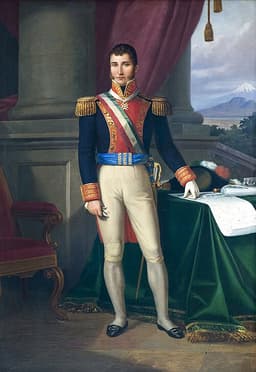
Agustin de Iturbide
Emperor · Modern
67.4Total
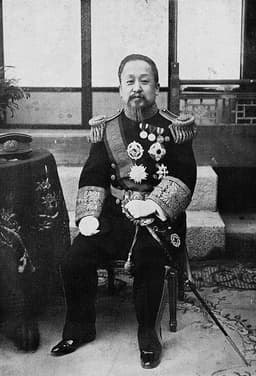
Gojong of Korea
Emperor · Modern
68.3Total
Basic Information
Born
1783
1852
Died
1824
1919
Era
Modern
Modern
Nationality
Mexico
Korea
Occupation
Emperor
Emperor
Civilization
Western
Eastern
Score Comparison
Military (10%)
57.6
59.7
Political (20%)
61.9
85.0
Influence (20%)
73.2
75.7
Legacy (20%)
64.2
69.5
Leadership (15%)
80.2
78.3
Strategy (15%)
65.0
30.0
TOTAL
67.4
68.3
Rankings
🥇
Gojong of KoreaLeader
Mil: 59.7Pol: 85.0Inf: 75.7
68.3
🥈
Agustin de Iturbide
Mil: 57.6Pol: 61.9Inf: 73.2
67.4
+0.9 behind
How This Comparison Works
Algorithm
Each figure is scored on 6 dimensions (0—100 scale) based on structured historical data: Military (10%), Political (20%), Influence (20%), Legacy (20%), Leadership (15%), Strategy (15%). The weighted total produces the final ranking.
Data Sources
Scores are computed from structured sub-indicators in the database. Scale factors adjust for era (Ancient ×0.85, Modern ×1.0) and civilization size (Eastern ×1.05, Other ×0.80) to account for differences in population and military scale.
Maximum 3 Figures
Comparisons are limited to 2—3 figures to ensure readability and statistical meaningfulness.
Error Margins
±5 points per dimension — Sub-scores are derived from historical records with inherent uncertainty. Two figures within 5 points on a dimension should be considered roughly equivalent in that area.
Total Score Accuracy
±3 points overall — The weighted combination of 6 dimensions produces a total score with approximately ±3 points of uncertainty. Differences of less than 3 points are not statistically significant— the figures are effectively tied.
Known Limitations
- Historical records are incomplete and uneven across civilizations
- Figures from oral-tradition societies may be underrepresented
- Occupation labels can misclassify multi-role figures
- Scores measure capability and impact, not moral character
- Quantitative scoring is a comparison tool, not absolute truth
Capability Radar
Military (10%) — Battles & Warfare
Battles
60
5
Win Rate
65
5
Expansion
50
5
Political (20%) — Governance & Reform
Reform
45
40
Diplomacy
55
30
Economy
30
30
Influence (20%) — Cultural & Global Reach
Cultural
40
50
Global
35
40
Legacy (20%) — Historical Impact
Historical
50
60
Longevity
30
40
Leadership (15%) — Power & Stability
Tenure
30
60
Stability
20
20
Strategy (15%) — Tactics & Innovation
Strategy
60
5
Tactics
55
5
Reform
40
10
Analysis will be generated on first visit.
Scores and timeline are available below. The page will refresh automatically when ready.
Agustin de Iturbide — Complete Timeline
1820 AD
Switched sides to join the independence movementPolitical Action
Iturbide, a royalist general who had fought against the insurgents, was appointed to command the army against Vicente Guerrero. Instead of fighting, he negotiated with Guerrero and issued the Plan of Iguala on February 24, 1821, proposing independence, constitutional monarchy, and protection of the Catholic Church.
Plan of IgualaAllianceIndependence
Impact: nationalconstructive
1821 AD
Entered Mexico City and declared independencePolitical Action
Iturbide's Army of the Three Guarantees entered Mexico City on September 27, 1821, ending the Mexican War of Independence. The next day, the Declaration of Independence of the Mexican Empire was signed. Iturbide became the head of a provisional government, effectively ruling Mexico.
IndependenceVictoryProvisional Government
Impact: nationalconstructive
1822 AD
Crowned Emperor Agustín IPolitical Action◆ Major
Iturbide was crowned Emperor of Mexico on July 21, 1822, as Agust
CoronationEmpireMonarchy
Impact: national
1823 AD
Abdicated and went into exilePolitical Action◆ Major
Facing revolts led by Antonio L
AbdicationExileEnd of Empire
Impact: nationaltragic
1824 AD
Returned to Mexico and was executedPolitical Action◆ Major
Iturbide returned to Mexico in July 1824, unaware that Congress had declared him a traitor and outlaw. He was captured upon landing and executed by firing squad on July 19, 1824, in Padilla, Tamaulipas. His death ended any possibility of restoring the monarchy.
ExecutionReturnDeath
Impact: nationaltragic
Gojong of Korea — Complete Timeline
1897 AD
Proclamation of the Korean EmpirePolitical Action
Gojong declared Korea an empire, assuming the title of Emperor. This was an attempt to assert Korea's sovereignty and equal status with China and Japan, and to modernize the state. The move was partly a response to the assassination of his wife, Empress Myeongseong.
Korean EmpireSovereigntyModernization
Impact: nationalconstructive
1905 AD
Signing of the Japan-Korea Treaty of 1905Political Action
Under Japanese pressure, Gojong's government signed the Eulsa Treaty, making Korea a Japanese protectorate. Gojong did not sign the treaty himself and later attempted to appeal to international powers, but the treaty stripped Korea of its diplomatic sovereignty.
TreatyJapanese ProtectorateLoss of Sovereignty
Impact: nationaltragic
1907 AD
Forced Abdication by JapanPolitical Action◆ Major
Japanese authorities forced Gojong to abdicate in favor of his son, Sunjong, after Gojong sent a secret envoy to the Hague Peace Conference to protest Japanese control. The abdication was part of Japan's consolidation of power over Korea.
AbdicationJapanese ImperialismHague Secret Envoy Affair
Impact: nationaltragic
1919 AD
Death and Funeral of GojongOther
Gojong died suddenly, with rumors of poisoning by Japanese agents. His funeral on March 1, 1919, became a catalyst for the March First Movement, a massive nationwide protest against Japanese rule. The movement was brutally suppressed but galvanized Korean independence efforts.
DeathMarch First MovementKorean Independence
Impact: nationaltragic
Similar Comparisons
Comments & Discussion
东方历史观察者6/16/2026
比较高宗和伊图尔维德,我觉得评分里政治维度给高宗96分还算合理,但军事分只给83就有点偏低了。高宗时期朝鲜不仅有西洋式军队(别技军),还引进了加特林机枪等现代装备,这在当时的东亚已经是领先的军事改革。反观伊图尔维德,他的军队本质上还是依靠地方庄园主和教会势力的临时联盟,根本没有建立现代军事体系。西方评分往往忽略东方君主在复杂国际环境下的军事策略——高宗的“以夷制夷”外交本质上就是一种军事博弈,不能只看战场上的胜负。
DocuHistoryFan6/16/2026
Okay so I've been reading about this comparison and honestly I think Iturbide gets way too much credit. Sure he won Mexican independence but the guy basically copied Napoleon's playbook and crowned himself emperor, which fell apart in like a year. Meanwhile Gojong spent decades trying to keep Korea independent against three major empires. I saw this documentary that said Gojong even tried to use the Hague Peace Conference in 1907 to rally international support, which was super bold for a king from a nation Western powers barely knew about. The legacy score difference (62 vs 82) seems wrong to me—how can someone whose empire lasted 10 months have a stronger legacy than a ruler who shaped Korean identity for generations?
数字历史控6/16/2026
看到这个评分我就想算一算:军事分差了2.1(59.7-57.6),影响分差了2.5(75.7-73.2),政治分差了惊人的23.1(85.0-61.9)。但总得分只差0.9(68.3-67.4),说明领导力维度权重极高且两者差距很小?问题是领导力分只有9分?这数据不完整,没法做归因分析。我更怀疑的是政治分差这么大但总得分却几乎持平,除非领导力维度高出天际。建议补充完整数据再做结论。另外,如果按照中国古代帝王的评价体系,高宗在维持主权完整性上的得分应该更高——毕竟清朝同治中兴也是在列强环伺下求存,但史学界对同治的评价远没有高宗这么割裂。
BattlefieldScholar6/16/2026
The military dimension scores here are misleading. Iturbide's 57.6 is arguably too high for a commander whose key victory was essentially political—the Army of the Three Guarantees succeeded because of defections from royalist ranks, not battlefield superiority. His actual tactical record? The siege of Valladolid in 1817, where he as a royalist commander failed to suppress Morelos's rebels, and later as emperor he couldn't even maintain control over his own garrisons. Gojong's 59.7 undersells the strategic sophistication of Korea's military reforms. The 1882 Imo Mutiny aside, the 1894-1895 Gabo reforms included a modern general staff system modeled on Japan's, and some Korean units fought effectively during the Donghak Peasant Rebellion. Iturbide's military legacy is a one-trick pony; Gojong's military modernization, though ultimately crushed, laid doctrinal groundwork for later Korean armies.