Loading...
Analysis will be generated on first visit.
Scores and timeline are available below. The page will refresh automatically when ready.
Abel Tasman vs Qin Shi Huang
Qin Shi Huang leads by 30.1 pts · 2 figures compared
…

Abel Tasman
Explorer · Modern
53.4Total
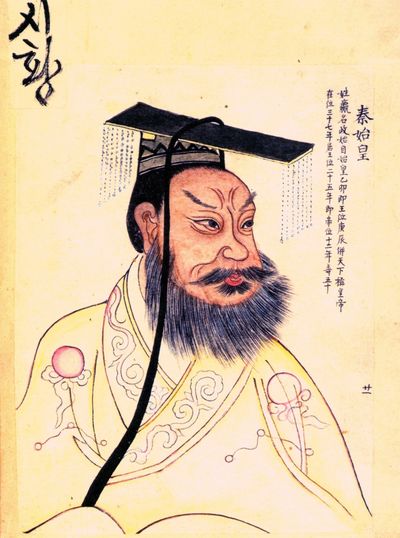
Qin Shi Huang
Emperor · Ancient
83.5Total
Basic Information
Born
1603
-259
Died
1659
-210
Era
Modern
Ancient
Nationality
Netherlands
China
Occupation
Explorer
Emperor
Civilization
Western
Eastern
Score Comparison
Military (10%)
32.2
80.0
Political (20%)
42.9
88.0
Influence (20%)
71.5
82.0
Legacy (20%)
61.8
85.0
Leadership (15%)
29.4
88.0
Strategy (15%)
70.0
75.0
TOTAL
53.4
83.5
Rankings
🥇
Qin Shi HuangLeader
Mil: 80.0Pol: 88.0Inf: 82.0
83.5
🥈
Abel Tasman
Mil: 32.2Pol: 42.9Inf: 71.5
53.4
+30.1 behind
How This Comparison Works
Algorithm
Each figure is scored on 6 dimensions (0—100 scale) based on structured historical data: Military (10%), Political (20%), Influence (20%), Legacy (20%), Leadership (15%), Strategy (15%). The weighted total produces the final ranking.
Data Sources
Scores are computed from structured sub-indicators in the database. Scale factors adjust for era (Ancient ×0.85, Modern ×1.0) and civilization size (Eastern ×1.05, Other ×0.80) to account for differences in population and military scale.
Maximum 3 Figures
Comparisons are limited to 2—3 figures to ensure readability and statistical meaningfulness.
Error Margins
±5 points per dimension — Sub-scores are derived from historical records with inherent uncertainty. Two figures within 5 points on a dimension should be considered roughly equivalent in that area.
Total Score Accuracy
±3 points overall — The weighted combination of 6 dimensions produces a total score with approximately ±3 points of uncertainty. Differences of less than 3 points are not statistically significant— the figures are effectively tied.
Known Limitations
- Historical records are incomplete and uneven across civilizations
- Figures from oral-tradition societies may be underrepresented
- Occupation labels can misclassify multi-role figures
- Scores measure capability and impact, not moral character
- Quantitative scoring is a comparison tool, not absolute truth
Capability Radar
Military (10%) — Battles & Warfare
Battles
0
85
Win Rate
0
90
Expansion
10
90
Political (20%) — Governance & Reform
Reform
0
95
Diplomacy
20
75
Economy
10
90
Influence (20%) — Cultural & Global Reach
Cultural
30
95
Global
40
85
Legacy (20%) — Historical Impact
Historical
50
95
Longevity
40
95
Leadership (15%) — Power & Stability
Tenure
10
70
Stability
10
65
Strategy (15%) — Tactics & Innovation
Strategy
0
85
Tactics
0
80
Reform
0
95
Analysis will be generated on first visit.
Scores and timeline are available below. The page will refresh automatically when ready.
Abel Tasman — Complete Timeline
1642 AD
First European to reach New ZealandInvention◆ Major
Tasman sighted the west coast of New Zealand's South Island, becoming the first European to reach the islands. He charted parts of the coastline but did not land due to hostile encounters with Maori.
DiscoveryNew ZealandExploration
Impact: global
Discovered TasmaniaInvention◆ Major
Tasman discovered the island of Tasmania, which he named Van Diemen's Land. He charted its coastline and claimed it for the Netherlands, though no settlement was established.
DiscoveryTasmaniaVan Diemen's Land
Impact: global
1643 AD
Explored the coast of New GuineaInvention
Tasman sailed along the northern coast of New Guinea, mapping parts of the island. He also charted the Bismarck Archipelago and the Solomon Islands, expanding Dutch knowledge of the Pacific.
ExplorationNew GuineaMapping
Impact: regional
First European to sight FijiInvention
Tasman sighted the Fiji Islands during his Pacific voyage. He did not land but charted the islands, making him the first European to record their existence.
DiscoveryFijiPacific
Impact: regional
Qin Shi Huang — Complete Timeline
246 BC
Construction of the Mausoleum and Terracotta ArmyOther◆ Major
Qin Shi Huang commissioned a vast mausoleum complex near Xi'an, guarded by thousands of life-sized terracotta soldiers, horses, and chariots. The project employed hundreds of thousands of workers and reflected his obsession with immortality and imperial power.
Impact: global
230 BC
Conquest of the Six Warring StatesWar
From 230 to 221 BCE, Ying Zheng led the Qin state in a series of campaigns that conquered the Han, Zhao, Wei, Chu, Yan, and Qi states. This unified China under a single ruler for the first time, ending the Warring States period.
Impact: global
221 BC
Standardization of Writing, Currency, and MeasurementsReform◆ Major
Qin Shi Huang ordered the standardization of Chinese script, currency, and weights and measures across the unified empire. This facilitated administration, trade, and cultural integration, laying a foundation for future dynasties.
Impact: globalconstructive
Proclamation of the Qin DynastyPolitical Action
After conquering the last independent state, Ying Zheng declared himself Shi Huangdi (First Emperor), founding the Qin Dynasty. He adopted a new title to signify his supreme authority and initiated centralized imperial rule.
Impact: global
214 BC
Initiation of the Great Wall ConstructionOther◆ Major
Qin Shi Huang ordered the connection and extension of existing northern fortifications to create a unified defensive wall against nomadic Xiongnu raids. This project involved massive conscripted labor and became the precursor to the later Great Wall.
Impact: regional
213 BC
Burning of Books and Burying of ScholarsPolitical Action◆ Major
On the advice of Li Si, Qin Shi Huang ordered the burning of historical records and philosophical texts not aligned with Legalist doctrine. He also had 460 Confucian scholars buried alive to suppress dissent and consolidate ideological control.
Impact: nationaldestructive
Similar Comparisons
Comments & Discussion
陶俑铁蹄6/17/2026
Comparing a ruthless emperor to a sea captain is like comparing a shark to a minnow. Qin Shi Huang united China with blood and iron, creating an empire that shaped East Asia for millennia. Tasman sailed around some islands and got lost. The Terracotta Army alone—8,000 life-sized soldiers—is more legacy than Tasman achieved in his entire career. Chinese history is about destiny; Dutch exploration is just geography homework.
航海诡计家6/17/2026
别拿殖民者和始皇帝相提并论。阿贝尔·塔斯曼就是个航海骗子,他根本没发现新西兰——毛利人早就在那住几百年了。他只不过画了张地图,回去交差领薪水。对比之下,秦始皇统一文字、度量衡,修长城抵御匈奴,那是真刀真枪给中华文明打地基。塔斯曼?他连范迪门斯地都搞错了,丢不丢人?历史地位差着十万里长城。
Historioclast6/17/2026
This comparison reeks of modern bias—pitting a "progressive" explorer against a "tyrannical" emperor to score cheap moral points. Qin Shi Huang's standardization of writing, currency, and laws was a monumental achievement that Tasman couldn't fathom. Meanwhile, Tasman's supposed discovery was actually just a series of near-misses—he never even set foot on New Zealand's South Island properly. Let's not forget that Tasman killed several Māori during his visit. Different eras, different ethics, but
战国博学家6/17/2026
你们都不懂秦法的精髓。始皇帝治国靠的是铁律和效率——修建驰道、疏通运河、统一思想,这些都是为了一个国家长期运转。塔斯曼呢?他航海靠运气,航行记录漏洞百出,连经纬度都经常算错。秦朝的法律竹简重达几十吨,塔斯曼的航海日志连自己船员的死亡原因都写不清楚。谁留给后世的史料更有价值?明眼人都知道。所以说,帝国的奠基者和海洋流浪汉根本没得比。
Deadpan Sea Dog6/17/2026
Look, I appreciate Tasman's grit—sailing into the unknown with nothing but wooden ships and bad charts—but his achievements are geographically trivial compared to Qin Shi Huang's administrative empire-building. Tasman mapped some coastlines; Qin Shi Huang conquered, unified, and standardized a civilization spanning millions of people. The Great Wall wasn't built by looking for a shortcut to Chile. Let's give credit where it's due: one man created China's foundation, the other gave us a few place