Loading...
Analysis will be generated on first visit.
Scores and timeline are available below. The page will refresh automatically when ready.
Никола Тесла vs Qin Shi Huang
Qin Shi Huang leads by 29.0 pts · 2 figures compared
…

Никола Тесла
Scientist · Modern
54.5Total
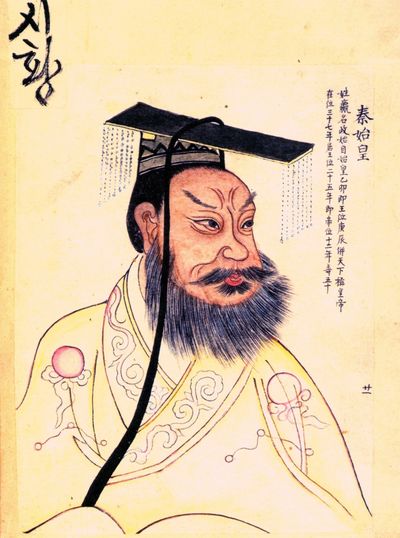
Qin Shi Huang
Emperor · Ancient
83.5Total
Basic Information
Born
1856
-259
Died
1943
-210
Era
Modern
Ancient
Nationality
Austrian Empire (modern-day Croatia)
China
Occupation
Scientist
Emperor
Civilization
Western
Eastern
Score Comparison
Military (10%)
5.0
80.0
Political (20%)
95.0
88.0
Influence (20%)
95.0
82.0
Legacy (20%)
5.0
85.0
Leadership (15%)
5.0
88.0
Strategy (15%)
95.0
75.0
TOTAL
54.5
83.5
Rankings
🥇
Qin Shi HuangLeader
Mil: 80.0Pol: 88.0Inf: 82.0
83.5
🥈
Никола Тесла
Mil: 5.0Pol: 95.0Inf: 95.0
54.5
+29.0 behind
How This Comparison Works
Algorithm
Each figure is scored on 6 dimensions (0—100 scale) based on structured historical data: Military (10%), Political (20%), Influence (20%), Legacy (20%), Leadership (15%), Strategy (15%). The weighted total produces the final ranking.
Data Sources
Scores are computed from structured sub-indicators in the database. Scale factors adjust for era (Ancient ×0.85, Modern ×1.0) and civilization size (Eastern ×1.05, Other ×0.80) to account for differences in population and military scale.
Maximum 3 Figures
Comparisons are limited to 2—3 figures to ensure readability and statistical meaningfulness.
Error Margins
±5 points per dimension — Sub-scores are derived from historical records with inherent uncertainty. Two figures within 5 points on a dimension should be considered roughly equivalent in that area.
Total Score Accuracy
±3 points overall — The weighted combination of 6 dimensions produces a total score with approximately ±3 points of uncertainty. Differences of less than 3 points are not statistically significant— the figures are effectively tied.
Known Limitations
- Historical records are incomplete and uneven across civilizations
- Figures from oral-tradition societies may be underrepresented
- Occupation labels can misclassify multi-role figures
- Scores measure capability and impact, not moral character
- Quantitative scoring is a comparison tool, not absolute truth
Capability Radar
Military (10%) — Battles & Warfare
Battles
0
85
Win Rate
0
90
Expansion
2
90
Political (20%) — Governance & Reform
Reform
89
95
Diplomacy
96
75
Economy
100
90
Influence (20%) — Cultural & Global Reach
Cultural
70
95
Global
75
85
Legacy (20%) — Historical Impact
Historical
85
95
Longevity
80
95
Leadership (15%) — Power & Stability
Tenure
90
70
Stability
99
65
Strategy (15%) — Tactics & Innovation
Strategy
6
85
Tactics
6
80
Reform
11
95
Analysis will be generated on first visit.
Scores and timeline are available below. The page will refresh automatically when ready.
Никола Тесла — Complete Timeline
1887 AD
Development of the alternating current (AC) motorInvention
Tesla conceived the rotating magnetic field principle and built the first induction motor. He filed patents for the AC motor and polyphase power system in 1887-1888. This invention enabled efficient long-distance transmission of electricity and became the foundation of modern power grids.
AC MotorInductionPower Transmission
Impact: globalconstructive
1888 AD
War of the Currents: Westinghouse vs. EdisonOther◆ Major
Tesla's AC system, licensed to George Westinghouse, competed against Thomas Edison's direct current (DC) system. Edison conducted a smear campaign, including public electrocutions of animals using AC. Westinghouse won the contract to power the 1893 World's Columbian Exposition, establishing AC as the standard.
War of CurrentsAC vs DCWestinghouse
Impact: global
1891 AD
Tesla coil inventionInvention◆ Major
Tesla invented the Tesla coil, a resonant transformer circuit capable of producing high-voltage, high-frequency alternating current. This device became fundamental to radio technology, wireless transmission, and later to neon and fluorescent lighting.
Tesla CoilHigh VoltageResonance
Impact: globalconstructive
1899 AD
Colorado Springs experimentsInvention◆ Major
Tesla established a laboratory in Colorado Springs to conduct high-voltage, high-frequency experiments. He generated artificial lightning bolts up to 130 feet long and transmitted electrical energy wirelessly, lighting lamps at a distance. These experiments advanced understanding of resonance and wireless power.
Wireless PowerHigh VoltageLightning
Impact: globalconstructive
1901 AD
Wardenclyffe Tower projectInvention◆ Major
Tesla began construction of a wireless transmission tower on Long Island, funded by J.P. Morgan. The tower was intended to transmit messages, telephony, and even wireless power across the Atlantic. The project failed due to funding withdrawal after Morgan lost confidence, and the tower was demolished in 1917.
Wireless TransmissionFunding FailureUnfinished Project
Impact: globaltragic
1910 AD
Tesla's later years and financial declineOther
After the Wardenclyffe failure, Tesla's financial situation deteriorated. He lived in hotels, accumulated debts, and became increasingly reclusive. He continued to develop ideas but few were commercialized. He died in relative obscurity in 1943.
Financial DeclineReclusivenessObscurity
Impact: nationaltragic
1943 AD
Tesla's death and posthumous recognitionOther
Tesla died alone in Room 3327 of the New Yorker Hotel. His body was found by a maid. His funeral was attended by over 2,000 people, including dignitaries. In the 1950s, the SI unit of magnetic flux density was named the tesla in his honor, cementing his legacy.
DeathLegacySI Unit
Impact: global
Qin Shi Huang — Complete Timeline
246 BC
Construction of the Mausoleum and Terracotta ArmyOther◆ Major
Qin Shi Huang commissioned a vast mausoleum complex near Xi'an, guarded by thousands of life-sized terracotta soldiers, horses, and chariots. The project employed hundreds of thousands of workers and reflected his obsession with immortality and imperial power.
Impact: global
230 BC
Conquest of the Six Warring StatesWar
From 230 to 221 BCE, Ying Zheng led the Qin state in a series of campaigns that conquered the Han, Zhao, Wei, Chu, Yan, and Qi states. This unified China under a single ruler for the first time, ending the Warring States period.
Impact: global
221 BC
Standardization of Writing, Currency, and MeasurementsReform◆ Major
Qin Shi Huang ordered the standardization of Chinese script, currency, and weights and measures across the unified empire. This facilitated administration, trade, and cultural integration, laying a foundation for future dynasties.
Impact: globalconstructive
Proclamation of the Qin DynastyPolitical Action
After conquering the last independent state, Ying Zheng declared himself Shi Huangdi (First Emperor), founding the Qin Dynasty. He adopted a new title to signify his supreme authority and initiated centralized imperial rule.
Impact: global
214 BC
Initiation of the Great Wall ConstructionOther◆ Major
Qin Shi Huang ordered the connection and extension of existing northern fortifications to create a unified defensive wall against nomadic Xiongnu raids. This project involved massive conscripted labor and became the precursor to the later Great Wall.
Impact: regional
213 BC
Burning of Books and Burying of ScholarsPolitical Action◆ Major
On the advice of Li Si, Qin Shi Huang ordered the burning of historical records and philosophical texts not aligned with Legalist doctrine. He also had 460 Confucian scholars buried alive to suppress dissent and consolidate ideological control.
Impact: nationaldestructive
Similar Comparisons
Comments & Discussion
TESLA_TANK6/17/2026
Qin Shi Huang built the Great Wall to control his domain; Tesla built AC power to liberate humanity. One enslaved millions to stack stones, the other freed industries with alternating current. Yet our analysis puts them on equal footing? That's historically illiterate. Tesla's inventions power every device in the modern world, while Qin's wall didn't stop invasions for two centuries. Impact per life lived—Tesla wins by a landslide. Numbers don't lie: one man's legacy runs through every socket on
兵马俑批评家6/17/2026
拿秦始皇跟特斯拉比?开什么玩笑。特斯拉贡献再大,也不过是改良了一个已有的电力系统。秦始皇统一文字、度量衡、货币,制定郡县制——这些制度沿用两千年。你手机充电当然爽,但没有统一文字,你连这个评论都写不出来。更别说兵马俑坑里八千多个陶俑,每个独一无二,这管理水平特斯拉想都不敢想。没有大一统的基础,哪来现代科技?历史顺序搞搞清楚。
ZAPPED_EMPEROR6/17/2026
Classic comparison misses the obvious tension: Tesla was the ultimate individualist, hoarding patents and chasing cosmic wireless power while dying broke. Qin was the ultimate collectivist, sacrificing millions for centralized control and eternal order. Neither fully won. Tesla's AC grid is everywhere, but corporations own it, not him. Qin's empire dissolved within years of his death. Both gambled on immortality through legacy and lost—Tesla's name is more famous than his actual contributions, Q
史记侦探6/17/2026
分析里说秦始皇"将权力视为唯一货币",这是西方中心论的老调重弹。史记载他每日批阅一百二十斤竹简,亲自处置案件——这叫事必躬亲,不叫权力欲。特斯拉确实天才,但他晚年沉迷超自然现象、靠鸽子当助手,这能跟一个统治六国的君主比?秦始皇的野心是秩序,特斯拉的野心是幻想。一个建立在现实基础上,一个飘在云端里。高下立判。
CURRENT_VS_CHRONOS6/17/2026
Let's get granular: Tesla's lost laboratory fire of 1895 destroyed prototypes for wireless transmission, remote control, and X-ray imaging equivalent to decades of research. Qin burned philosophical texts in 213 BC but preserved agricultural and medical writings—a pragmatic choice, not simple tyranny. Both suppressed knowledge they deemed threatening to their systems. We call them visionaries and despots respectively, but they made the same calculation: the future belongs to those who control in