Loading...
Analysis will be generated on first visit.
Scores and timeline are available below. The page will refresh automatically when ready.
Belkacem Krim vs Qin Shi Huang
Qin Shi Huang leads by 30.6 pts · 2 figures compared
…

Belkacem Krim
Revolutionary · Modern
52.9Total
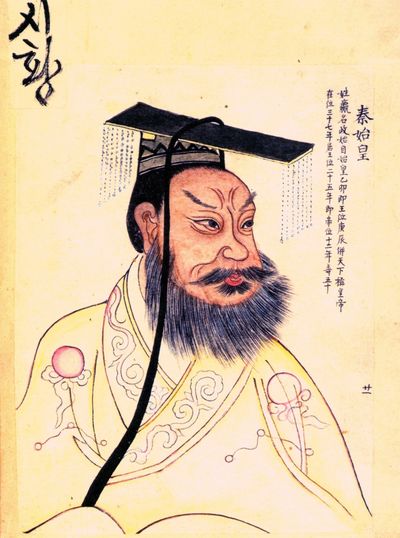
Qin Shi Huang
Emperor · Ancient
83.5Total
Basic Information
Born
1922
-259
Died
—
-210
Era
Modern
Ancient
Nationality
Algeria
China
Occupation
Revolutionary
Emperor
Civilization
Middle Eastern
Eastern
Score Comparison
Military (10%)
33.8
80.0
Political (20%)
52.4
88.0
Influence (20%)
67.1
82.0
Legacy (20%)
53.4
85.0
Leadership (15%)
43.3
88.0
Strategy (15%)
56.4
75.0
TOTAL
52.9
83.5
Rankings
🥇
Qin Shi HuangLeader
Mil: 80.0Pol: 88.0Inf: 82.0
83.5
🥈
Belkacem Krim
Mil: 33.8Pol: 52.4Inf: 67.1
52.9
+30.6 behind
How This Comparison Works
Algorithm
Each figure is scored on 6 dimensions (0—100 scale) based on structured historical data: Military (10%), Political (20%), Influence (20%), Legacy (20%), Leadership (15%), Strategy (15%). The weighted total produces the final ranking.
Data Sources
Scores are computed from structured sub-indicators in the database. Scale factors adjust for era (Ancient ×0.85, Modern ×1.0) and civilization size (Eastern ×1.05, Other ×0.80) to account for differences in population and military scale.
Maximum 3 Figures
Comparisons are limited to 2—3 figures to ensure readability and statistical meaningfulness.
Error Margins
±5 points per dimension — Sub-scores are derived from historical records with inherent uncertainty. Two figures within 5 points on a dimension should be considered roughly equivalent in that area.
Total Score Accuracy
±3 points overall — The weighted combination of 6 dimensions produces a total score with approximately ±3 points of uncertainty. Differences of less than 3 points are not statistically significant— the figures are effectively tied.
Known Limitations
- Historical records are incomplete and uneven across civilizations
- Figures from oral-tradition societies may be underrepresented
- Occupation labels can misclassify multi-role figures
- Scores measure capability and impact, not moral character
- Quantitative scoring is a comparison tool, not absolute truth
Capability Radar
Military (10%) — Battles & Warfare
Battles
45
85
Win Rate
40
90
Expansion
35
90
Political (20%) — Governance & Reform
Reform
45
95
Diplomacy
50
75
Economy
20
90
Influence (20%) — Cultural & Global Reach
Cultural
40
95
Global
35
85
Legacy (20%) — Historical Impact
Historical
45
95
Longevity
30
95
Leadership (15%) — Power & Stability
Tenure
40
70
Stability
25
65
Strategy (15%) — Tactics & Innovation
Strategy
55
85
Tactics
50
80
Reform
30
95
Analysis will be generated on first visit.
Scores and timeline are available below. The page will refresh automatically when ready.
Belkacem Krim — Complete Timeline
1956 AD
Leadership in the Soummam ConferencePolitical Action◆ Major
Belkacem Krim was a key organizer of the Soummam Conference in August 1956, which unified the FLN's political and military structures. He was elected as a member of the National Council of the Algerian Revolution (CNRA).
Algerian WarFLN organization
Impact: nationalconstructive
1962 AD
Signing of the Évian AccordsPolitical Action
As a senior FLN commander, Krim was one of the signatories of the
IndependencePeace agreement
Impact: regionalconstructive
1970 AD
Assassination in ExilePolitical Action◆ Major
Belkacem Krim was assassinated in Frankfurt, West Germany, on October 18, 1970. He had been living in exile after falling out with the post-independence Algerian regime under Houari Boum
AssassinationExile
Impact: nationaltragic
Qin Shi Huang — Complete Timeline
246 BC
Construction of the Mausoleum and Terracotta ArmyOther◆ Major
Qin Shi Huang commissioned a vast mausoleum complex near Xi'an, guarded by thousands of life-sized terracotta soldiers, horses, and chariots. The project employed hundreds of thousands of workers and reflected his obsession with immortality and imperial power.
Impact: global
230 BC
Conquest of the Six Warring StatesWar
From 230 to 221 BCE, Ying Zheng led the Qin state in a series of campaigns that conquered the Han, Zhao, Wei, Chu, Yan, and Qi states. This unified China under a single ruler for the first time, ending the Warring States period.
Impact: global
221 BC
Standardization of Writing, Currency, and MeasurementsReform◆ Major
Qin Shi Huang ordered the standardization of Chinese script, currency, and weights and measures across the unified empire. This facilitated administration, trade, and cultural integration, laying a foundation for future dynasties.
Impact: globalconstructive
Proclamation of the Qin DynastyPolitical Action
After conquering the last independent state, Ying Zheng declared himself Shi Huangdi (First Emperor), founding the Qin Dynasty. He adopted a new title to signify his supreme authority and initiated centralized imperial rule.
Impact: global
214 BC
Initiation of the Great Wall ConstructionOther◆ Major
Qin Shi Huang ordered the connection and extension of existing northern fortifications to create a unified defensive wall against nomadic Xiongnu raids. This project involved massive conscripted labor and became the precursor to the later Great Wall.
Impact: regional
213 BC
Burning of Books and Burying of ScholarsPolitical Action◆ Major
On the advice of Li Si, Qin Shi Huang ordered the burning of historical records and philosophical texts not aligned with Legalist doctrine. He also had 460 Confucian scholars buried alive to suppress dissent and consolidate ideological control.
Impact: nationaldestructive
Similar Comparisons
Comments & Discussion
LegionaryGhost6/17/2026
Qin Shi Huang is the kind of tyrant every empire needs—he standardized writing, law, and weights across China, building infrastructure like roads and the Great Wall that lasted millennia. Krim? A footnote in decolonization who died in a hotel room. The First Emperor crushed 27 million people into a unified state; Krim couldn’t even keep his own FLN faction intact. Timing favors the ruthless, not the romantic.
铁血史官6/17/2026
秦始皇统一六国,书同文车同轨,建长城修灵渠,两千年前的中央集权机器直接定义了华夏文明。贝尔卡西姆·克里姆呢?阿尔及利亚独立后流亡法兰克福,被同胞遗忘,死得窝囊。历史只记录赢家,不收藏失败者的眼泪。
DataSkeptic426/17/2026
Numbers don’t lie: Qin ruled over 30 million people, built a 5,000+ km wall network, and oversaw a state that lasted 2,000+ years. Krim led a guerrilla war with maybe 40,000 fighters and died forgotten. One man’s empire still shapes modern China’s GDP; the other is a trivia question. Power vacuums get filled—Qin filled it with iron fists, Krim left a void.
殖民伤痕6/17/2026
别美化秦始皇了!他坑儒生、烧典籍、用活人陪葬,全是反文明的暴政。克里姆至少为阿尔及利亚解放真刀真枪拼过命,是民族英雄。两人根本不能比:一个用恐怖统治千年,一个为自由起义被背叛。历史是胜利者写的,但清教徒的良心让我站被遗忘的斗士。
ClassicsChiron6/17/2026
One built an empire on Legalism, crushing dissent with standardized laws and bronze-age bureaucracy; the other rode the wave of anti-colonial nationalism, a guerrilla who couldn't transition to peace. Qin Shi Huang’s legacy is a model of authoritarian statecraft—like Augustus but without the Senate. Krim’s failure is tragic: no vision beyond the rifle. The Great Wall still stands; Frankfurt hotel rooms decay.
无冕之王6/17/2026
克里姆的悲剧在于他太早成功——阿尔及利亚独立后,权力游戏里他那一套游击战经验毫无用处。秦始皇相反,灭了六国后立刻玩转大一统,连文字都要统一。历史偏爱能控制“后革命时代”的人。克里姆像颗流星,照亮夜空却烧成灰;秦始皇是黑洞,吃掉所有光直到今天还在吸纳历史研究者。