Loading...
Analysis will be generated on first visit.
Scores and timeline are available below. The page will refresh automatically when ready.
Manmohan Singh vs Qin Shi Huang
Qin Shi Huang leads by 11.9 pts · 2 figures compared
…

Manmohan Singh
Politician · Modern
71.6Total
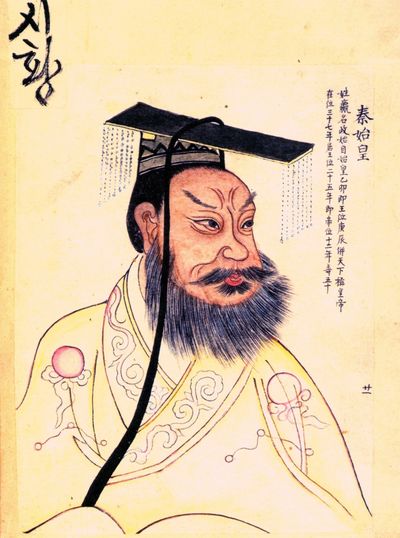
Qin Shi Huang
Emperor · Ancient
83.5Total
Basic Information
Born
1932
-259
Died
—
-210
Era
Modern
Ancient
Nationality
India
China
Occupation
Politician
Emperor
Civilization
Indian
Eastern
Score Comparison
Military (10%)
52.2
80.0
Political (20%)
83.9
88.0
Influence (20%)
72.9
82.0
Legacy (20%)
66.9
85.0
Leadership (15%)
85.5
88.0
Strategy (15%)
58.7
75.0
TOTAL
71.6
83.5
Rankings
🥇
Qin Shi HuangLeader
Mil: 80.0Pol: 88.0Inf: 82.0
83.5
🥈
Manmohan Singh
Mil: 52.2Pol: 83.9Inf: 72.9
71.6
+11.9 behind
How This Comparison Works
Algorithm
Each figure is scored on 6 dimensions (0—100 scale) based on structured historical data: Military (10%), Political (20%), Influence (20%), Legacy (20%), Leadership (15%), Strategy (15%). The weighted total produces the final ranking.
Data Sources
Scores are computed from structured sub-indicators in the database. Scale factors adjust for era (Ancient ×0.85, Modern ×1.0) and civilization size (Eastern ×1.05, Other ×0.80) to account for differences in population and military scale.
Maximum 3 Figures
Comparisons are limited to 2—3 figures to ensure readability and statistical meaningfulness.
Error Margins
±5 points per dimension — Sub-scores are derived from historical records with inherent uncertainty. Two figures within 5 points on a dimension should be considered roughly equivalent in that area.
Total Score Accuracy
±3 points overall — The weighted combination of 6 dimensions produces a total score with approximately ±3 points of uncertainty. Differences of less than 3 points are not statistically significant— the figures are effectively tied.
Known Limitations
- Historical records are incomplete and uneven across civilizations
- Figures from oral-tradition societies may be underrepresented
- Occupation labels can misclassify multi-role figures
- Scores measure capability and impact, not moral character
- Quantitative scoring is a comparison tool, not absolute truth
Capability Radar
Military (10%) — Battles & Warfare
Battles
46
85
Win Rate
49
90
Expansion
49
90
Political (20%) — Governance & Reform
Reform
85
95
Diplomacy
70
75
Economy
90
90
Influence (20%) — Cultural & Global Reach
Cultural
40
95
Global
60
85
Legacy (20%) — Historical Impact
Historical
65
95
Longevity
50
95
Leadership (15%) — Power & Stability
Tenure
75
70
Stability
65
65
Strategy (15%) — Tactics & Innovation
Strategy
50
85
Tactics
55
80
Reform
60
95
Analysis will be generated on first visit.
Scores and timeline are available below. The page will refresh automatically when ready.
Manmohan Singh — Complete Timeline
2004 AD
Appointed Prime Minister of IndiaPolitical Action◆ Major
Manmohan Singh became the 13th Prime Minister of India, leading the United Progressive Alliance (UPA) coalition. He was the first Sikh to hold the office and served two full terms until 2014.
Indian PoliticsUPASikh Prime Minister
Impact: nationalconstructive
Presided Over High Economic Growth PeriodOther◆ Major
During Singh's tenure, India experienced an average GDP growth rate of over 8% per year, lifting millions out of poverty. The growth was driven by economic reforms initiated in the 1990s and global demand.
Economic GrowthDevelopmentGDP
Impact: nationalconstructive
2005 AD
Implemented National Rural Employment Guarantee Act (NREGA)Reform◆ Major
Singh's government enacted NREGA, guaranteeing 100 days of wage employment per year to rural households. The program became one of India's largest social welfare schemes, reducing rural poverty but facing implementation challenges.
Social WelfareRural EmploymentNREGA
Impact: nationalconstructive
2008 AD
Signed US-India Civil Nuclear AgreementPolitical Action
Singh's government finalized the US-India Civil Nuclear Agreement, ending India's nuclear isolation and allowing civilian nuclear trade. The deal faced political opposition but was passed after a confidence vote.
Nuclear DealUS-India RelationsEnergy Policy
Impact: globalconstructive
2010 AD
Faced 2G Spectrum Scandal AllegationsPolitical Action◆ Major
Singh's government was embroiled in the 2G spectrum allocation scandal, with allegations of underpricing leading to revenue loss. The Supreme Court later cancelled 122 licenses, and the scandal damaged the government's reputation.
Corruption2G ScandalTelecom
Impact: nationaldestructive
Qin Shi Huang — Complete Timeline
246 BC
Construction of the Mausoleum and Terracotta ArmyOther◆ Major
Qin Shi Huang commissioned a vast mausoleum complex near Xi'an, guarded by thousands of life-sized terracotta soldiers, horses, and chariots. The project employed hundreds of thousands of workers and reflected his obsession with immortality and imperial power.
Impact: global
230 BC
Conquest of the Six Warring StatesWar
From 230 to 221 BCE, Ying Zheng led the Qin state in a series of campaigns that conquered the Han, Zhao, Wei, Chu, Yan, and Qi states. This unified China under a single ruler for the first time, ending the Warring States period.
Impact: global
221 BC
Standardization of Writing, Currency, and MeasurementsReform◆ Major
Qin Shi Huang ordered the standardization of Chinese script, currency, and weights and measures across the unified empire. This facilitated administration, trade, and cultural integration, laying a foundation for future dynasties.
Impact: globalconstructive
Proclamation of the Qin DynastyPolitical Action
After conquering the last independent state, Ying Zheng declared himself Shi Huangdi (First Emperor), founding the Qin Dynasty. He adopted a new title to signify his supreme authority and initiated centralized imperial rule.
Impact: global
214 BC
Initiation of the Great Wall ConstructionOther◆ Major
Qin Shi Huang ordered the connection and extension of existing northern fortifications to create a unified defensive wall against nomadic Xiongnu raids. This project involved massive conscripted labor and became the precursor to the later Great Wall.
Impact: regional
213 BC
Burning of Books and Burying of ScholarsPolitical Action◆ Major
On the advice of Li Si, Qin Shi Huang ordered the burning of historical records and philosophical texts not aligned with Legalist doctrine. He also had 460 Confucian scholars buried alive to suppress dissent and consolidate ideological control.
Impact: nationaldestructive
Similar Comparisons
Comments & Discussion
清算人Qín6/17/2026
Qin Shi Huang didn't just unify China; he standardized script, weights, measures, and even axle lengths. Any serious military historian knows logistics wins wars, and those axle-gauge standards allowed supply carts to roll seamlessly across his empire's new road networks. Meanwhile, Singh's reforms* were timid, market-friendly nudges at best. Huangdi commanded chariots and grain; Singh could barely command a parliamentary committee.
汗青屠夫6/17/2026
拿秦始皇给曼莫汉·辛格比,这本身就离谱。辛格1991年搞经济改革,说白了是被国际货币基金组织逼着放开了几个行业,他还磨磨蹭蹭不彻底。秦始皇上台可是直接书同文车同轨,把六国贵族连根拔起,全国修驰道。辛格连印度农业补贴都不敢动,这叫改革?一个是被动应付,一个是主动重塑文明,差了两千年的魄力。
Quill & Quarry6/17/2026
As a classics scholar, I find the comparison structurally flawed. The First Emperor welded his identity onto China through stone steles, oracle bones, and the very concept of *tianxia*—all before Christ. Singh governs within a constitutional democracy that endlessly debates his legacy while he's still alive. One produced a philosophical revolution; the other managed an economic crisis. Apples and chariots.
铁血考据党6/17/2026
数据本身不会说谎:秦始皇在公元前221年统一度量衡,全国推行小篆,修了700公里驰道直通九原郡。反观辛格,他任内印度GDP确实从1991年2700亿美元涨到2004年7000亿,但基尼系数从0.28飙到0.36。经济数字好看,代价是社会撕裂。你把两个数据摆一起,一个在建立秩序,一个在解构秩序,这哪门子可比性?
Revisionist Axe6/17/2026
The comparison romanticizes both men. Singh's "reforms" were neoliberal capitulation dressed in a turban, and Qin's "unification" was mass slaughter with a legalist veneer. Why not mention that Qin ordered 460 scholars buried alive for dissent, or that Singh's 1991 budget basically amputated India's public sector to please foreign creditors? Both were ruthless centralizers, but neither deserves the "great man" treatment. Just different techniques of control.