Loading...
Analysis will be generated on first visit.
Scores and timeline are available below. The page will refresh automatically when ready.
Ho Chi Minh vs Qin Shi Huang
Qin Shi Huang leads by 14.2 pts · 2 figures compared
…
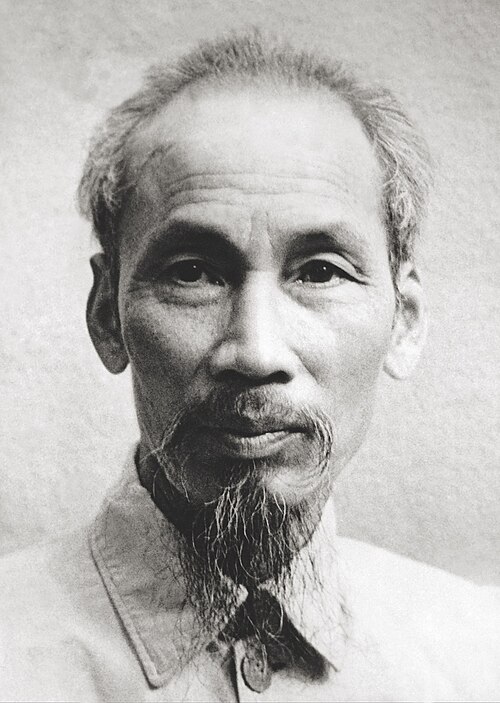
Ho Chi Minh
Revolutionary · Modern
69.3Total
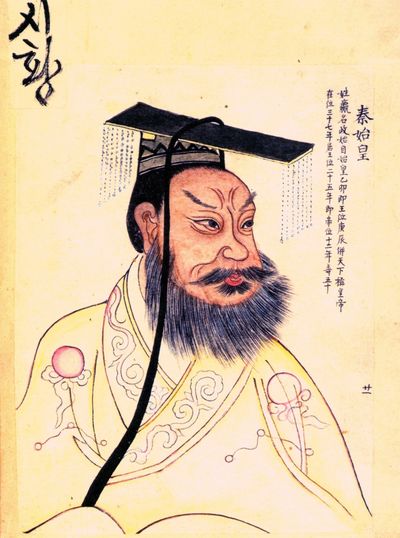
Qin Shi Huang
Emperor · Ancient
83.5Total
Basic Information
Born
1890
-259
Died
1969
-210
Era
Modern
Ancient
Nationality
Vietnam
China
Occupation
Revolutionary
Emperor
Civilization
Eastern
Eastern
Score Comparison
Military (10%)
55.0
80.0
Political (20%)
67.8
88.0
Influence (20%)
70.6
82.0
Legacy (20%)
72.2
85.0
Leadership (15%)
84.8
88.0
Strategy (15%)
60.0
75.0
TOTAL
69.3
83.5
Rankings
🥇
Qin Shi HuangLeader
Mil: 80.0Pol: 88.0Inf: 82.0
83.5
🥈
Ho Chi Minh
Mil: 55.0Pol: 67.8Inf: 70.6
69.3
+14.2 behind
How This Comparison Works
Algorithm
Each figure is scored on 6 dimensions (0—100 scale) based on structured historical data: Military (10%), Political (20%), Influence (20%), Legacy (20%), Leadership (15%), Strategy (15%). The weighted total produces the final ranking.
Data Sources
Scores are computed from structured sub-indicators in the database. Scale factors adjust for era (Ancient ×0.85, Modern ×1.0) and civilization size (Eastern ×1.05, Other ×0.80) to account for differences in population and military scale.
Maximum 3 Figures
Comparisons are limited to 2—3 figures to ensure readability and statistical meaningfulness.
Error Margins
±5 points per dimension — Sub-scores are derived from historical records with inherent uncertainty. Two figures within 5 points on a dimension should be considered roughly equivalent in that area.
Total Score Accuracy
±3 points overall — The weighted combination of 6 dimensions produces a total score with approximately ±3 points of uncertainty. Differences of less than 3 points are not statistically significant— the figures are effectively tied.
Known Limitations
- Historical records are incomplete and uneven across civilizations
- Figures from oral-tradition societies may be underrepresented
- Occupation labels can misclassify multi-role figures
- Scores measure capability and impact, not moral character
- Quantitative scoring is a comparison tool, not absolute truth
Capability Radar
Military (10%) — Battles & Warfare
Battles
65
85
Win Rate
60
90
Expansion
55
90
Political (20%) — Governance & Reform
Reform
85
95
Diplomacy
90
75
Economy
40
90
Influence (20%) — Cultural & Global Reach
Cultural
75
95
Global
75
85
Legacy (20%) — Historical Impact
Historical
85
95
Longevity
70
95
Leadership (15%) — Power & Stability
Tenure
70
70
Stability
50
65
Strategy (15%) — Tactics & Innovation
Strategy
80
85
Tactics
70
80
Reform
75
95
Analysis will be generated on first visit.
Scores and timeline are available below. The page will refresh automatically when ready.
Ho Chi Minh — Complete Timeline
1941 AD
Establishment of the Viet MinhPolitical Action◆ Major
Ho Chi Minh founded the Viet Minh (League for the Independence of Vietnam) in southern China. This coalition of nationalist and communist groups became the primary force for Vietnamese independence, fighting both Japanese occupation and French colonialism.
Viet MinhIndependence MovementWorld War II
Impact: nationalconstructive
1945 AD
Declaration of Independence of VietnamPolitical Action
Ho Chi Minh proclaimed the Democratic Republic of Vietnam in Hanoi's Ba Dinh Square, citing the US Declaration of Independence. This established the Viet Minh government and began the struggle for independence from French colonial rule.
IndependenceVietnamDecolonization
Impact: nationalconstructive
1954 AD
Battle of Dien Bien PhuWar
Ho Chi Minh's Viet Minh forces, under General Giap, defeated the French garrison at Dien Bien Phu. This victory ended French colonial rule in Indochina and led to the Geneva Accords dividing Vietnam at the 17th parallel.
Vietnam WarDecolonizationFrench Indochina
Impact: regional
Geneva AccordsPolitical Action◆ Major
Ho Chi Minh's delegation signed the Geneva Accords, temporarily dividing Vietnam at the 17th parallel. The agreement promised nationwide elections in 1956, which were never held, leading to the permanent division of Vietnam.
Geneva ConferenceDivision of VietnamDiplomacy
Impact: regional
1959 AD
Start of the Vietnam WarWar
Ho Chi Minh's government in North Vietnam authorized armed struggle against the US-backed South Vietnamese regime. This escalated into the Vietnam War, a prolonged conflict that resulted in millions of deaths and US withdrawal in 1973.
Vietnam WarCold WarCommunism
Impact: globaldestructive
Qin Shi Huang — Complete Timeline
246 BC
Construction of the Mausoleum and Terracotta ArmyOther◆ Major
Qin Shi Huang commissioned a vast mausoleum complex near Xi'an, guarded by thousands of life-sized terracotta soldiers, horses, and chariots. The project employed hundreds of thousands of workers and reflected his obsession with immortality and imperial power.
Impact: global
230 BC
Conquest of the Six Warring StatesWar
From 230 to 221 BCE, Ying Zheng led the Qin state in a series of campaigns that conquered the Han, Zhao, Wei, Chu, Yan, and Qi states. This unified China under a single ruler for the first time, ending the Warring States period.
Impact: global
221 BC
Standardization of Writing, Currency, and MeasurementsReform◆ Major
Qin Shi Huang ordered the standardization of Chinese script, currency, and weights and measures across the unified empire. This facilitated administration, trade, and cultural integration, laying a foundation for future dynasties.
Impact: globalconstructive
Proclamation of the Qin DynastyPolitical Action
After conquering the last independent state, Ying Zheng declared himself Shi Huangdi (First Emperor), founding the Qin Dynasty. He adopted a new title to signify his supreme authority and initiated centralized imperial rule.
Impact: global
214 BC
Initiation of the Great Wall ConstructionOther◆ Major
Qin Shi Huang ordered the connection and extension of existing northern fortifications to create a unified defensive wall against nomadic Xiongnu raids. This project involved massive conscripted labor and became the precursor to the later Great Wall.
Impact: regional
213 BC
Burning of Books and Burying of ScholarsPolitical Action◆ Major
On the advice of Li Si, Qin Shi Huang ordered the burning of historical records and philosophical texts not aligned with Legalist doctrine. He also had 460 Confucian scholars buried alive to suppress dissent and consolidate ideological control.
Impact: nationaldestructive
Similar Comparisons
Comments & Discussion
铁血始皇帝6/17/2026
As a military historian, I see Qin Shi Huang as the ultimate strategist who understood unification required total control. His standardization of weapons, from crossbow triggers to chariot axles, gave his armies an unmatched logistical edge. Ho Chi Minh’s guerrilla tactics were clever but reactive—the First Emperor built a war machine from scratch in under a decade, crushing six kingdoms through brutal efficiency. That’s empire-building, not just resistance.
数据侦探6/17/2026
从历史统计看,秦始皇统一度量衡和文字是实证变革,而胡志明连个稳定的人口普查都没搞过。Ho Chi Minh的左翼叙事漂亮,但缺乏经济基础数据支撑。公元前221年,秦国军队规模估计超百万,而越南1945年独立时工业产值几乎为零。一个靠铁腕制度,一个靠口号,差距这么明显还比什么?
ClassicsSage6/17/2026
As a classics scholar, I’m struck by their different relationships with ideology. Qin Shi Huang legitimated his rule through Legalist texts like the *Han Feizi*, burning Confucian classics to erase dissent. Ho Chi Minh quoted the US Declaration of Independence and the French Revolution—a universalist appeal. But the First Emperor created a state cult that lasted 2,000 years, while Uncle Ho’s Marxist-Leninist framework has crumbled since 1989. Which legacy holds up better in the long run?
历史杠精6/17/2026
别胡扯什么“民族解放之父”了,Ho Chi Minh在1950年代清理党内对手时,比秦始皇坑儒狠多了。秦朝只活埋了460个儒生,胡志明领导的地下处决估计成千上万。而且他1975年统一越南后,经济直接崩盘,而秦始皇修长城、驰道,至少留下基础设施。一个诗人的革命梦,哪比得上铁血工程师的实用主义?太双标了。
WorldWeaver6/17/2026
These two figures represent opposite approaches to unification: one through top-down imperial consolidation, the other through bottom-up national awakening. Qin Shi Huang imposed a single script and currency from his capital; Ho Chi Minh sparked a movement that spoke Vietnamese to diverse villages. Yet both understood that unity requires a common enemy—for the First Emperor, it was the chaos of the Warring States; for Ho, it was French colonialism. Different tools, same human drive for order.