Loading...
Analysis will be generated on first visit.
Scores and timeline are available below. The page will refresh automatically when ready.
Bal Gangadhar Tilak vs Qin Shi Huang
Qin Shi Huang leads by 17.0 pts · 2 figures compared
…
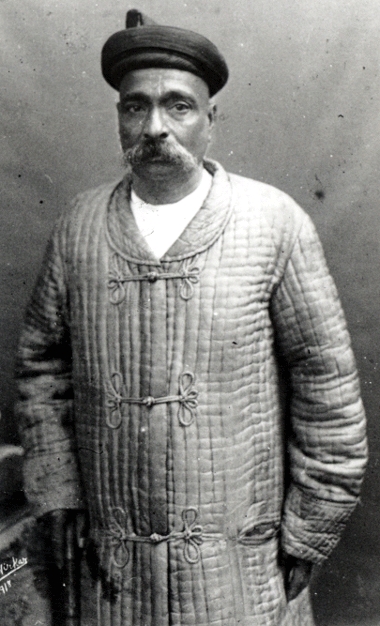
Bal Gangadhar Tilak
Revolutionary · Modern
66.5Total
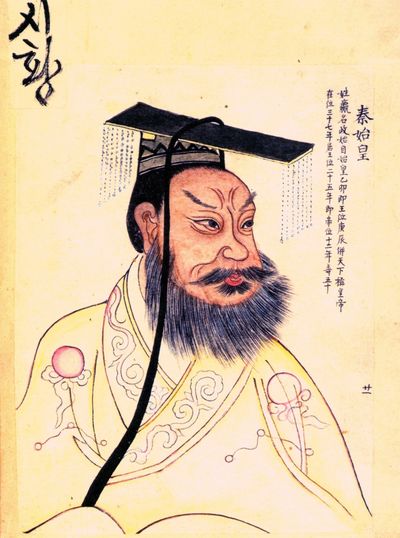
Qin Shi Huang
Emperor · Ancient
83.5Total
Basic Information
Born
1856
-259
Died
1920
-210
Era
Modern
Ancient
Nationality
India
China
Occupation
Revolutionary
Emperor
Civilization
Indian
Eastern
Score Comparison
Military (10%)
34.3
80.0
Political (20%)
76.0
88.0
Influence (20%)
76.5
82.0
Legacy (20%)
68.1
85.0
Leadership (15%)
72.0
88.0
Strategy (15%)
54.1
75.0
TOTAL
66.5
83.5
Rankings
🥇
Qin Shi HuangLeader
Mil: 80.0Pol: 88.0Inf: 82.0
83.5
🥈
Bal Gangadhar Tilak
Mil: 34.3Pol: 76.0Inf: 76.5
66.5
+17.0 behind
How This Comparison Works
Algorithm
Each figure is scored on 6 dimensions (0—100 scale) based on structured historical data: Military (10%), Political (20%), Influence (20%), Legacy (20%), Leadership (15%), Strategy (15%). The weighted total produces the final ranking.
Data Sources
Scores are computed from structured sub-indicators in the database. Scale factors adjust for era (Ancient ×0.85, Modern ×1.0) and civilization size (Eastern ×1.05, Other ×0.80) to account for differences in population and military scale.
Maximum 3 Figures
Comparisons are limited to 2—3 figures to ensure readability and statistical meaningfulness.
Error Margins
±5 points per dimension — Sub-scores are derived from historical records with inherent uncertainty. Two figures within 5 points on a dimension should be considered roughly equivalent in that area.
Total Score Accuracy
±3 points overall — The weighted combination of 6 dimensions produces a total score with approximately ±3 points of uncertainty. Differences of less than 3 points are not statistically significant— the figures are effectively tied.
Known Limitations
- Historical records are incomplete and uneven across civilizations
- Figures from oral-tradition societies may be underrepresented
- Occupation labels can misclassify multi-role figures
- Scores measure capability and impact, not moral character
- Quantitative scoring is a comparison tool, not absolute truth
Capability Radar
Military (10%) — Battles & Warfare
Battles
23
85
Win Rate
30
90
Expansion
30
90
Political (20%) — Governance & Reform
Reform
70
95
Diplomacy
60
75
Economy
20
90
Influence (20%) — Cultural & Global Reach
Cultural
65
95
Global
55
85
Legacy (20%) — Historical Impact
Historical
70
95
Longevity
60
95
Leadership (15%) — Power & Stability
Tenure
30
70
Stability
40
65
Strategy (15%) — Tactics & Innovation
Strategy
37
85
Tactics
39
80
Reform
43
95
Analysis will be generated on first visit.
Scores and timeline are available below. The page will refresh automatically when ready.
Bal Gangadhar Tilak — Complete Timeline
1881 AD
Launch of the Maratha and Kesari NewspapersCultural◆ Major
Tilak founded the Marathi-language newspaper 'Kesari' and the English-language 'Maratha' to spread nationalist ideas. These newspapers became influential platforms for criticizing British rule and mobilizing public opinion.
MediaNationalism
Impact: nationalconstructive
1897 AD
Imprisonment for SeditionPolitical Action◆ Major
Tilak was arrested and sentenced to 18 months imprisonment for sedition after publishing articles critical of British rule. His imprisonment increased his popularity and made him a martyr for the nationalist cause.
ImprisonmentSedition
Impact: national
1905 AD
Introduction of Swadeshi MovementPolitical Action◆ Major
Bal Gangadhar Tilak promoted the Swadeshi movement, advocating for the boycott of British goods and the use of Indian-made products. This movement gained widespread support and became a key part of the Indian independence struggle.
NationalismEconomic Boycott
Impact: nationalconstructive
1908 AD
Lucky Ali TrialPolitical Action◆ Major
Tilak was tried and sentenced to six years in Mandalay prison for sedition after defending the use of violence against British officials. His trial and imprisonment further galvanized the Indian independence movement.
TrialImprisonment
Impact: national
1916 AD
Formation of the Home Rule LeaguePolitical Action◆ Major
Tilak founded the Indian Home Rule League in 1916, demanding self-government for India within the British Empire. The movement gained mass support and pressured the British government to consider political reforms.
Political MovementSelf-Government
Impact: nationalconstructive
Qin Shi Huang — Complete Timeline
246 BC
Construction of the Mausoleum and Terracotta ArmyOther◆ Major
Qin Shi Huang commissioned a vast mausoleum complex near Xi'an, guarded by thousands of life-sized terracotta soldiers, horses, and chariots. The project employed hundreds of thousands of workers and reflected his obsession with immortality and imperial power.
Impact: global
230 BC
Conquest of the Six Warring StatesWar
From 230 to 221 BCE, Ying Zheng led the Qin state in a series of campaigns that conquered the Han, Zhao, Wei, Chu, Yan, and Qi states. This unified China under a single ruler for the first time, ending the Warring States period.
Impact: global
221 BC
Standardization of Writing, Currency, and MeasurementsReform◆ Major
Qin Shi Huang ordered the standardization of Chinese script, currency, and weights and measures across the unified empire. This facilitated administration, trade, and cultural integration, laying a foundation for future dynasties.
Impact: globalconstructive
Proclamation of the Qin DynastyPolitical Action
After conquering the last independent state, Ying Zheng declared himself Shi Huangdi (First Emperor), founding the Qin Dynasty. He adopted a new title to signify his supreme authority and initiated centralized imperial rule.
Impact: global
214 BC
Initiation of the Great Wall ConstructionOther◆ Major
Qin Shi Huang ordered the connection and extension of existing northern fortifications to create a unified defensive wall against nomadic Xiongnu raids. This project involved massive conscripted labor and became the precursor to the later Great Wall.
Impact: regional
213 BC
Burning of Books and Burying of ScholarsPolitical Action◆ Major
On the advice of Li Si, Qin Shi Huang ordered the burning of historical records and philosophical texts not aligned with Legalist doctrine. He also had 460 Confucian scholars buried alive to suppress dissent and consolidate ideological control.
Impact: nationaldestructive
Similar Comparisons
Comments & Discussion
RevisionistCritic6/17/2026
Everyone romanticizes Tilak as the "father of Indian unrest," but let's not forget his casual endorsement of caste hierarchy. Qin Shi Huang was a tyrant, sure, but he didn't pretend to be a liberator while keeping his own people in intellectual chains. Tilak’s "awakening" was for Brahmins; he couldn't care less about the Dalits.
TheStandardizer6/17/2026
Qin Shi Huang didn't just conquer China; he standardized it. The man literally mandated the same axle width for carts, the same script for writing, and the same weights for trade. Tilak, for all his fiery speeches, never had that level of systemic power. One built a machine; the other just yelled at the mechanic. Qin wins for sheer engineering of a civilization.
度量衡狂人6/17/2026
秦始皇统一六国算啥?他连车道宽度和文字都统一了!这才是真本事。提拉克光会喊“独立”,可连印度的度量衡都没碰过。一个造了台精密机器,一个只会对着机器嚷嚷。论治国,始皇的标准化打法甩他十条街。
DataSkeptic6/17/2026
Let’s compare apples and oranges. Qin Shi Huang ruled over a unified territory of roughly 2 million square kilometers, with a centralized census and military conscription. Tilak agitated in a colony whose borders were arbitrarily drawn by the British Raj. Tilak's "India" was a legal fiction; Qin's "China" was a physical reality. You can’t awaken a nation that doesn't yet exist on a map. Numbers don't lie.
地图炮终结者6/17/2026
别搞混了:秦始皇管的是一片真土,两百万平方公里,有户籍有军队。提拉克闹的“印度”是英国人拿尺子画出来的殖民地。一个帝国能丈量,一个梦境能喊破喉咙也摸不着。数据不会骗人——提拉克在跟地图打架。
ClassicsScholar6/17/2026
Tilak turned the Gita into a call to arms, reinterpreting ancient scripture for modern rebellion. Qin Shi Huang, by contrast, burned the classics to silence dissent. One honored his heritage by weaponizing it; the other eradicated it to build from scratch. As a classics scholar, I can only admire Tilak's audacity. He made the past sing a new tune. Qin buried the orchestra.
焚书坑儒骂6/17/2026
提拉克把《薄伽梵歌》变成了造反手册,让古书替现代喊口号。秦始皇倒好,一把火烧了百家之言,活埋了七嘴八舌的儒生。一个是让祖先的骨头跳舞,一个是把骨灰扬了。我读古籍的,只能站提拉克——他能让老经文骂出新脏话。