Loading...
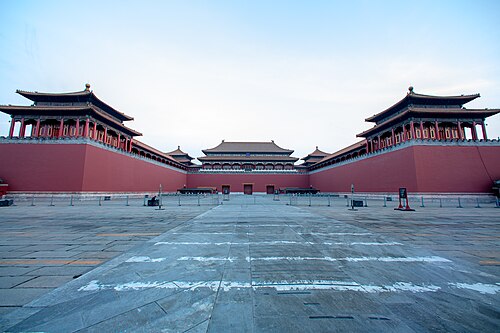
Wu Sangui
ModernGeneralChina1612 — 1678
Ming general who opened Shanhai Pass to the Manchus, later rebelled.
Compare Wu Sangui with another historical figure:
Quick Facts
Born
1612
Died
1678
Country
China
Era
Modern
Occupation
General
Score Overview
Military (10%)82
Political (20%)68
Influence (20%)57
Legacy (20%)55
Leadership (15%)80
Strategy (15%)58
Total Score64.1
Wu Sangui — Complete Timeline
1644 AD
Defeated Li Zicheng at the Battle of Shanhai PassWar◆ Major
Wu Sangui allied with the Manchu forces to defeat Li Zicheng's rebel army at the Battle of Shanhai Pass. The combined Qing-Ming loyalist army routed Li's forces, forcing Li to retreat from Beijing. This battle sealed the Qing conquest of northern China.
Ming-Qing TransitionBattleAlliance
Impact: globaldestructive
Opened Shanhai Pass to the ManchusPolitical Action
Wu Sangui, commanding the Ming garrison at Shanhai Pass, opened the pass to the Manchu army led by Dorgon. This allowed the Manchus to enter China proper and march on Beijing, which had been captured by Li Zicheng's rebel forces.
Ming-Qing TransitionBetrayalShanhai Pass
Impact: globaldestructive
Appointed Prince of Pingxi by the QingPolitical Action◆ Major
Wu Sangui was appointed Prince of Pingxi by the Qing dynasty for his role in their conquest. He was granted control over Yunnan province, becoming one of the three powerful feudatories that ruled southern China under Qing suzerainty.
Qing DynastyFeudatoryAppointment
Impact: national
1673 AD
Launched the Revolt of the Three FeudatoriesWar
Wu Sangui initiated the Revolt of the Three Feudatories against the Qing dynasty. He proclaimed a new dynasty and led a rebellion from his base in Yunnan, initially gaining control of much of southern China before the Qing counteroffensive.
Qing DynastyRebellionThree Feudatories
Impact: nationaldestructive
1678 AD
Proclaimed Emperor of the Zhou DynastyPolitical Action◆ Major
Wu Sangui proclaimed himself Emperor of the Zhou dynasty in Hengzhou (modern Hengyang). This act formalized his rebellion against the Qing. However, he died later that same year, and his rebellion collapsed shortly after.
Qing DynastyRebellionProclamation
Impact: nationaldestructive
Detailed Scores
▶View all detailed scores
Military
Strategy
7
Tactics
7
Battles
7
Army Scale
7
War Impact
7
Political
Governance
7
Reform
7
Stability
7
Policy
8
Power
7
Influence
History
9
Global
9
Culture
9
Ideology
9
Legacy
9
People often compare with
See how Wu Sangui stacks up against other historical figures
Popular Comparisons
Wu Sangui vs Mahadji Scindia
vs Mahadji Scindia65
Wu Sangui vs Ivan Konev
vs Ivan Konev59
Wu Sangui vs Abdul Rashid Dostum
vs Abdul Rashid Dostum55
Wu Sangui vs Gerd von Rundstedt
vs Gerd von Rundstedt54
Wu Sangui vs Fu Zuoyi
vs Fu Zuoyi54
Wu Sangui vs Rabeh az-Zubayr
vs Rabeh az-Zubayr51