Loading...
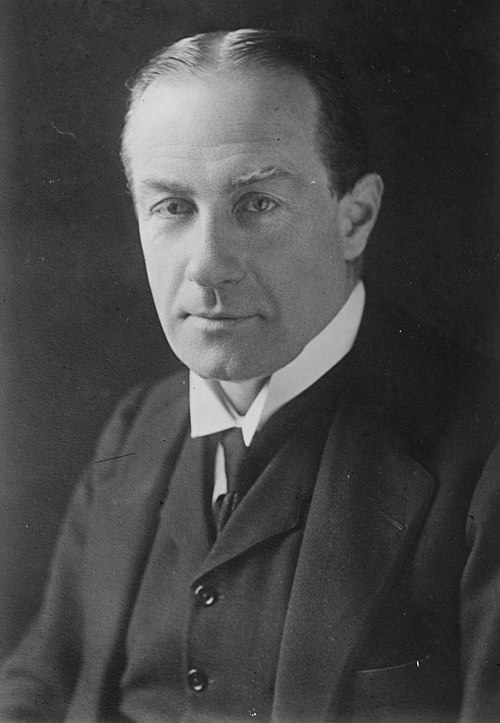
Stanley Baldwin
ModernPoliticianUnited Kingdom1867 — 1947
Three-time Conservative prime minister between the wars.
Compare Stanley Baldwin with another historical figure:
Quick Facts
Born
1867
Died
1947
Country
United Kingdom
Era
Modern
Occupation
Politician
Score Overview
Military (10%)19
Political (20%)60
Influence (20%)58
Legacy (20%)49
Leadership (15%)80
Strategy (15%)27
Total Score52.3
Stanley Baldwin — Complete Timeline
1926 AD
General Strike of 1926Political Action◆ Major
As Prime Minister, Baldwin faced the General Strike called by the Trades Union Congress in support of coal miners. Baldwin's government used emergency powers and propaganda to maintain essential services, and the strike collapsed after nine days, weakening the trade union movement.
General StrikeLabour RelationsConservative Government
Impact: national
1927 AD
Trade Disputes and Trade Unions Act 1927Political Action◆ Major
Baldwin's government passed the Trade Disputes and Trade Unions Act, which made general strikes illegal and restricted trade union political funds. The Act required union members to opt in to paying the political levy, reducing Labour Party funding.
Trade UnionsLegislationConservative Policy
Impact: nationaldestructive
1931 AD
Statute of Westminster 1931Political Action◆ Major
Baldwin's government enacted the Statute of Westminster, which granted legislative independence to the Dominions of the British Empire (Canada, Australia, New Zealand, South Africa, Irish Free State, Newfoundland). This established the legal basis for the modern Commonwealth.
CommonwealthDecolonizationConstitutional Law
Impact: globalconstructive
1935 AD
Re-armament ProgrammePolitical Action◆ Major
Baldwin's government initiated a major re-armament programme in response to German re-militarization, including expansion of the Royal Air Force and Royal Navy. This marked a shift from earlier disarmament policies, though critics argued it was too slow.
RearmamentDefence PolicyNazi Germany
Impact: national
1936 AD
Abdication Crisis of Edward VIIIPolitical Action
As Prime Minister, Baldwin managed the constitutional crisis caused by King Edward VIII's desire to marry Wallis Simpson, a divorced American. Baldwin insisted the King abdicate if he married Simpson, leading to Edward's abdication in December 1936 and the accession of George VI.
MonarchyConstitutional CrisisAbdication
Impact: national
Detailed Scores
▶View all detailed scores
Military
Strategy
6
Tactics
6
Battles
6
Army Scale
6
War Impact
6
Political
Governance
7
Reform
7
Stability
7
Policy
8
Power
8
Influence
History
9
Global
8
Culture
9
Ideology
9
Legacy
8
People often compare with
See how Stanley Baldwin stacks up against other historical figures
Popular Comparisons
Stanley Baldwin vs Camillo Benso Count of Cavour
vs Camillo Benso Count of Cavour63
Stanley Baldwin vs C. Rajagopalachari
vs C. Rajagopalachari60
Stanley Baldwin vs Lee Teng-hui
vs Lee Teng-hui57
Stanley Baldwin vs Denys Shmyhal
vs Denys Shmyhal52
Stanley Baldwin vs Ruth Perry
vs Ruth Perry50