Loading...
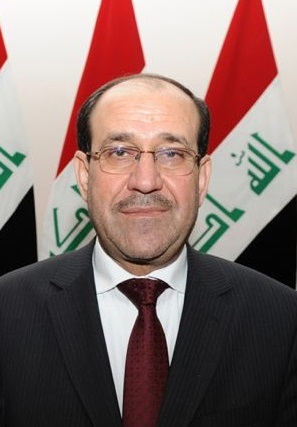
Nouri al-Maliki
ModernPoliticianIraq1950 — ?
Prime minister of Iraq during the US withdrawal.
Compare Nouri al-Maliki with another historical figure:
Quick Facts
Born
1950
Country
Iraq
Era
Modern
Occupation
Politician
Score Overview
Military (10%)37
Political (20%)35
Influence (20%)52
Legacy (20%)43
Leadership (15%)67
Strategy (15%)53
Total Score47.8
Nouri al-Maliki — Complete Timeline
2006 AD
Election as Prime MinisterPolitical Action◆ Major
Maliki was elected Prime Minister of Iraq by the Council of Representatives, forming a unity government. His election followed months of political deadlock after the 2005 parliamentary elections, and he inherited a country mired in sectarian violence.
Prime MinisterGovernment FormationPost-2003 Iraq
Impact: national
2007 AD
Surge and the Battle of BaghdadWar◆ Major
Maliki supported the US troop surge and launched the Baghdad Security Plan, a joint US-Iraqi operation to reduce sectarian violence. The plan succeeded in lowering casualty rates, but Maliki's government was criticized for sectarian bias in its security forces.
SurgeSecuritySectarian Violence
Impact: national
2011 AD
US withdrawal from IraqPolitical Action
Maliki's government oversaw the complete withdrawal of US combat forces from Iraq by December 2011, as per the Status of Forces Agreement. The withdrawal ended the US military presence, but left Iraq facing security challenges and political instability.
US WithdrawalSovereigntyPost-War
Impact: global
2014 AD
Rise of ISIS and loss of territoryWar
Under Maliki's leadership, the Iraqi army collapsed in the face of the Islamic State (ISIS) offensive, losing control of Mosul and large parts of northern Iraq. Maliki's sectarian policies were blamed for alienating Sunnis and enabling ISIS's rise.
ISISMilitary CollapseSectarianism
Impact: regionaldestructive
Resignation as Prime MinisterPolitical Action◆ Major
Facing intense domestic and international pressure after the ISIS advance, Maliki resigned as Prime Minister in August 2014. He was succeeded by Haider al-Abadi, ending his eight-year tenure and marking a shift in Iraqi politics.
ResignationPolitical ChangeSuccession
Impact: national
Detailed Scores
▶View all detailed scores
Military
Strategy
6
Tactics
5
Battles
6
Army Scale
5
War Impact
6
Political
Governance
7
Reform
7
Stability
7
Policy
7
Power
8
Influence
History
9
Global
8
Culture
9
Ideology
9
Legacy
9
People often compare with
See how Nouri al-Maliki stacks up against other historical figures
Popular Comparisons
Nouri al-Maliki vs Arturo Alessandri
vs Arturo Alessandri57
Nouri al-Maliki vs Nicos Anastasiades
vs Nicos Anastasiades54
Nouri al-Maliki vs B. J. Habibie
vs B. J. Habibie53
Nouri al-Maliki vs Ong Teng Cheong
vs Ong Teng Cheong49
Nouri al-Maliki vs Eric Zemmour
vs Eric Zemmour45
Nouri al-Maliki vs Mohamed Morsi
vs Mohamed Morsi43