Loading...
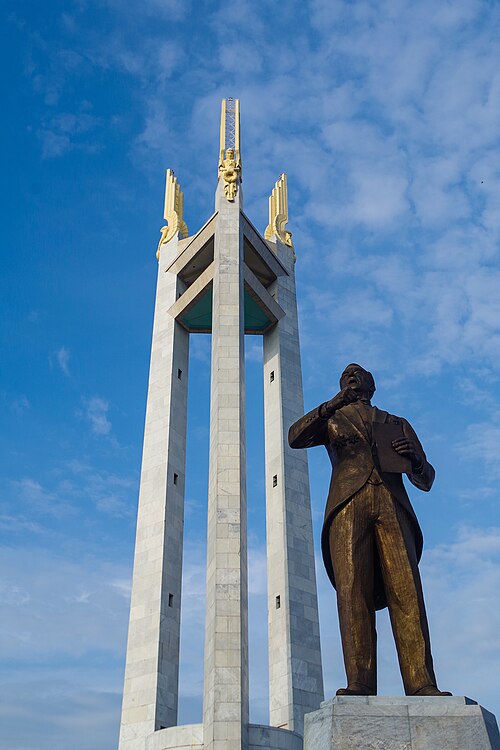
Manuel L. Quezon
ModernPoliticianPhilippines1878 — 1944
First president of the Philippine Commonwealth.
Compare Manuel L. Quezon with another historical figure:
Quick Facts
Born
1878
Died
1944
Country
Philippines
Era
Modern
Occupation
Politician
Score Overview
Military (10%)11
Political (20%)72
Influence (20%)62
Legacy (20%)52
Leadership (15%)66
Strategy (15%)35
Total Score53.8
Manuel L. Quezon — Complete Timeline
1934 AD
Signed the Tydings-McDuffie ActPolitical Action◆ Major
Quezon, as president of the Philippine Senate, negotiated and secured the passage of the Tydings-McDuffie Act in the U.S. Congress. This act established the Philippine Commonwealth and set a 10-year transition period to full independence.
LegislationIndependenceU.S.-Philippines Relations
Impact: nationalconstructive
1935 AD
Became First President of the Philippine CommonwealthPolitical Action
Manuel L. Quezon was elected as the first president of the Philippine Commonwealth, a transitional government established under U.S. sovereignty leading to full independence. He was inaugurated on November 15, 1935.
PresidencyCommonwealthIndependence
Impact: nationalconstructive
1937 AD
Established the National Language (Filipino)Cultural◆ Major
Quezon proclaimed Tagalog as the basis of the national language of the Philippines, later named Filipino. This decision aimed to unify the diverse linguistic groups of the archipelago and promote national identity.
Language PolicyNational IdentityCultural Unification
Impact: nationalconstructive
1942 AD
Went into Exile During Japanese OccupationPolitical Action◆ Major
After the Japanese invasion of the Philippines, Quezon fled to the United States, establishing a government-in-exile in Washington, D.C. He continued to lead the Commonwealth government and advocate for Philippine interests during World War II.
ExileWorld War IIGovernment-in-Exile
Impact: national
1944 AD
Died in ExileOther
Quezon died of tuberculosis in Saranac Lake, New York, while still in exile. His death occurred before the liberation of the Philippines, and he was succeeded by Vice President Sergio Osme
DeathExileWorld War II
Impact: nationaltragic
Detailed Scores
▶View all detailed scores
Military
Strategy
6
Tactics
5
Battles
6
Army Scale
5
War Impact
6
Political
Governance
7
Reform
7
Stability
7
Policy
7
Power
8
Influence
History
9
Global
8
Culture
8
Ideology
9
Legacy
8
People often compare with
See how Manuel L. Quezon stacks up against other historical figures
Popular Comparisons
Manuel L. Quezon vs Camillo Benso di Cavour
vs Camillo Benso di Cavour58
Manuel L. Quezon vs Algirdas Brazauskas
vs Algirdas Brazauskas56
Manuel L. Quezon vs Lord Ripon
vs Lord Ripon55
Manuel L. Quezon vs Thomas Klestil
vs Thomas Klestil52
Manuel L. Quezon vs Alar Karis
vs Alar Karis45
Manuel L. Quezon vs Umaru Musa YarAdua
vs Umaru Musa YarAdua44