Loading...
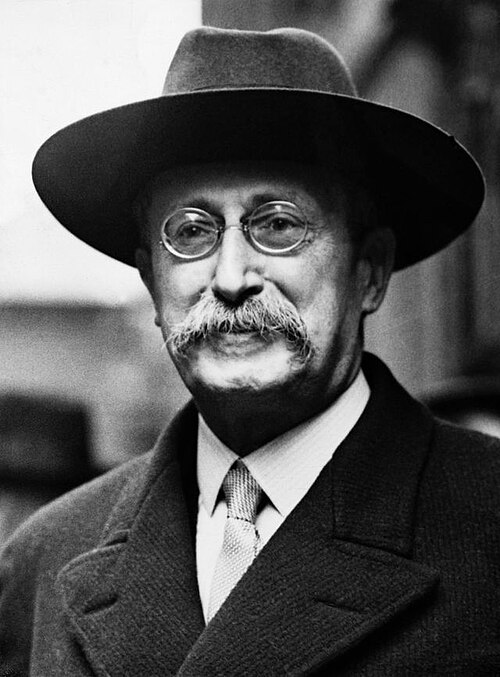
Leon Blum
ModernPoliticianFrance1872 — 1950
Three-time French prime minister, Popular Front leader.
Compare Leon Blum with another historical figure:
Quick Facts
Born
1872
Died
1950
Country
France
Era
Modern
Occupation
Politician
Score Overview
Military (10%)50
Political (20%)70
Influence (20%)55
Legacy (20%)52
Leadership (15%)53
Strategy (15%)42
Total Score54.4
Leon Blum — Complete Timeline
1936 AD
Matignon AgreementsReform◆ Major
Blum's government mediated the Matignon Agreements between employers and unions, ending a wave of strikes. The agreements mandated paid vacations, a 40-hour work week, and wage increases, transforming French labor relations and establishing key welfare state elements.
Labor ReformStrikesSocial Policy
Impact: nationalprogressive
Formation of the Popular Front GovernmentPolitical Action
Blum became Prime Minister of France leading the Popular Front coalition, a left-wing alliance of Socialists, Radicals, and Communists. His government enacted the Matignon Agreements, granting workers paid leave, a 40-hour work week, and collective bargaining rights, significantly advancing labor rights.
Popular FrontLabor RightsSocial Reform
Impact: nationalprogressive
1938 AD
Second Popular Front GovernmentPolitical Action
Blum formed a short-lived second government in March 1938, lasting only one month. He sought to broaden the coalition to address the growing threat of Nazi Germany but failed to secure support for his economic and defense policies, leading to his resignation.
Popular FrontGovernment FormationThird Republic
Impact: national
1942 AD
Arrest and Trial at RiomPolitical Action◆ Major
The Vichy regime arrested Blum and put him on trial at Riom for allegedly causing France's defeat in 1940. Blum used the trial to defend the Third Republic and criticize the Vichy government. The trial was suspended in 1943, and Blum was deported to Buchenwald concentration camp.
Vichy FranceTrialWorld War II
Impact: nationaltragic
1946 AD
Interim Presidency of the Provisional GovernmentPolitical Action
After World War II, Blum served as interim President of the Provisional Government of the French Republic from December 1946 to January 1947. He oversaw the transition to the Fourth Republic and worked to stabilize the post-war economy and political system.
Fourth RepublicPost-WarProvisional Government
Impact: nationalconstructive
Detailed Scores
▶View all detailed scores
Military
Strategy
6
Tactics
5
Battles
6
Army Scale
5
War Impact
6
Political
Governance
7
Reform
7
Stability
7
Policy
8
Power
8
Influence
History
9
Global
9
Culture
9
Ideology
10
Legacy
9
People often compare with
See how Leon Blum stacks up against other historical figures
Popular Comparisons
Leon Blum vs Norodom Sihanouk
vs Norodom Sihanouk60
Leon Blum vs Alija Izetbegovic
vs Alija Izetbegovic55
Leon Blum vs John Compton
vs John Compton55
Leon Blum vs Paul Doumer
vs Paul Doumer53
Leon Blum vs Antonio Guterres
vs Antonio Guterres52
Leon Blum vs Rafael Caldera
vs Rafael Caldera51