Loading...
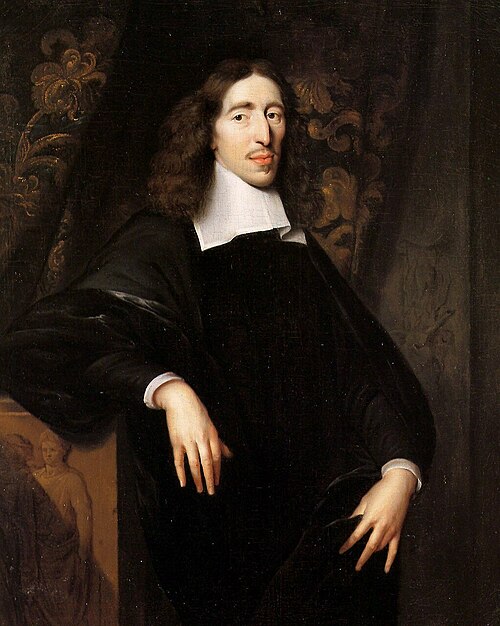
Johan de Witt
ModernPoliticianNetherlands1625 — 1672
Dutch statesman who led the Dutch Republic during its Golden Age.
Compare Johan de Witt with another historical figure:
Quick Facts
Born
1625
Died
1672
Country
Netherlands
Era
Modern
Occupation
Politician
Score Overview
Military (10%)20
Political (20%)90
Influence (20%)82
Legacy (20%)55
Leadership (15%)75
Strategy (15%)43
Total Score65.3
Johan de Witt — Complete Timeline
1652 AD
First Anglo-Dutch War (ended 1654)War◆ Major
De Witt oversaw the Dutch Republic's conduct in the First Anglo-Dutch War, which ended with the Treaty of Westminster. The war was a commercial conflict, and de Witt's leadership helped maintain Dutch maritime trade despite English naval superiority.
WarAnglo-Dutch WarsTrade
Impact: global
1653 AD
Appointed Grand Pensionary of HollandPolitical Action◆ Major
Johan de Witt was appointed Grand Pensionary of Holland, the most powerful political position in the Dutch Republic. He effectively led the republic during its Golden Age, focusing on naval power, trade, and republican governance, while opposing the influence of the House of Orange.
GovernmentDutch RepublicGolden Age
Impact: nationalconstructive
1667 AD
Raid on the MedwayWar◆ Major
Under de Witt's direction, the Dutch navy executed a daring raid on the English fleet at Chatham, destroying several ships and capturing the flagship Royal Charles. This humiliating defeat forced England to negotiate a favorable peace for the Dutch, ending the Second Anglo-Dutch War.
Naval RaidAnglo-Dutch WarsVictory
Impact: regionalconstructive
1672 AD
Murder of Johan de WittOther◆ Major
Johan de Witt and his brother Cornelis were lynched by an Orangist mob in The Hague. The murder occurred during the Rampjaar (Disaster Year) when the Dutch Republic faced invasions from France, England, and German states, and de Witt was blamed for the military failures.
MurderRampjaarPolitical Violence
Impact: nationaltragic
Detailed Scores
▶View all detailed scores
Military
Strategy
6
Tactics
5
Battles
6
Army Scale
5
War Impact
6
Political
Governance
8
Reform
8
Stability
8
Policy
8
Power
9
Influence
History
9
Global
8
Culture
9
Ideology
9
Legacy
8
People often compare with
See how Johan de Witt stacks up against other historical figures
Popular Comparisons
Johan de Witt vs Luiz Inacio Lula da Silva
vs Luiz Inacio Lula da Silva66
Johan de Witt vs Pravedes Mateo Sagasta
vs Pravedes Mateo Sagasta56
Johan de Witt vs Jacobo Arbenz
vs Jacobo Arbenz55
Johan de Witt vs Millard Fillmore
vs Millard Fillmore50
Johan de Witt vs Qiao Shi
vs Qiao Shi50
Johan de Witt vs Mohamed Boudiaf
vs Mohamed Boudiaf42