Loading...
This comparison has not been analyzed yet.
One-time AI generation (~1 minute). Scores and timeline are already available below.
Jacobo Arbenz vs Johan de Witt
Johan de Witt leads by 10.3 pts · 2 figures compared
…

Jacobo Arbenz
Politician · Modern
55.0Total
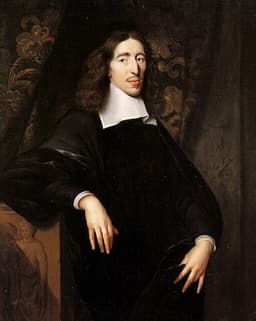
Johan de Witt
Politician · Modern
65.3Total
Basic Information
Born
1913
1625
Died
1971
1672
Era
Modern
Modern
Nationality
Guatemala
Netherlands
Occupation
Politician
Politician
Civilization
Western
Western
Score Comparison
Military (10%)
48.9
20.0
Political (20%)
68.0
90.0
Influence (20%)
55.7
82.0
Legacy (20%)
49.2
55.0
Leadership (15%)
62.2
75.0
Strategy (15%)
43.4
43.3
TOTAL
55.0
65.3
Jacobo Arbenz — Complete Timeline
1952 AD
Decree 900: Agrarian Reform LawReform◆ Major
Arbenz enacted Decree 900, an agrarian reform law that redistributed uncultivated land from large estates to landless peasants. The law targeted the United Fruit Company's holdings, leading to conflict with U.S. corporate interests and the U.S. government.
Agrarian ReformLand RedistributionUnited Fruit Company
Impact: nationalconstructive
1953 AD
Nationalization of United Fruit Company landPolitical Action◆ Major
Arbenz's government expropriated over 400,000 acres of uncultivated land from the United Fruit Company, offering compensation based on the company's declared tax value. This action intensified U.S. opposition and was a key factor in the decision to overthrow him.
NationalizationUnited Fruit CompanyLand Reform
Impact: nationalconstructive
1954 AD
CIA-backed coup d'étatPolitical Action
The CIA orchestrated Operation PBSUCCESS, a covert operation that overthrew Arbenz. The coup involved propaganda, a small invasion force led by Carlos Castillo Armas, and psychological warfare. Arbenz resigned on June 27, 1954, and went into exile.
CIACoupCold WarExile
Impact: regionaldestructive
Johan de Witt — Complete Timeline
1652 AD
First Anglo-Dutch War (ended 1654)War◆ Major
De Witt oversaw the Dutch Republic's conduct in the First Anglo-Dutch War, which ended with the Treaty of Westminster. The war was a commercial conflict, and de Witt's leadership helped maintain Dutch maritime trade despite English naval superiority.
WarAnglo-Dutch WarsTrade
Impact: global
1653 AD
Appointed Grand Pensionary of HollandPolitical Action◆ Major
Johan de Witt was appointed Grand Pensionary of Holland, the most powerful political position in the Dutch Republic. He effectively led the republic during its Golden Age, focusing on naval power, trade, and republican governance, while opposing the influence of the House of Orange.
GovernmentDutch RepublicGolden Age
Impact: nationalconstructive
1667 AD
Raid on the MedwayWar◆ Major
Under de Witt's direction, the Dutch navy executed a daring raid on the English fleet at Chatham, destroying several ships and capturing the flagship Royal Charles. This humiliating defeat forced England to negotiate a favorable peace for the Dutch, ending the Second Anglo-Dutch War.
Naval RaidAnglo-Dutch WarsVictory
Impact: regionalconstructive
1672 AD
Murder of Johan de WittOther◆ Major
Johan de Witt and his brother Cornelis were lynched by an Orangist mob in The Hague. The murder occurred during the Rampjaar (Disaster Year) when the Dutch Republic faced invasions from France, England, and German states, and de Witt was blamed for the military failures.
MurderRampjaarPolitical Violence
Impact: nationaltragic
This comparison has not been analyzed yet.
One-time AI generation (~1 minute). Scores and timeline are already available below.
Rankings
🥇
Johan de WittLeader
Mil: 20.0Pol: 90.0Inf: 82.0
65.3
🥈
Jacobo Arbenz
Mil: 48.9Pol: 68.0Inf: 55.7
55.0
+10.3 behind
How This Comparison Works
Algorithm
Each figure is scored on 6 dimensions (0—100 scale) based on structured historical data: Military (10%), Political (20%), Influence (20%), Legacy (20%), Leadership (15%), Strategy (15%). The weighted total produces the final ranking.
Data Sources
Scores are computed from structured sub-indicators in the database. Scale factors adjust for era (Ancient ×0.85, Modern ×1.0) and civilization size (Eastern ×1.05, Other ×0.80) to account for differences in population and military scale.
Maximum 3 Figures
Comparisons are limited to 2—3 figures to ensure readability and statistical meaningfulness.
Error Margins
±5 points per dimension — Sub-scores are derived from historical records with inherent uncertainty. Two figures within 5 points on a dimension should be considered roughly equivalent in that area.
Total Score Accuracy
±3 points overall — The weighted combination of 6 dimensions produces a total score with approximately ±3 points of uncertainty. Differences of less than 3 points are not statistically significant— the figures are effectively tied.
Known Limitations
- Historical records are incomplete and uneven across civilizations
- Figures from oral-tradition societies may be underrepresented
- Occupation labels can misclassify multi-role figures
- Scores measure capability and impact, not moral character
- Quantitative scoring is a comparison tool, not absolute truth
Capability Radar
Military (10%) — Battles & Warfare
Battles
27
15
Win Rate
33
20
Expansion
37
10
Political (20%) — Governance & Reform
Reform
65
85
Diplomacy
30
90
Economy
55
95
Influence (20%) — Cultural & Global Reach
Cultural
30
60
Global
45
70
Legacy (20%) — Historical Impact
Historical
55
75
Longevity
40
65
Leadership (15%) — Power & Stability
Tenure
40
75
Stability
20
70
Strategy (15%) — Tactics & Innovation
Strategy
41
40
Tactics
39
25
Reform
46
60
Similar Comparisons
Comments & Discussion
No comments yet. Be the first to share your thoughts!