Loading...
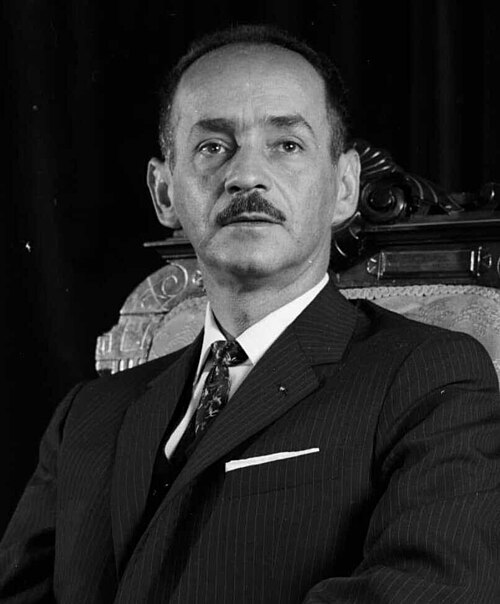
Hugo Banzer
ModernGeneralBolivia1926 — ?
Bolivian military dictator turned democrat.
Compare Hugo Banzer with another historical figure:
Quick Facts
Born
1926
Country
Bolivia
Era
Modern
Occupation
General
Score Overview
Military (10%)48
Political (20%)68
Influence (20%)53
Legacy (20%)45
Leadership (15%)71
Strategy (15%)43
Total Score54.3
Hugo Banzer — Complete Timeline
1971 AD
Led Coup and Became DictatorPolitical Action◆ Major
General Hugo Banzer led a military coup that overthrew the leftist government of Juan Jos
CoupDictatorship
Impact: nationaldestructive
Repressive RegimePolitical Action◆ Major
Banzer's dictatorship (1971-1978) was marked by widespread human rights abuses, including torture, disappearances, and suppression of political dissent. Trade unions and leftist parties were banned, and thousands were imprisoned or exiled.
RepressionHuman Rights
Impact: nationaldestructive
1973 AD
Economic Growth Under DictatorshipReform
During Banzer's rule, Bolivia experienced economic growth driven by high commodity prices and foreign investment, particularly in oil and gas. However, this growth was uneven and benefited elites, while poverty and inequality persisted.
EconomyGrowth
Impact: national
1978 AD
Transition to DemocracyPolitical Action◆ Major
Banzer called for elections in 1978, but they were marred by fraud. He was eventually forced to step down after a coup, leading to a period of political instability. However, his later role in the democratic transition was significant.
DemocracyTransition
Impact: national
1997 AD
Elected President DemocraticallyPolitical Action◆ Major
Banzer was elected president of Bolivia in 1997 as a democrat, leading a coalition government. His term (1997-2001) focused on anti-corruption, education reform, and coca eradication, but was also marked by social unrest.
PresidencyDemocracy
Impact: nationalconstructive
1998 AD
Coca Eradication PolicyReform◆ Major
Banzer's government implemented a policy of forced coca eradication, targeting coca production in the Chapare region. This led to violent clashes with coca growers, who were supported by Evo Morales, and was controversial both domestically and internationally.
CocaDrug Policy
Impact: nationaldestructive
2001 AD
Resigned Due to IllnessPolitical Action
Banzer resigned the presidency in 2001 due to lung cancer. He was succeeded by his vice president, Jorge Quiroga. His resignation marked the end of his political career.
ResignationHealth
Impact: national
Detailed Scores
▶View all detailed scores
Military
Strategy
7
Tactics
7
Battles
7
Army Scale
7
War Impact
7
Political
Governance
7
Reform
7
Stability
7
Policy
8
Power
7
Influence
History
9
Global
8
Culture
9
Ideology
9
Legacy
8
People often compare with
See how Hugo Banzer stacks up against other historical figures
Popular Comparisons
Hugo Banzer vs Napoleon Bonaparte
vs Napoleon Bonaparte71
Hugo Banzer vs Yue Zhongqi
vs Yue Zhongqi57
Hugo Banzer vs Jerry Rawlings
vs Jerry Rawlings56
Hugo Banzer vs John Nicholson
vs John Nicholson51
Hugo Banzer vs Umezu Yoshijiro
vs Umezu Yoshijiro43
Hugo Banzer vs Riad al-Asaad
vs Riad al-Asaad40