Loading...
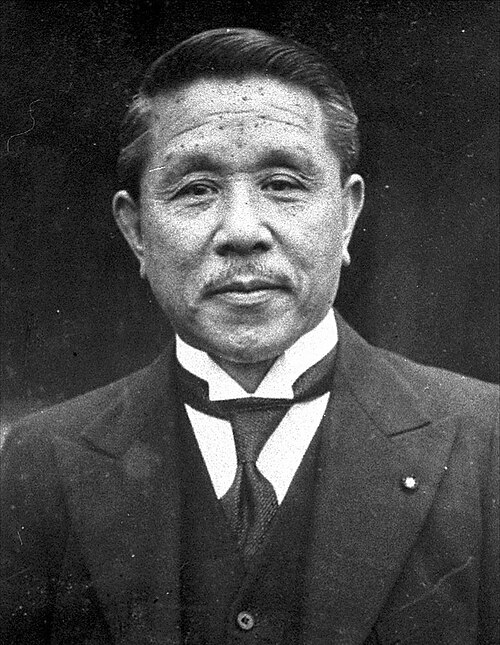
Hirota Koki
ModernPoliticianJapan1878 — 1948
Civilian PM later executed as war criminal.
Compare Hirota Koki with another historical figure:
Quick Facts
Born
1878
Died
1948
Country
Japan
Era
Modern
Occupation
Politician
Score Overview
Military (10%)11
Political (20%)42
Influence (20%)49
Legacy (20%)40
Leadership (15%)65
Strategy (15%)44
Total Score43.8
Hirota Koki — Complete Timeline
1936 AD
Service as Prime MinisterPolitical Action◆ Major
Hirota Koki became Prime Minister in March 1936, forming a cabinet after the February 26 Incident. As a civilian, he was seen as a compromise candidate, but his government was dominated by the military and pursued expansionist policies.
Prime MinisterCivilian Government
Impact: national
Signing of the Anti-Comintern PactPolitical Action◆ Major
Hirota's government signed the Anti-Comintern Pact with Nazi Germany in November 1936, forming an alliance against the Soviet Union and international communism. This pact aligned Japan with Germany and Italy, leading to the Axis alliance.
Axis AllianceForeign PolicyAnti-Comintern
Impact: globaldestructive
1937 AD
Foreign Minister During the Nanking MassacrePolitical Action◆ Major
As Foreign Minister in 1937, Hirota was responsible for diplomatic relations during the Nanking Massacre. The Tokyo Tribunal found that he failed to take adequate steps to stop the atrocities despite receiving reports, contributing to his war crimes conviction.
Nanking MassacreWar CrimesDiplomacy
Impact: globaldestructive
1948 AD
Execution as a War CriminalOther◆ Major
Hirota Koki was executed by hanging on December 23, 1948, after being convicted by the International Military Tribunal for the Far East. He was found guilty of conspiracy to wage aggressive war and for atrocities committed by Japanese forces in China, including the Nanking Massacre.
War CrimesExecutionTokyo Trials
Impact: globaltragic
Detailed Scores
▶View all detailed scores
Military
Strategy
6
Tactics
6
Battles
6
Army Scale
5
War Impact
6
Political
Governance
7
Reform
7
Stability
7
Policy
7
Power
8
Influence
History
9
Global
8
Culture
8
Ideology
9
Legacy
8
People often compare with
See how Hirota Koki stacks up against other historical figures
Popular Comparisons
Hirota Koki vs A. P. J. Abdul Kalam
vs A. P. J. Abdul Kalam62
Hirota Koki vs Walter Lini
vs Walter Lini56
Hirota Koki vs Janez Drnovsek
vs Janez Drnovsek56
Hirota Koki vs V. V. Giri
vs V. V. Giri51
Hirota Koki vs Umaru YarAdua
vs Umaru YarAdua49
Hirota Koki vs Allan Kemakeza
vs Allan Kemakeza42