Loading...
This comparison has not been analyzed yet.
One-time AI generation (~1 minute). Scores and timeline are already available below.
Hirota Koki vs V. V. Giri
V. V. Giri leads by 7.6 pts · 2 figures compared
…
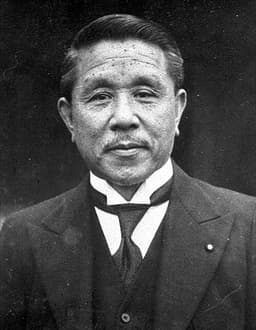
Hirota Koki
Politician · Modern
43.8Total

V. V. Giri
Politician · Modern
51.4Total
Basic Information
Born
1878
1894
Died
1948
1980
Era
Modern
Modern
Nationality
Japan
India
Occupation
Politician
Politician
Civilization
Eastern
Indian
Score Comparison
Military (10%)
11.4
49.6
Political (20%)
42.3
45.1
Influence (20%)
48.6
52.5
Legacy (20%)
40.0
43.3
Leadership (15%)
65.0
65.0
Strategy (15%)
44.2
60.0
TOTAL
43.8
51.4
Hirota Koki — Complete Timeline
1936 AD
Service as Prime MinisterPolitical Action◆ Major
Hirota Koki became Prime Minister in March 1936, forming a cabinet after the February 26 Incident. As a civilian, he was seen as a compromise candidate, but his government was dominated by the military and pursued expansionist policies.
Prime MinisterCivilian Government
Impact: national
Signing of the Anti-Comintern PactPolitical Action◆ Major
Hirota's government signed the Anti-Comintern Pact with Nazi Germany in November 1936, forming an alliance against the Soviet Union and international communism. This pact aligned Japan with Germany and Italy, leading to the Axis alliance.
Axis AllianceForeign PolicyAnti-Comintern
Impact: globaldestructive
1937 AD
Foreign Minister During the Nanking MassacrePolitical Action◆ Major
As Foreign Minister in 1937, Hirota was responsible for diplomatic relations during the Nanking Massacre. The Tokyo Tribunal found that he failed to take adequate steps to stop the atrocities despite receiving reports, contributing to his war crimes conviction.
Nanking MassacreWar CrimesDiplomacy
Impact: globaldestructive
1948 AD
Execution as a War CriminalOther◆ Major
Hirota Koki was executed by hanging on December 23, 1948, after being convicted by the International Military Tribunal for the Far East. He was found guilty of conspiracy to wage aggressive war and for atrocities committed by Japanese forces in China, including the Nanking Massacre.
War CrimesExecutionTokyo Trials
Impact: globaltragic
V. V. Giri — Complete Timeline
1956 AD
Appointed Governor of Uttar PradeshPolitical Action
V. V. Giri was appointed as the Governor of Uttar Pradesh, serving from 1956 to 1960. He later served as Governor of Kerala and Mysore, handling administrative responsibilities in various states.
GovernorUttar PradeshConstitutional
Impact: regionalconstructive
1967 AD
Appointed Vice President of IndiaPolitical Action◆ Major
V. V. Giri was elected as the Vice President of India, serving from 1967 to 1969. He also served as Chairman of the Rajya Sabha, presiding over the upper house.
Vice PresidentRajya SabhaConstitutional
Impact: nationalconstructive
1969 AD
Nationalization of banksReform◆ Major
President V. V. Giri supported the nationalization of 14 major commercial banks in India in 1969, a key socialist policy of the Indira Gandhi government. This aimed to increase credit access for agriculture and small industries.
Bank NationalizationEconomic ReformSocialism
Impact: nationalconstructive
Acting President of IndiaPolitical Action◆ Major
V. V. Giri served as Acting President of India following the death of President Zakir Husain in May 1969. He held the office until the election of a new president.
Acting PresidentConstitutionalTransition
Impact: national
Elected President of IndiaPolitical Action◆ Major
V. V. Giri was elected as the 4th President of India in a contested election, defeating the official Congress candidate. He served from 1969 to 1974, promoting socialist policies and labor rights.
PresidencyElectionSocialist
Impact: nationalconstructive
This comparison has not been analyzed yet.
One-time AI generation (~1 minute). Scores and timeline are already available below.
Rankings
🥇
V. V. GiriLeader
Mil: 49.6Pol: 45.1Inf: 52.5
51.4
🥈
Hirota Koki
Mil: 11.4Pol: 42.3Inf: 48.6
43.8
+7.6 behind
How This Comparison Works
Algorithm
Each figure is scored on 6 dimensions (0—100 scale) based on structured historical data: Military (10%), Political (20%), Influence (20%), Legacy (20%), Leadership (15%), Strategy (15%). The weighted total produces the final ranking.
Data Sources
Scores are computed from structured sub-indicators in the database. Scale factors adjust for era (Ancient ×0.85, Modern ×1.0) and civilization size (Eastern ×1.05, Other ×0.80) to account for differences in population and military scale.
Maximum 3 Figures
Comparisons are limited to 2—3 figures to ensure readability and statistical meaningfulness.
Error Margins
±5 points per dimension — Sub-scores are derived from historical records with inherent uncertainty. Two figures within 5 points on a dimension should be considered roughly equivalent in that area.
Total Score Accuracy
±3 points overall — The weighted combination of 6 dimensions produces a total score with approximately ±3 points of uncertainty. Differences of less than 3 points are not statistically significant— the figures are effectively tied.
Known Limitations
- Historical records are incomplete and uneven across civilizations
- Figures from oral-tradition societies may be underrepresented
- Occupation labels can misclassify multi-role figures
- Scores measure capability and impact, not moral character
- Quantitative scoring is a comparison tool, not absolute truth
Capability Radar
Military (10%) — Battles & Warfare
Battles
16
44
Win Rate
19
44
Expansion
19
49
Political (20%) — Governance & Reform
Reform
30
35
Diplomacy
40
45
Economy
30
30
Influence (20%) — Cultural & Global Reach
Cultural
10
25
Global
20
20
Legacy (20%) — Historical Impact
Historical
30
30
Longevity
10
20
Leadership (15%) — Power & Stability
Tenure
60
40
Stability
20
40
Strategy (15%) — Tactics & Innovation
Strategy
25
52
Tactics
28
57
Reform
32
57
Similar Comparisons
Comments & Discussion
No comments yet. Be the first to share your thoughts!