Loading...
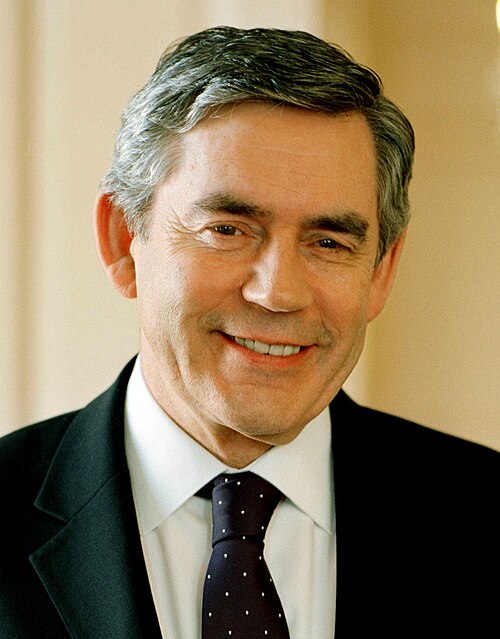
Gordon Brown
ModernPoliticianUnited Kingdom1951 — ?
British prime minister during the global financial crisis.
Compare Gordon Brown with another historical figure:
Quick Facts
Born
1951
Country
United Kingdom
Era
Modern
Occupation
Politician
Score Overview
Military (10%)50
Political (20%)55
Influence (20%)55
Legacy (20%)48
Leadership (15%)66
Strategy (15%)42
Total Score53.1
Gordon Brown — Complete Timeline
1997 AD
Introduced the Fiscal Rules as ChancellorReform◆ Major
As Chancellor, Brown introduced the 'Golden Rule' and 'Sustainable Investment Rule' for fiscal policy. These rules aimed to ensure responsible public finances and were credited with maintaining economic stability during his tenure.
Economic PolicyFiscal RulesChancellor
Impact: nationalconstructive
2007 AD
Appointed Prime MinisterPolitical Action◆ Major
Brown succeeded Tony Blair as Prime Minister of the United Kingdom without a general election. He had served as Chancellor of the Exchequer for ten years and was widely expected to take over the leadership of the Labour Party.
Political TransitionLabour PartyPrime Minister
Impact: national
2008 AD
Led the G20 Response to the Global Financial CrisisPolitical Action
Brown played a leading role in coordinating the international response to the global financial crisis. He hosted the G20 summit in London in 2009, securing commitments for fiscal stimulus and financial regulation reforms.
Financial CrisisG20International Cooperation
Impact: globalconstructive
Nationalization of Northern RockPolitical Action◆ Major
Brown's government nationalized the failing bank Northern Rock after a bank run. The decision was controversial but aimed at stabilizing the financial system. It was the first nationalization of a UK bank in decades.
Financial CrisisBank NationalizationEconomic Intervention
Impact: national
2010 AD
Lost the 2010 General ElectionPolitical Action◆ Major
Brown led the Labour Party to defeat in the 2010 general election, resulting in a hung parliament. He resigned as prime minister after failing to form a coalition government with the Liberal Democrats, ending 13 years of Labour government.
General ElectionLabour DefeatHung Parliament
Impact: nationaltragic
Detailed Scores
▶View all detailed scores
Military
Strategy
6
Tactics
5
Battles
6
Army Scale
5
War Impact
6
Political
Governance
7
Reform
7
Stability
7
Policy
8
Power
8
Influence
History
10
Global
9
Culture
9
Ideology
10
Legacy
9
People often compare with
See how Gordon Brown stacks up against other historical figures
Popular Comparisons
Gordon Brown vs William Lyon Mackenzie King
vs William Lyon Mackenzie King62
Gordon Brown vs Helen Suzman
vs Helen Suzman57
Gordon Brown vs Pravind Jugnauth
vs Pravind Jugnauth53
Gordon Brown vs Khaled Mashal
vs Khaled Mashal53
Gordon Brown vs Mauricio Macri
vs Mauricio Macri52
Gordon Brown vs Lyuh Woon-hyung
vs Lyuh Woon-hyung47