Loading...
Gordon Brown vs William Lyon Mackenzie King
William Lyon Mackenzie King leads by 9.1 pts · 2 figures compared
…
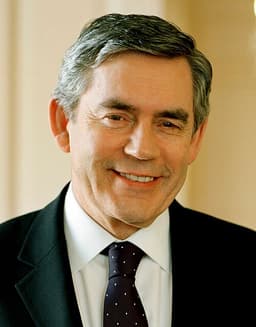
Gordon Brown
Politician · Modern
53.1Total

William Lyon Mackenzie King
Politician · Modern
62.2Total
Basic Information
Born
1951
1874
Died
—
1950
Era
Modern
Modern
Nationality
United Kingdom
Canada
Occupation
Politician
Politician
Civilization
Western
Western
Score Comparison
Military (10%)
50.0
50.0
Political (20%)
55.0
78.0
Influence (20%)
55.0
58.3
Legacy (20%)
48.3
58.0
Leadership (15%)
66.0
81.7
Strategy (15%)
41.7
42.1
TOTAL
53.1
62.2
Gordon Brown — Complete Timeline
1997 AD
Introduced the Fiscal Rules as ChancellorReform◆ Major
As Chancellor, Brown introduced the 'Golden Rule' and 'Sustainable Investment Rule' for fiscal policy. These rules aimed to ensure responsible public finances and were credited with maintaining economic stability during his tenure.
Economic PolicyFiscal RulesChancellor
Impact: nationalconstructive
2007 AD
Appointed Prime MinisterPolitical Action◆ Major
Brown succeeded Tony Blair as Prime Minister of the United Kingdom without a general election. He had served as Chancellor of the Exchequer for ten years and was widely expected to take over the leadership of the Labour Party.
Political TransitionLabour PartyPrime Minister
Impact: national
2008 AD
Led the G20 Response to the Global Financial CrisisPolitical Action
Brown played a leading role in coordinating the international response to the global financial crisis. He hosted the G20 summit in London in 2009, securing commitments for fiscal stimulus and financial regulation reforms.
Financial CrisisG20International Cooperation
Impact: globalconstructive
Nationalization of Northern RockPolitical Action◆ Major
Brown's government nationalized the failing bank Northern Rock after a bank run. The decision was controversial but aimed at stabilizing the financial system. It was the first nationalization of a UK bank in decades.
Financial CrisisBank NationalizationEconomic Intervention
Impact: national
2010 AD
Lost the 2010 General ElectionPolitical Action◆ Major
Brown led the Labour Party to defeat in the 2010 general election, resulting in a hung parliament. He resigned as prime minister after failing to form a coalition government with the Liberal Democrats, ending 13 years of Labour government.
General ElectionLabour DefeatHung Parliament
Impact: nationaltragic
William Lyon Mackenzie King — Complete Timeline
1921 AD
Became Prime Minister of CanadaPolitical Action◆ Major
King became the tenth Prime Minister of Canada, leading the Liberal Party. His first term was marked by post-war reconstruction and economic challenges.
Government FormationLiberalismPost-War
Impact: national
1926 AD
Navigated the King-Byng AffairPolitical Action◆ Major
King requested a dissolution of Parliament from Governor General Lord Byng, who refused. King resigned, and the Conservative government fell within days. King returned to power after the election, establishing the principle that the Governor General must act on the Prime Minister's advice.
Constitutional CrisisGovernor GeneralDemocracy
Impact: national
1939 AD
Led Canada through World War IIWar◆ Major
King led Canada through World War II, managing the war effort, mobilizing the economy, and maintaining national unity. He avoided a repeat of the 1917 conscription crisis by holding a plebiscite and limiting conscription to home defense until 1944.
World War IIMilitaryNational Unity
Impact: global
1944 AD
Introduced universal family allowancesReform◆ Major
King's government introduced the Family Allowance Act, providing monthly payments to all families with children. This was a landmark social welfare program that laid the foundation for Canada's post-war social safety net.
Social WelfareFamily AllowancePost-War
Impact: nationalconstructive
Expert Analysis
Origins
Gordon Brown was born on February 20, 1951, in Giffnock, Scotland, into a family of ministers. His father, John Brown, was a Church of Scotland minister. Brown attended Kirkcaldy High School and later studied history at the University of Edinburgh, where he earned a PhD. His early interest in politics was shaped by the Labour Party's social democratic ideals. In contrast, William Lyon Mackenzie King was born on December 17, 1874, in Berlin (now Kitchener), Ontario, Canada. His grandfather, William Lyon Mackenzie, was a leader of the 1837 Rebellions. King studied at the University of Toronto, then Harvard, earning a PhD in economics. His background combined intellectual rigor with political lineage.
Rise to Power
Brown entered Parliament in 1983 and quickly rose through Labour ranks. As Shadow Chancellor (1992-1997), he positioned Labour as fiscally responsible. When Labour won the 1997 election, Brown became Chancellor of the Exchequer, a role he held for ten years. He granted independence to the Bank of England in 1997, a key turning point. In 2007, he succeeded Tony Blair as Prime Minister without a general election. King first became Prime Minister in 1921 after leading the Liberal Party to a minority government. His rise was marked by skillful navigation of Canada's regional and ethnic divisions. He lost power briefly in 1926 and 1930 but returned, serving over 21 years total.
Leadership & Governance
Brown's leadership style was intellectual and detail-oriented, but he struggled with communication and political charisma. As Prime Minister, he focused on the financial crisis, coordinating the G20 London summit in 2009, which resulted in a $1.1 trillion global stimulus package. His fiscal rules as Chancellor—the Golden Rule and Sustainable Investment Rule—aimed at responsible borrowing. However, critics argue he overspent before the crisis. King's leadership was cautious and pragmatic. He excelled at managing coalition governments and maintaining national unity during World War II. He introduced universal family allowances in 1944, a landmark social policy. King's approach to WWII was to avoid conscription as long as possible, holding a plebiscite in 1942. His political score of 78.0 reflects his ability to stay in power, while Brown's 55.0 indicates a shorter, less stable tenure.
Triumph & Tragedy
Brown's greatest triumph was his leadership during the 2008 financial crisis. He prevented a global banking collapse through coordinated stimulus and bank nationalizations, such as Northern Rock. His tragedy was losing the 2010 election after failing to connect with voters. The 'Bigotgate' incident, where he was caught calling a voter a bigot, damaged his campaign. King's triumph was leading Canada through WWII with remarkable political stability. He mobilized the economy and maintained national unity, avoiding the conscription crisis that had torn the country in 1917. His tragedy was the King-Byng Affair in 1926, where his request for dissolution was refused, leading to a constitutional crisis. However, he turned it into a political victory by resigning and winning the subsequent election.
Character & Destiny
Brown was known for his seriousness and moral conviction. He was a workaholic with a deep sense of duty, but his introverted nature made him appear aloof. His destiny was shaped by the financial crisis, which he handled competently, but his lack of electoral mandate weakened his authority. King was secretive, cautious, and obsessed with control. He used spiritualism and consulted mediums, believing he communicated with the dead. His character suited Canada's need for a steady hand during crises. His leadership score of 81.7 reflects his success, while Brown's 66.0 shows his limitations.
Legacy
Brown's legacy is tied to his response to the financial crisis. The G20 summits became a permanent forum for international economic coordination. However, his fiscal rules were abandoned after the crisis. He is remembered as a competent crisis manager but a failed electoral politician. King's legacy is as Canada's longest-serving prime minister. He shaped the modern welfare state with family allowances and managed Canada's emergence as a middle power. His political score of 78.0 and influence score of 58.3 reflect his enduring impact. Brown's legacy score of 48.3 is lower, indicating less lasting influence.
Conclusion
William Lyon Mackenzie King had a greater impact than Gordon Brown. His leadership score of 81.7 versus Brown's 66.0, and total score of 62.2 versus 53.1, reflect his longer tenure and more effective governance. King navigated Canada through the Great Depression and WWII, leaving a lasting welfare state. Brown's crisis management was effective but short-lived, and his political failures diminished his influence. While Brown's role in the G20 response was significant, King's legacy in shaping Canadian identity and policy endures more strongly.
Rankings
🥇
William Lyon Mackenzie KingLeader
Mil: 50.0Pol: 78.0Inf: 58.3
62.2
🥈
Gordon Brown
Mil: 50.0Pol: 55.0Inf: 55.0
53.1
+9.1 behind
How This Comparison Works
Algorithm
Each figure is scored on 6 dimensions (0—100 scale) based on structured historical data: Military (10%), Political (20%), Influence (20%), Legacy (20%), Leadership (15%), Strategy (15%). The weighted total produces the final ranking.
Data Sources
Scores are computed from structured sub-indicators in the database. Scale factors adjust for era (Ancient ×0.85, Modern ×1.0) and civilization size (Eastern ×1.05, Other ×0.80) to account for differences in population and military scale.
Maximum 3 Figures
Comparisons are limited to 2—3 figures to ensure readability and statistical meaningfulness.
Error Margins
±5 points per dimension — Sub-scores are derived from historical records with inherent uncertainty. Two figures within 5 points on a dimension should be considered roughly equivalent in that area.
Total Score Accuracy
±3 points overall — The weighted combination of 6 dimensions produces a total score with approximately ±3 points of uncertainty. Differences of less than 3 points are not statistically significant— the figures are effectively tied.
Known Limitations
- Historical records are incomplete and uneven across civilizations
- Figures from oral-tradition societies may be underrepresented
- Occupation labels can misclassify multi-role figures
- Scores measure capability and impact, not moral character
- Quantitative scoring is a comparison tool, not absolute truth
Capability Radar
Military (10%) — Battles & Warfare
Battles
29
32
Win Rate
30
31
Expansion
32
32
Political (20%) — Governance & Reform
Reform
60
70
Diplomacy
55
85
Economy
70
75
Influence (20%) — Cultural & Global Reach
Cultural
30
50
Global
55
60
Legacy (20%) — Historical Impact
Historical
40
65
Longevity
30
60
Leadership (15%) — Power & Stability
Tenure
65
95
Stability
50
80
Strategy (15%) — Tactics & Innovation
Strategy
38
36
Tactics
40
41
Reform
43
44
Similar Comparisons
Comments & Discussion
No comments yet. Be the first to share your thoughts!