Loading...
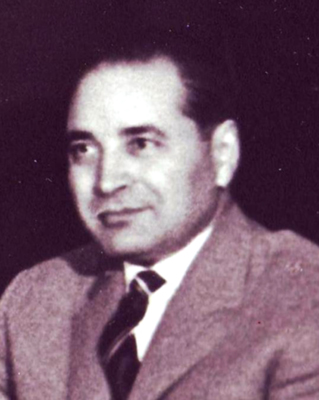
Gheorghiu-Dej
ModernPoliticianRomania1901 — 1965
Romanian communist leader who pursued independent foreign policy.
Compare Gheorghiu-Dej with another historical figure:
Quick Facts
Born
1901
Died
1965
Country
Romania
Era
Modern
Occupation
Politician
Score Overview
Military (10%)50
Political (20%)70
Influence (20%)57
Legacy (20%)48
Leadership (15%)72
Strategy (15%)44
Total Score57.1
Gheorghiu-Dej — Complete Timeline
1944 AD
Became General Secretary of the Romanian Communist PartyPolitical Action
Gheorghe Gheorghiu-Dej became General Secretary of the Romanian Communist Party in October 1944, following the 1944 coup. He led the party during the transition to communist rule, consolidating power through purges and alliances.
Communist PartyLeadershipPost-War
Impact: national
1948 AD
Oversaw the Nationalization of Industry and Collectivization of AgricultureReform◆ Major
Gheorghiu-Dej implemented a Soviet-style command economy, nationalizing major industries in 1948 and forcing collectivization of agriculture by 1962. These policies aimed at rapid industrialization but caused widespread hardship and resistance among peasants.
NationalizationCollectivizationEconomic Reform
Impact: nationaldestructive
1949 AD
Initiated the Construction of the Danube-Black Sea CanalReform◆ Major
Gheorghiu-Dej ordered the construction of the Danube-Black Sea Canal, a massive infrastructure project using forced labor from political prisoners. The canal was intended to shorten shipping routes but was plagued by inefficiency and high mortality rates among workers.
InfrastructureForced LaborIndustrialization
Impact: nationaldestructive
1952 AD
Purged Rival Ana Pauker and the 'Muscovite' FactionPolitical Action◆ Major
Gheorghiu-Dej orchestrated the purge of Ana Pauker, Vasile Luca, and other 'Muscovite' communists who had spent the war in the Soviet Union. This eliminated his main rivals and solidified his control over the party, establishing a more nationalist communist line.
PurgeInternal StruggleNational Communism
Impact: nationaldestructive
1964 AD
Pursued an Independent Foreign Policy from the Soviet UnionPolitical Action
In April 1964, Gheorghiu-Dej issued the 'Declaration of Independence' from the Soviet Union, asserting Romania's right to pursue its own path to socialism. This policy included maintaining diplomatic relations with China and Albania, and opposing Soviet economic integration plans.
Foreign PolicySoviet RelationsNational Communism
Impact: globalconstructive
Detailed Scores
▶View all detailed scores
Military
Strategy
6
Tactics
5
Battles
6
Army Scale
5
War Impact
6
Political
Governance
7
Reform
8
Stability
7
Policy
8
Power
8
Influence
History
9
Global
8
Culture
9
Ideology
9
Legacy
8
People often compare with
See how Gheorghiu-Dej stacks up against other historical figures
Popular Comparisons
Gheorghiu-Dej vs Julia Gillard
vs Julia Gillard57
Gheorghiu-Dej vs Miklos Horthy
vs Miklos Horthy57
Gheorghiu-Dej vs Sukhbaataryn Batbold
vs Sukhbaataryn Batbold52
Gheorghiu-Dej vs Garry Kasparov
vs Garry Kasparov47
Gheorghiu-Dej vs Droupadi Murmu
vs Droupadi Murmu46
Gheorghiu-Dej vs Allen Chastanet
vs Allen Chastanet41