Loading...
This comparison has not been analyzed yet.
One-time AI generation (~1 minute). Scores and timeline are already available below.
Gheorghiu-Dej vs Julia Gillard
Gheorghiu-Dej leads by 0.0 pts · 2 figures compared
…
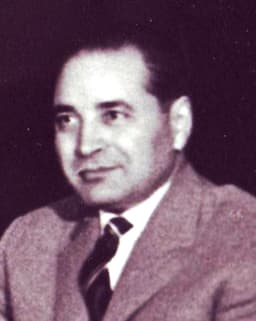
Gheorghiu-Dej
Politician · Modern
57.1Total

Julia Gillard
Politician · Modern
57.1Total
Basic Information
Born
1901
1961
Died
1965
—
Era
Modern
Modern
Nationality
Romania
Australia
Occupation
Politician
Politician
Civilization
Western
Western
Score Comparison
Military (10%)
50.0
50.0
Political (20%)
70.0
62.7
Influence (20%)
57.2
62.0
Legacy (20%)
48.3
47.5
Leadership (15%)
72.0
74.0
Strategy (15%)
44.0
42.3
TOTAL
57.1
57.1
Gheorghiu-Dej — Complete Timeline
1944 AD
Became General Secretary of the Romanian Communist PartyPolitical Action
Gheorghe Gheorghiu-Dej became General Secretary of the Romanian Communist Party in October 1944, following the 1944 coup. He led the party during the transition to communist rule, consolidating power through purges and alliances.
Communist PartyLeadershipPost-War
Impact: national
1948 AD
Oversaw the Nationalization of Industry and Collectivization of AgricultureReform◆ Major
Gheorghiu-Dej implemented a Soviet-style command economy, nationalizing major industries in 1948 and forcing collectivization of agriculture by 1962. These policies aimed at rapid industrialization but caused widespread hardship and resistance among peasants.
NationalizationCollectivizationEconomic Reform
Impact: nationaldestructive
1949 AD
Initiated the Construction of the Danube-Black Sea CanalReform◆ Major
Gheorghiu-Dej ordered the construction of the Danube-Black Sea Canal, a massive infrastructure project using forced labor from political prisoners. The canal was intended to shorten shipping routes but was plagued by inefficiency and high mortality rates among workers.
InfrastructureForced LaborIndustrialization
Impact: nationaldestructive
1952 AD
Purged Rival Ana Pauker and the 'Muscovite' FactionPolitical Action◆ Major
Gheorghiu-Dej orchestrated the purge of Ana Pauker, Vasile Luca, and other 'Muscovite' communists who had spent the war in the Soviet Union. This eliminated his main rivals and solidified his control over the party, establishing a more nationalist communist line.
PurgeInternal StruggleNational Communism
Impact: nationaldestructive
1964 AD
Pursued an Independent Foreign Policy from the Soviet UnionPolitical Action
In April 1964, Gheorghiu-Dej issued the 'Declaration of Independence' from the Soviet Union, asserting Romania's right to pursue its own path to socialism. This policy included maintaining diplomatic relations with China and Albania, and opposing Soviet economic integration plans.
Foreign PolicySoviet RelationsNational Communism
Impact: globalconstructive
Julia Gillard — Complete Timeline
2010 AD
Became First Female Prime Minister of AustraliaPolitical Action
Gillard became prime minister after successfully challenging Kevin Rudd for the Labor leadership. She was the first woman to hold the office in Australian history, marking a significant milestone for gender equality in the nation's politics.
Gender EqualityLeadershipLabor Party
Impact: nationalprogressive
2011 AD
Introduced the Carbon PriceReform◆ Major
Gillard's government introduced a carbon pricing mechanism, requiring large emitters to pay for their greenhouse gas emissions. The policy aimed to reduce Australia's carbon footprint and transition to a low-carbon economy, but was highly controversial.
Climate ChangeCarbon TaxEnvironment
Impact: nationalconstructive
2012 AD
Delivered the Misogyny SpeechCultural◆ Major
Gillard delivered a powerful speech in parliament accusing opposition leader Tony Abbott of sexism and misogyny. The speech went viral globally and became a defining moment in discussions about gender and politics in Australia.
GenderSpeechMisogyny
Impact: globalprogressive
2013 AD
Lost Labor Leadership to Kevin RuddPolitical Action◆ Major
Gillard lost a leadership spill to Kevin Rudd, ending her tenure as prime minister. The defeat came after months of poor polling and internal party divisions, and marked the end of her brief but historic time in office.
Leadership SpillRuddLabor Party
Impact: nationaltragic
This comparison has not been analyzed yet.
One-time AI generation (~1 minute). Scores and timeline are already available below.
Rankings
🥇
Gheorghiu-DejLeader
Mil: 50.0Pol: 70.0Inf: 57.2
57.1
🥈
Julia Gillard
Mil: 50.0Pol: 62.7Inf: 62.0
57.1
How This Comparison Works
Algorithm
Each figure is scored on 6 dimensions (0—100 scale) based on structured historical data: Military (10%), Political (20%), Influence (20%), Legacy (20%), Leadership (15%), Strategy (15%). The weighted total produces the final ranking.
Data Sources
Scores are computed from structured sub-indicators in the database. Scale factors adjust for era (Ancient ×0.85, Modern ×1.0) and civilization size (Eastern ×1.05, Other ×0.80) to account for differences in population and military scale.
Maximum 3 Figures
Comparisons are limited to 2—3 figures to ensure readability and statistical meaningfulness.
Error Margins
±5 points per dimension — Sub-scores are derived from historical records with inherent uncertainty. Two figures within 5 points on a dimension should be considered roughly equivalent in that area.
Total Score Accuracy
±3 points overall — The weighted combination of 6 dimensions produces a total score with approximately ±3 points of uncertainty. Differences of less than 3 points are not statistically significant— the figures are effectively tied.
Known Limitations
- Historical records are incomplete and uneven across civilizations
- Figures from oral-tradition societies may be underrepresented
- Occupation labels can misclassify multi-role figures
- Scores measure capability and impact, not moral character
- Quantitative scoring is a comparison tool, not absolute truth
Capability Radar
Military (10%) — Battles & Warfare
Battles
28
27
Win Rate
31
32
Expansion
36
36
Political (20%) — Governance & Reform
Reform
65
65
Diplomacy
75
55
Economy
60
50
Influence (20%) — Cultural & Global Reach
Cultural
30
60
Global
45
50
Legacy (20%) — Historical Impact
Historical
50
55
Longevity
40
30
Leadership (15%) — Power & Stability
Tenure
70
40
Stability
55
45
Strategy (15%) — Tactics & Innovation
Strategy
40
39
Tactics
42
41
Reform
45
42
Similar Comparisons
Comments & Discussion
No comments yet. Be the first to share your thoughts!