Loading...
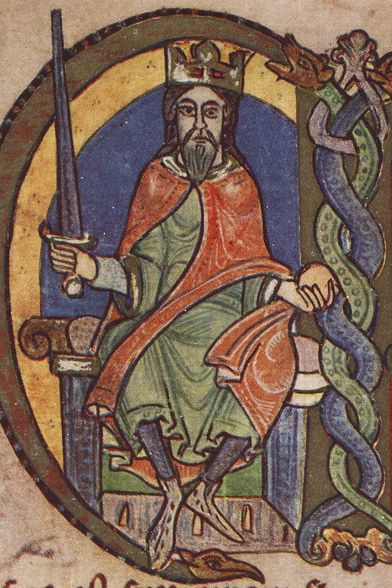
David I of Scotland
MedievalEmperorScotland1084 — 1153
Saint of Scotland who introduced feudalism and monasteries.
Compare David I of Scotland with another historical figure:
Quick Facts
Born
1084
Died
1153
Country
Scotland
Era
Medieval
Occupation
Emperor
Score Overview
Military (10%)50
Political (20%)68
Influence (20%)56
Legacy (20%)50
Leadership (15%)72
Strategy (15%)36
Total Score56.2
David I of Scotland — Complete Timeline
1124 AD
Introduction of Feudalism to ScotlandReform
David I introduced Norman-style feudalism to Scotland, granting lands to Anglo-Norman knights in exchange for military service. He established a system of sheriffdoms and castles, transforming Scottish governance and land tenure. This laid the foundation for a centralized medieval kingdom.
FeudalismGovernanceNorman Influence
Impact: nationalconstructive
1128 AD
Foundation of MonasteriesCultural◆ Major
David I founded several monasteries, including Melrose Abbey (Cistercian) and Holyrood Abbey (Augustinian). He also supported the establishment of other religious houses, bringing continental monastic orders to Scotland. These foundations promoted religious reform and economic development.
MonasteriesReligionCistercians
Impact: regionalconstructive
1130 AD
Creation of Royal BurghsReform◆ Major
David I created the first royal burghs in Scotland, including Berwick, Roxburgh, and Edinburgh. These towns were granted trading privileges and self-government, stimulating commerce and urban growth. The burgh system became a key feature of Scottish economic life.
BurghsTradeUrbanization
Impact: nationalconstructive
1138 AD
Invasion of England (1138)War◆ Major
David I invaded northern England during the civil war between Stephen and Matilda. He was defeated at the Battle of the Standard near Northallerton in August 1138. Despite the defeat, he negotiated the Treaty of Durham, which secured control of Cumberland and Northumberland for Scotland.
InvasionBattle of the StandardTreaty of Durham
Impact: regional
1139 AD
Treaty of DurhamPolitical Action◆ Major
After the Battle of the Standard, David I negotiated the Treaty of Durham with King Stephen. The treaty granted David control of the earldoms of Cumberland and Northumberland, significantly expanding Scottish territory. This was a diplomatic success despite the military defeat.
TreatyTerritorial ExpansionDiplomacy
Impact: regionalconstructive
Detailed Scores
▶View all detailed scores
Military
Strategy
7
Tactics
7
Battles
7
Army Scale
6
War Impact
7
Political
Governance
6
Reform
7
Stability
6
Policy
7
Power
7
Influence
History
9
Global
8
Culture
8
Ideology
9
Legacy
8
People often compare with
See how David I of Scotland stacks up against other historical figures
Popular Comparisons
David I of Scotland vs Suryavarman II
vs Suryavarman II69
David I of Scotland vs Tughril
vs Tughril62
David I of Scotland vs Stephen the Great
vs Stephen the Great62
David I of Scotland vs Barquq
vs Barquq57
David I of Scotland vs Stefan Lazarevic
vs Stefan Lazarevic56
David I of Scotland vs Louis the Pious
vs Louis the Pious49