Loading...
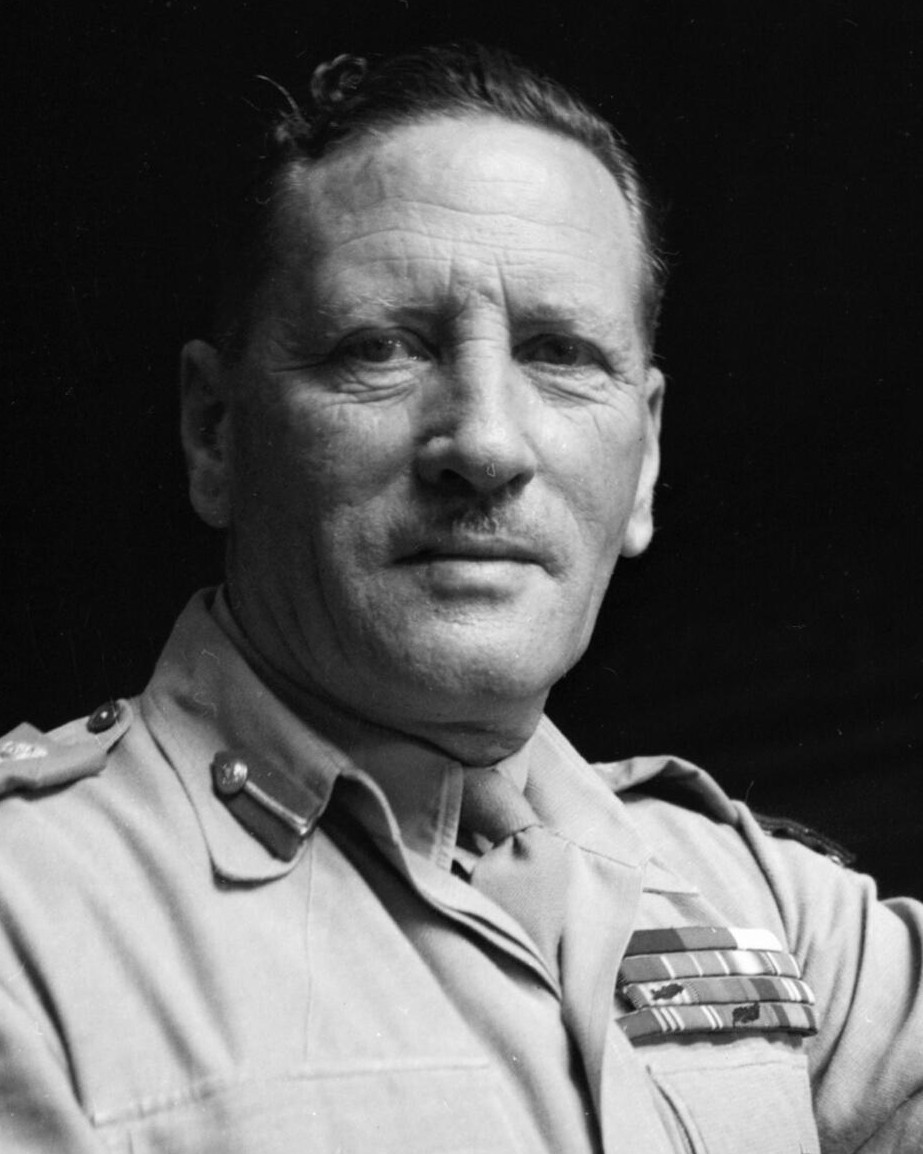
Claude Auchinleck
ModernGeneralUnited Kingdom1884 — 1981
The Auk who commanded in North Africa before Montgomery.
Compare Claude Auchinleck with another historical figure:
Quick Facts
Born
1884
Died
1981
Country
United Kingdom
Era
Modern
Occupation
General
Score Overview
Military (10%)73
Political (20%)39
Influence (20%)61
Legacy (20%)50
Leadership (15%)54
Strategy (15%)61
Total Score55.2
Claude Auchinleck — Complete Timeline
1941 AD
Appointed Commander-in-Chief of India CommandOther◆ Major
Auchinleck was appointed Commander-in-Chief of the Indian Army in January 1941. He oversaw the expansion and training of Indian forces for service in the Middle East, East Africa, and Southeast Asia, building a multi-ethnic army that grew to over two million men.
World War IIIndia
Impact: national
Appointed Commander-in-Chief of Middle East CommandOther◆ Major
Auchinleck replaced Archibald Wavell as Commander-in-Chief of Middle East Command in July 1941. He assumed command of British forces in North Africa, Iraq, and Persia during a critical period when German forces under Rommel were threatening Egypt and the Suez Canal.
World War IINorth Africa
Impact: national
Launched Operation CrusaderOther◆ Major
Auchinleck launched Operation Crusader on November 18, 1941, an offensive to relieve the besieged garrison at Tobruk. After heavy tank battles at Sidi Rezegh, British forces relieved Tobruk on December 10, forcing Rommel to retreat to El Agheila and lifting the 242-day siege.
World War IINorth AfricaVictory
Impact: nationalconstructive
1942 AD
Defeated at the First Battle of El AlameinOther◆ Major
Auchinleck personally took command of the Eighth Army in June 1942 after the fall of Tobruk. He halted Rommel's advance at the First Battle of El Alamein in July 1942, preventing the Axis from reaching Alexandria and the Suez Canal, but failed to destroy the German forces.
World War IINorth AfricaStalemate
Impact: national
Relieved of Command and Replaced by MontgomeryOther◆ Major
Auchinleck was relieved of command in August 1942 by Prime Minister Churchill, who lost confidence in his leadership. He was replaced by General Harold Alexander as Commander-in-Chief and Bernard Montgomery as commander of the Eighth Army, a decision that remains controversial among historians.
World War IINorth AfricaDismissal
Impact: nationaldestructive
1943 AD
Appointed Commander-in-Chief of India Command (Second Term)Other◆ Major
Auchinleck returned as Commander-in-Chief of the Indian Army in June 1943, a position he held until 1947. He oversaw the Burma Campaign, the defense against the Japanese invasion of India, and the post-war demobilization and partition of the Indian Army between India and Pakistan.
World War IIIndiaPartition
Impact: national
Detailed Scores
▶View all detailed scores
Military
Strategy
7
Tactics
7
Battles
7
Army Scale
7
War Impact
7
Political
Governance
7
Reform
7
Stability
7
Policy
8
Power
7
Influence
History
9
Global
9
Culture
9
Ideology
10
Legacy
9
People often compare with
See how Claude Auchinleck stacks up against other historical figures
Popular Comparisons
Claude Auchinleck vs Carl Gustaf Emil Mannerheim
vs Carl Gustaf Emil Mannerheim63
Claude Auchinleck vs Carl von Clausewitz
vs Carl von Clausewitz61
Claude Auchinleck vs Louis de Buade de Frontenac
vs Louis de Buade de Frontenac61
Claude Auchinleck vs K. M. Cariappa
vs K. M. Cariappa57
Claude Auchinleck vs Justo Jose de Urquiza
vs Justo Jose de Urquiza55
Claude Auchinleck vs Joseph Stilwell
vs Joseph Stilwell55