Loading...
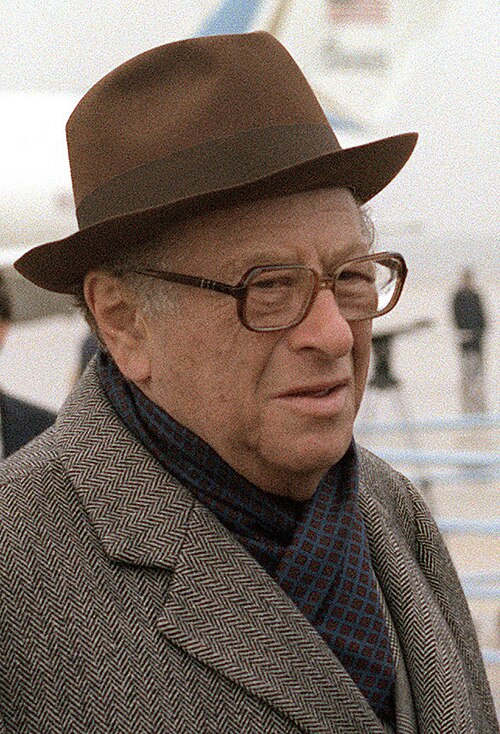
Bruno Kreisky
ModernPoliticianAustria1911 — 1990
Long-serving Austrian chancellor who promoted neutrality.
Compare Bruno Kreisky with another historical figure:
Quick Facts
Born
1911
Died
1990
Country
Austria
Era
Modern
Occupation
Politician
Score Overview
Military (10%)50
Political (20%)78
Influence (20%)57
Legacy (20%)58
Leadership (15%)80
Strategy (15%)43
Total Score61.7
Bruno Kreisky — Complete Timeline
1970 AD
Election as Chancellor of AustriaPolitical Action◆ Major
Kreisky became chancellor on April 21, 1970, after leading the Social Democratic Party to a plurality in the national elections. He formed a minority government, later securing a majority in 1971. His chancellorship lasted until 1983, the longest continuous tenure in Austrian history.
ElectionSocial DemocracyLong Tenure
Impact: nationalconstructive
1971 AD
Enactment of the Kreisky reformsReform◆ Major
Kreisky's government implemented a series of social reforms, including the introduction of the 40-hour work week, expanded social security benefits, and the legalization of abortion during the first trimester. These reforms modernized Austrian social policy and expanded the welfare state.
Social ReformWelfare StateModernization
Impact: nationalprogressive
1975 AD
Promotion of Austrian neutrality and mediationPolitical Action◆ Major
Kreisky actively promoted Austria's role as a neutral mediator in international conflicts. He hosted the 1975 Helsinki Accords follow-up meetings and offered Vienna as a venue for US-Soviet arms control talks. His policy strengthened Austria's international standing as a bridge between East and West.
NeutralityDiplomacyCold War
Impact: globalconstructive
1983 AD
Resignation as ChancellorPolitical Action◆ Major
After the Social Democratic Party lost its absolute majority in the 1983 elections, Kreisky resigned as chancellor on April 24, 1983. He had led the government for 13 years, overseeing a period of economic growth and social reform, but his later years were marked by controversy over his dealings with Middle Eastern leaders.
ResignationEnd of EraPolitical Transition
Impact: national
Detailed Scores
▶View all detailed scores
Military
Strategy
6
Tactics
5
Battles
6
Army Scale
5
War Impact
6
Political
Governance
7
Reform
7
Stability
7
Policy
7
Power
8
Influence
History
9
Global
8
Culture
9
Ideology
9
Legacy
8
People often compare with
See how Bruno Kreisky stacks up against other historical figures
Popular Comparisons
Bruno Kreisky vs Jose Figueres Olsen
vs Jose Figueres Olsen59
Bruno Kreisky vs Hassan Sheikh Mohamud
vs Hassan Sheikh Mohamud52
Bruno Kreisky vs Zhang Jian
vs Zhang Jian49
Bruno Kreisky vs Alfred Milner
vs Alfred Milner49
Bruno Kreisky vs Rexhep Meidani
vs Rexhep Meidani44