Loading...
This comparison has not been analyzed yet.
One-time AI generation (~1 minute). Scores and timeline are already available below.
Alfred Milner vs Bruno Kreisky
Bruno Kreisky leads by 12.7 pts · 2 figures compared
…

Alfred Milner
Politician · Modern
49.0Total
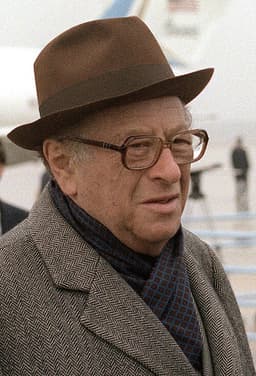
Bruno Kreisky
Politician · Modern
61.7Total
Basic Information
Born
1854
1911
Died
1925
1990
Era
Modern
Modern
Nationality
Great Britain
Austria
Occupation
Politician
Politician
Civilization
Western
Western
Score Comparison
Military (10%)
21.2
49.6
Political (20%)
48.0
78.0
Influence (20%)
54.9
56.7
Legacy (20%)
46.7
58.0
Leadership (15%)
65.0
80.0
Strategy (15%)
45.0
43.4
TOTAL
49.0
61.7
Alfred Milner — Complete Timeline
1897 AD
Appointed High Commissioner for South AfricaPolitical Action◆ Major
Milner was appointed High Commissioner for South Africa and Governor of the Cape Colony. His aggressive policies toward the Boer republics, including demands for voting rights for British expatriates, escalated tensions leading to the Second Boer War.
Colonial AdministrationBoer WarImperialism
Impact: regionaldestructive
1902 AD
Implemented the Milner KindergartenReform
Milner assembled a group of young British administrators, known as the 'Milner Kindergarten,' to reconstruct South Africa after the Boer War. They implemented policies promoting British immigration and economic development, influencing the Union of South Africa's formation.
ReconstructionAdministrationImperialism
Impact: regionalconstructive
Signed the Treaty of VereenigingPolitical Action◆ Major
Milner was a key British negotiator in the treaty that ended the Second Boer War. The treaty annexed the Boer republics into the British Empire but granted them self-government later, shaping South Africa's future union.
TreatyBoer WarSouth Africa
Impact: regional
Bruno Kreisky — Complete Timeline
1970 AD
Election as Chancellor of AustriaPolitical Action◆ Major
Kreisky became chancellor on April 21, 1970, after leading the Social Democratic Party to a plurality in the national elections. He formed a minority government, later securing a majority in 1971. His chancellorship lasted until 1983, the longest continuous tenure in Austrian history.
ElectionSocial DemocracyLong Tenure
Impact: nationalconstructive
1971 AD
Enactment of the Kreisky reformsReform◆ Major
Kreisky's government implemented a series of social reforms, including the introduction of the 40-hour work week, expanded social security benefits, and the legalization of abortion during the first trimester. These reforms modernized Austrian social policy and expanded the welfare state.
Social ReformWelfare StateModernization
Impact: nationalprogressive
1975 AD
Promotion of Austrian neutrality and mediationPolitical Action◆ Major
Kreisky actively promoted Austria's role as a neutral mediator in international conflicts. He hosted the 1975 Helsinki Accords follow-up meetings and offered Vienna as a venue for US-Soviet arms control talks. His policy strengthened Austria's international standing as a bridge between East and West.
NeutralityDiplomacyCold War
Impact: globalconstructive
1983 AD
Resignation as ChancellorPolitical Action◆ Major
After the Social Democratic Party lost its absolute majority in the 1983 elections, Kreisky resigned as chancellor on April 24, 1983. He had led the government for 13 years, overseeing a period of economic growth and social reform, but his later years were marked by controversy over his dealings with Middle Eastern leaders.
ResignationEnd of EraPolitical Transition
Impact: national
This comparison has not been analyzed yet.
One-time AI generation (~1 minute). Scores and timeline are already available below.
Rankings
🥇
Bruno KreiskyLeader
Mil: 49.6Pol: 78.0Inf: 56.7
61.7
🥈
Alfred Milner
Mil: 21.2Pol: 48.0Inf: 54.9
49.0
+12.7 behind
How This Comparison Works
Algorithm
Each figure is scored on 6 dimensions (0—100 scale) based on structured historical data: Military (10%), Political (20%), Influence (20%), Legacy (20%), Leadership (15%), Strategy (15%). The weighted total produces the final ranking.
Data Sources
Scores are computed from structured sub-indicators in the database. Scale factors adjust for era (Ancient ×0.85, Modern ×1.0) and civilization size (Eastern ×1.05, Other ×0.80) to account for differences in population and military scale.
Maximum 3 Figures
Comparisons are limited to 2—3 figures to ensure readability and statistical meaningfulness.
Error Margins
±5 points per dimension — Sub-scores are derived from historical records with inherent uncertainty. Two figures within 5 points on a dimension should be considered roughly equivalent in that area.
Total Score Accuracy
±3 points overall — The weighted combination of 6 dimensions produces a total score with approximately ±3 points of uncertainty. Differences of less than 3 points are not statistically significant— the figures are effectively tied.
Known Limitations
- Historical records are incomplete and uneven across civilizations
- Figures from oral-tradition societies may be underrepresented
- Occupation labels can misclassify multi-role figures
- Scores measure capability and impact, not moral character
- Quantitative scoring is a comparison tool, not absolute truth
Capability Radar
Military (10%) — Battles & Warfare
Battles
10
29
Win Rate
10
34
Expansion
40
33
Political (20%) — Governance & Reform
Reform
50
70
Diplomacy
30
85
Economy
40
72
Influence (20%) — Cultural & Global Reach
Cultural
30
55
Global
40
60
Legacy (20%) — Historical Impact
Historical
50
65
Longevity
30
60
Leadership (15%) — Power & Stability
Tenure
60
75
Stability
20
80
Strategy (15%) — Tactics & Innovation
Strategy
20
39
Tactics
10
42
Reform
15
44
Similar Comparisons
Comments & Discussion
No comments yet. Be the first to share your thoughts!