Loading...
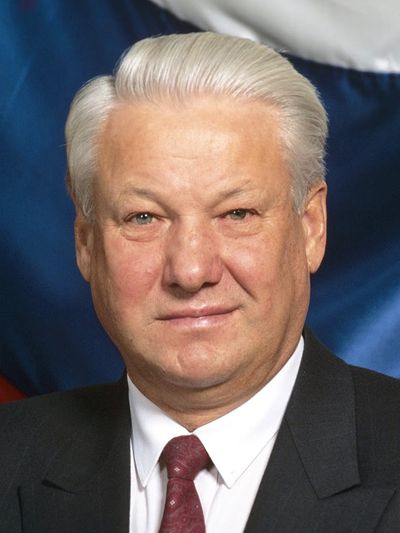
Boris Yeltsin
ModernPoliticianRussia1931 — ?
First president of the Russian Federation after the Soviet collapse.
Compare Boris Yeltsin with another historical figure:
Quick Facts
Born
1931
Country
Russia
Era
Modern
Occupation
Politician
Score Overview
Military (10%)10
Political (20%)54
Influence (20%)55
Legacy (20%)54
Leadership (15%)74
Strategy (15%)38
Total Score51.2
Boris Yeltsin — Complete Timeline
1991 AD
Elected President of the Russian Soviet Federative Socialist RepublicOther◆ Major
Yeltsin was elected President of the Russian SFSR in a direct popular election on June 12, 1991, winning 57% of the vote. This made him the first popularly elected leader in Russian history and gave him a democratic mandate separate from Soviet President Mikhail Gorbachev.
Russian PresidencyDemocracySoviet Union
Impact: nationalconstructive
Led Resistance to August 1991 CoupPolitical Action◆ Major
During the August 1991 coup attempt by hardline Communist Party members against Gorbachev, Yeltsin famously climbed onto a tank outside the Russian White House and called for resistance. His defiance rallied opposition to the coup, which collapsed within days, accelerating the dissolution of the Soviet Union.
Soviet CoupRussian ResistanceDemocracy
Impact: globalconstructive
Signed Belavezha Accords Dissolving Soviet UnionOther◆ Major
Yeltsin, along with leaders of Ukraine and Belarus, signed the Belavezha Accords on December 8, 1991, declaring the Soviet Union dissolved and establishing the Commonwealth of Independent States (CIS). This effectively ended the USSR and created the Russian Federation as an independent state.
Soviet DissolutionCISRussian Independence
Impact: global
1993 AD
Ordered Shelling of Russian ParliamentOther◆ Major
Yeltsin ordered the Russian army to shell the White House (parliament building) on October 4, 1993, to end a constitutional crisis where the Supreme Soviet had refused to accept his decrees. The attack killed hundreds and led to the adoption of a new constitution with strong presidential powers.
Constitutional CrisisRussian ParliamentAuthoritarianism
Impact: nationaldestructive
1994 AD
Launched First Chechen WarOther◆ Major
Yeltsin ordered Russian troops into Chechnya on December 11, 1994, to suppress the separatist government of Dzhokhar Dudayev. The war resulted in massive casualties, destruction of Grozny, and a humiliating Russian withdrawal in 1996, severely damaging Yeltsin's popularity and military reputation.
Chechen WarRussian MilitarySeparatism
Impact: regionaldestructive
1999 AD
Resigned as President of RussiaPolitical Action◆ Major
Yeltsin announced his resignation on December 31, 1999, in a televised address, appointing Prime Minister Vladimir Putin as acting president. The resignation was unexpected and allowed Putin to consolidate power before the 2000 election, marking the end of Yeltsin's tumultuous decade in power.
Russian PresidencySuccessionPutin
Impact: national
Detailed Scores
▶View all detailed scores
Military
Strategy
6
Tactics
5
Battles
6
Army Scale
5
War Impact
6
Political
Governance
7
Reform
7
Stability
7
Policy
7
Power
8
Influence
History
9
Global
8
Culture
9
Ideology
10
Legacy
9
People often compare with
See how Boris Yeltsin stacks up against other historical figures
Popular Comparisons
Boris Yeltsin vs Valentin Paniagua
vs Valentin Paniagua54
Boris Yeltsin vs Jack Layton
vs Jack Layton54
Boris Yeltsin vs Frederick Chiluba
vs Frederick Chiluba54
Boris Yeltsin vs Abubakar Tafawa Balewa
vs Abubakar Tafawa Balewa53
Boris Yeltsin vs Masayoshi Ohira
vs Masayoshi Ohira50
Boris Yeltsin vs George Weah
vs George Weah47