Loading...
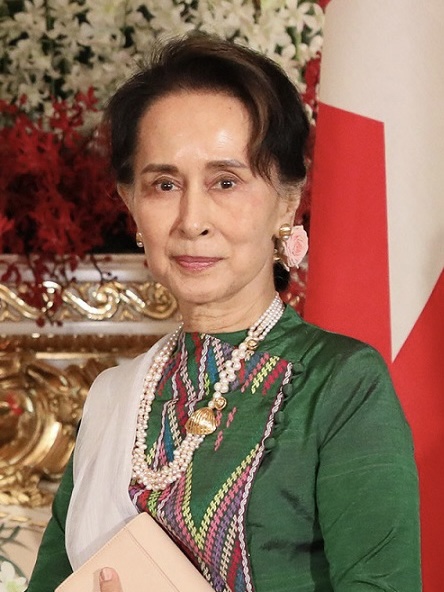
Aung San Suu Kyi
ModernPoliticianMyanmar1945 — ?
Nobel laureate and state counsellor of Myanmar.
Compare Aung San Suu Kyi with another historical figure:
Quick Facts
Born
1945
Country
Myanmar
Era
Modern
Occupation
Politician
Score Overview
Military (10%)15
Political (20%)47
Influence (20%)55
Legacy (20%)54
Leadership (15%)64
Strategy (15%)31
Total Score48.4
Aung San Suu Kyi — Complete Timeline
1989 AD
House arrest under SLORCPolitical Action◆ Major
Aung San Suu Kyi was placed under house arrest by the State Law and Order Restoration Council (SLORC) after leading pro-democracy protests. She was offered release if she left Myanmar but refused, remaining under detention for nearly 15 years total.
House arrestPro-democracySLORC
Impact: nationaldestructive
1991 AD
Nobel Peace Prize awardCultural◆ Major
Aung San Suu Kyi was awarded the Nobel Peace Prize for her non-violent struggle for democracy and human rights in Myanmar. Her sons accepted on her behalf as she remained under house arrest.
Nobel PrizePeaceDemocracy
Impact: globalconstructive
2010 AD
Release from house arrestPolitical Action◆ Major
Aung San Suu Kyi was released from house arrest six days after Myanmar's general election. Her release followed years of international pressure and marked a turning point in Myanmar's political transition.
ReleasePolitical transitionDemocracy
Impact: nationalprogressive
2012 AD
Elected to parliamentPolitical Action◆ Major
Aung San Suu Kyi won a seat in Myanmar's parliament in by-elections, becoming an opposition MP. Her National League for Democracy party won 43 of 45 contested seats, marking her entry into formal politics.
ElectionParliamentNLD
Impact: nationalprogressive
2016 AD
Appointed State CounsellorPolitical Action◆ Major
Aung San Suu Kyi was appointed State Counsellor of Myanmar, a position created for her, effectively making her the de facto leader. The constitution barred her from the presidency due to her foreign spouse and children.
State CounsellorLeadershipConstitution
Impact: nationalconstructive
2017 AD
Rohingya genocide defensePolitical Action◆ Major
Aung San Suu Kyi defended Myanmar's military actions against the Rohingya minority at the International Court of Justice, denying genocide allegations. This stance severely damaged her international reputation as a human rights icon.
RohingyaGenocideICJHuman rights
Impact: globaldestructive
2021 AD
Detained in 2021 coupPolitical Action◆ Major
Aung San Suu Kyi was detained by Myanmar's military in a coup that overturned the 2020 election results. She was charged with multiple offenses including corruption and violating the Official Secrets Act, leading to long prison sentences.
CoupDetentionMilitaryElection
Impact: nationaltragic
Detailed Scores
▶View all detailed scores
Military
Strategy
6
Tactics
5
Battles
6
Army Scale
5
War Impact
6
Political
Governance
7
Reform
7
Stability
7
Policy
7
Power
8
Influence
History
9
Global
8
Culture
8
Ideology
9
Legacy
8
People often compare with
See how Aung San Suu Kyi stacks up against other historical figures
Popular Comparisons
Aung San Suu Kyi vs William Ewart Gladstone
vs William Ewart Gladstone65
Aung San Suu Kyi vs Dolores Ibarruri
vs Dolores Ibarruri58
Aung San Suu Kyi vs Aminu Kano
vs Aminu Kano55
Aung San Suu Kyi vs Arturo Frondizi
vs Arturo Frondizi55
Aung San Suu Kyi vs Vivian Balakrishnan
vs Vivian Balakrishnan50
Aung San Suu Kyi vs Buddhadeb Bhattacharjee
vs Buddhadeb Bhattacharjee44