Loading...
This comparison has not been analyzed yet.
One-time AI generation (~1 minute). Scores and timeline are already available below.
Xu Jie vs Yuan Zhen
Xu Jie leads by 8.6 pts · 2 figures compared
…
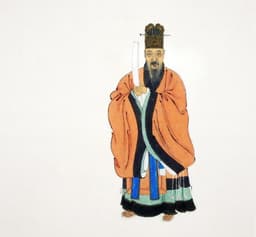
Xu Jie
Politician · Medieval
53.8Total

Yuan Zhen
Politician · Medieval
45.2Total
Basic Information
Born
1503
779
Died
1583
831
Era
Medieval
Medieval
Nationality
China
China
Occupation
Politician
Politician
Civilization
Eastern
Eastern
Score Comparison
Military (10%)
37.5
13.9
Political (20%)
65.0
36.5
Influence (20%)
53.3
59.0
Legacy (20%)
45.8
48.3
Leadership (15%)
78.0
51.9
Strategy (15%)
38.0
37.1
TOTAL
53.8
45.2
Xu Jie — Complete Timeline
1552 AD
Appointed Grand SecretaryPolitical Action◆ Major
Xu Jie was appointed to the Grand Secretariat. He initially maintained a low profile to survive the dominance of Yan Song, carefully building his own network of allies within the Ming court.
Ming DynastyAppointmentCourt Politics
Impact: national
1562 AD
Ousted Yan Song from PowerPolitical Action
Xu Jie orchestrated the downfall of Grand Secretary Yan Song. He manipulated court politics to turn the Jiajing Emperor against Yan Song, leading to Yan's dismissal and the execution of his son. Xu Jie then became the leading Grand Secretary.
Ming DynastyPolitical ManeuveringPower Shift
Impact: nationalconstructive
1567 AD
Implemented ReformsReform◆ Major
After the death of the Jiajing Emperor, Xu Jie used his influence to implement reforms. He reversed some of the previous regime's excesses, reduced government spending, and promoted capable officials, helping to stabilize the Ming state.
Ming DynastyReformStabilization
Impact: nationalconstructive
1568 AD
Retired from PoliticsPolitical Action
Xu Jie retired from his position as Grand Secretary. His retirement was prompted by conflicts with the new Longqing Emperor and rival officials. He returned to his hometown, where he lived until his death in 1583.
Ming DynastyRetirementCourt Politics
Impact: national
Yuan Zhen — Complete Timeline
800 AD
Composed 'The Story of Yingying'Cultural◆ Major
Yuan Zhen wrote the short story 'The Story of Yingying' (Yingying Zhuan), a tale of a scholar's romantic entanglement and abandonment of a woman. The story became a foundational work of Chinese fiction, later adapted into plays and operas.
LiteratureFictionTang Dynasty
Impact: national
Friendship with Bai JuyiCultural◆ Major
Yuan Zhen formed a close friendship with poet Bai Juyi, exchanging hundreds of poems over decades. Their correspondence and mutual influence produced some of the most celebrated works of Tang poetry, including Bai's 'Song of Everlasting Sorrow'.
FriendshipPoetryTang Dynasty
Impact: nationalconstructive
810 AD
Exiled to JianglingPolitical Action◆ Major
Yuan Zhen was exiled to Jiangling (modern Hubei) after offending powerful eunuchs and court officials. His exile deepened his friendship with Bai Juyi, with whom he exchanged many poems, and influenced his later political career.
ExileFriendshipTang Dynasty
Impact: nationaltragic
822 AD
Appointed ChancellorPolitical Action◆ Major
Yuan Zhen was appointed as chancellor (zaixiang) under Emperor Muzong. His tenure was marked by factional struggles and accusations of corruption, leading to his dismissal after only a few months. This brief chancellorship defined his political legacy.
ChancellorTang DynastyPolitical Faction
Impact: national
This comparison has not been analyzed yet.
One-time AI generation (~1 minute). Scores and timeline are already available below.
Rankings
🥇
Xu JieLeader
Mil: 37.5Pol: 65.0Inf: 53.3
53.8
🥈
Yuan Zhen
Mil: 13.9Pol: 36.5Inf: 59.0
45.2
+8.6 behind
How This Comparison Works
Algorithm
Each figure is scored on 6 dimensions (0—100 scale) based on structured historical data: Military (10%), Political (20%), Influence (20%), Legacy (20%), Leadership (15%), Strategy (15%). The weighted total produces the final ranking.
Data Sources
Scores are computed from structured sub-indicators in the database. Scale factors adjust for era (Ancient ×0.85, Modern ×1.0) and civilization size (Eastern ×1.05, Other ×0.80) to account for differences in population and military scale.
Maximum 3 Figures
Comparisons are limited to 2—3 figures to ensure readability and statistical meaningfulness.
Error Margins
±5 points per dimension — Sub-scores are derived from historical records with inherent uncertainty. Two figures within 5 points on a dimension should be considered roughly equivalent in that area.
Total Score Accuracy
±3 points overall — The weighted combination of 6 dimensions produces a total score with approximately ±3 points of uncertainty. Differences of less than 3 points are not statistically significant— the figures are effectively tied.
Known Limitations
- Historical records are incomplete and uneven across civilizations
- Figures from oral-tradition societies may be underrepresented
- Occupation labels can misclassify multi-role figures
- Scores measure capability and impact, not moral character
- Quantitative scoring is a comparison tool, not absolute truth
Capability Radar
Military (10%) — Battles & Warfare
Battles
38
36
Win Rate
42
39
Expansion
43
43
Political (20%) — Governance & Reform
Reform
65
20
Diplomacy
80
30
Economy
60
15
Influence (20%) — Cultural & Global Reach
Cultural
40
55
Global
20
40
Legacy (20%) — Historical Impact
Historical
55
50
Longevity
30
50
Leadership (15%) — Power & Stability
Tenure
75
35
Stability
70
10
Strategy (15%) — Tactics & Innovation
Strategy
49
49
Tactics
50
53
Reform
52
52
Similar Comparisons
Comments & Discussion
No comments yet. Be the first to share your thoughts!